Every behaviour a Perth household adopts to feel warmer in August raises the moisture load inside a closed building. The comfort decisions and the moisture decisions are the same decisions, and nobody has ever been told.
The most careful household in the street
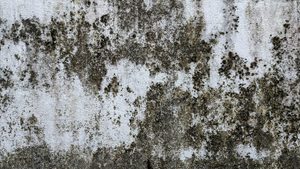
Two houses on the same street, same era, same orientation, same number of occupants. One of them has growth in the corner of the main bedroom and along the ceiling line of the hallway. The other does not.
The house with the problem belongs to the more careful household. They are the ones who sealed the gaps, who put the draught excluder under the back door, who keep the bedroom doors closed to hold the heat in the rooms they are using, who do not leave windows open in winter because that is money going out of the building. Everything they did was sensible, deliberate and in line with every piece of advice about energy they have ever received.
The other house has a stuck window that has not closed properly since autumn.
We see this often enough that it has stopped being an irony and started being a diagnosis. Monday’s article was the physics of condensation. This one is about why a household walks into it, every single winter, without anybody in it making a bad decision.
We optimise for the sense we have
A household runs its building on feedback. The question is which feedback it actually receives.
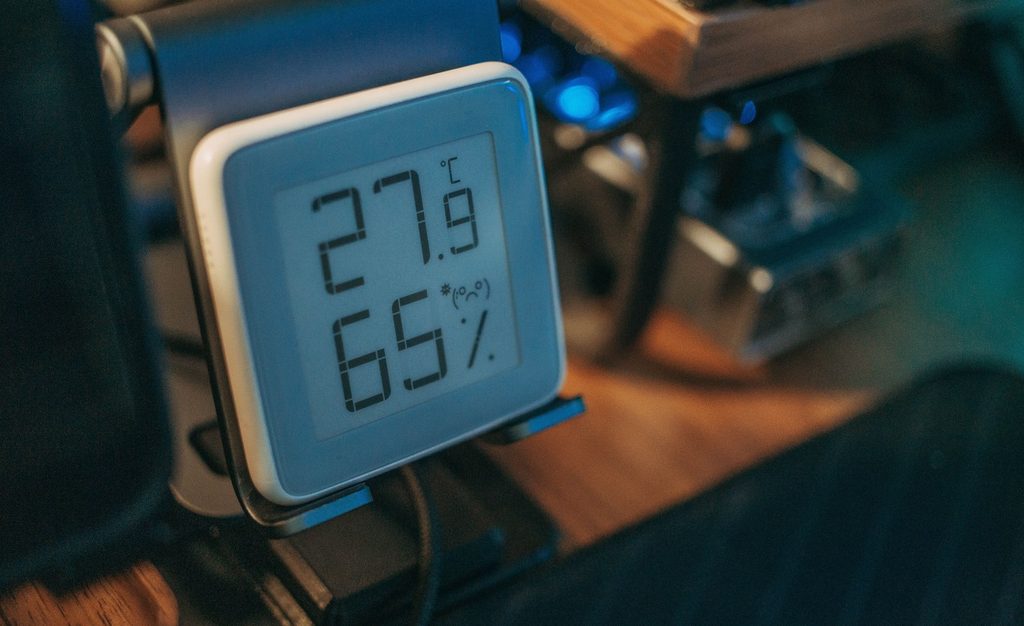
Temperature is sensed directly, continuously, by a dedicated system that reports it without being asked. Everybody in the house knows within seconds whether a room is cold. That reading arrives free, all day, and the household acts on it.
The moisture content of the air is not sensed at all. There is no human sense organ for the mass of water vapour in a room. The dew point is not sensed. The surface temperature of a wall is barely sensed, and only by deliberately putting a hand on it, which nobody does. Relative humidity is felt indirectly and unreliably, mostly as stuffiness, and only at high levels.
So the household is running a control loop on the one variable it can feel and is blind to the variable that does the damage. That is not a failure of character. It is a measurement problem, and it is the same measurement problem the trade has, which is why the trade solved it with instruments and the household has not.
The second half of the problem is cost. Heat has a visible price that arrives on a bill with a number on it. Ventilation has no bill at all, which should make it feel free and instead makes it feel wasteful, because what a household perceives when it opens a window in August is not air arriving. It is heat leaving, and heat is the thing they just paid for.
Put those two together and you get the standard winter posture of a Perth house. Optimise hard for the sensed variable, at a perceived cost of zero, against an unsensed variable at a perceived cost of nothing. The building is then asked to absorb the difference, and it does, in the paper liner of the plasterboard.
Eight decisions, none of them a moisture decision
Nobody decides to raise the vapour load in their house. What happens is that eight separate decisions get made for eight separate reasons, across about six weeks, and the sum of them is a different building.
The windows close in May and stay closed. The bedroom doors close at night, for warmth and for privacy and because a child is asleep. The wall vents get blocked, because they are draughts. The old fireplace gets sealed, for the same reason. A draught excluder goes under the external doors. Showers get longer and hotter, because standing in hot water is the best thing available on a cold morning. More cooking happens, and more of it is slow and wet. The clothes come off the line and onto a rack in the lounge, because the line has been wet for three days. An unflued gas heater comes out of the garage. Everybody is home more.
Read as comfort decisions, every one of those is correct and most of them are thrifty. Read as moisture decisions, which is what they also are, the household has increased the water going into its own air and decreased every path by which that water could leave.
The important part is the arithmetic of blame. No single decision on that list is responsible. Remove any one of them and the outcome barely changes. Which means there is no culprit to find, nothing to feel bad about, and nothing obvious to reverse. Households are good at reversing a decision and very poor at reversing an aggregate, and the trade has never once presented them with the aggregate.
The lag that defeats learning
People learn from consequences that arrive quickly and resemble their cause. This one does neither.
The behaviour starts in May. The surfaces begin holding moisture through June. Material takes up vapour faster than it gives it back, so the trend runs one way across the season with no visible intermediate signal. The mark appears in August, and it appears in a room that is not the room where the water was generated, because vapour moves to wherever the cold surface is. By the time there is something to see, the cause is three months upstream and in a different part of the house.
That is well outside the range in which human beings connect an action to an outcome. So the household attributes it to something else, and the available explanations are all wrong in the same direction. It is an old house. It was a wet winter. It is the shade on that side. Or, most damagingly, they conclude it is a cleaning failure, and they clean it.
The misattribution is the real cost, because each of those explanations is a reason to do nothing differently. An old house cannot be changed. The weather cannot be changed. A cleaning failure is corrected by cleaning harder, which is the one response that has no effect on the mechanism at all.
The winter this city does not admit to
There is a cultural layer under all of this and it is worth saying plainly, because it explains why Perth households are less equipped for a damp season than households in colder places with the same problem.
Cold climates have a folklore for this. Airing the house is a ritual with a name. Trickle ventilation is built into the windows. Dehumidifiers are an ordinary domestic appliance. Drying washing indoors is understood to be a trade off rather than a convenience. None of that exists here, because this city’s image of itself is hot and dry, and a place that does not believe it has a winter does not develop winter habits.
So Perth gets the worst version of the arrangement. Four months cold and wet enough to produce the problem. A housing stock, much of it uninsulated masonry, built for the other eight months. And no cultural memory of damp to draw on, which means every household meets it for the first time, every year, with no vocabulary and no equipment.
That is not a criticism of anybody. It is the reason the correction is education rather than diligence. The World Health Organization’s 2009 guidelines on indoor air quality, dampness and mould recommend preventing and remediating dampness rather than measuring toward a permitted level. In a Perth winter, prevention is substantially behavioural, and behaviour cannot be corrected by people who have not been told what the behaviour affects.
Warmth is not the enemy. Sealed warmth is.
The resolution matters, because a household that reads all of the above and concludes it must choose between being warm and being dry has learned the wrong lesson.
Warm surfaces do not condense. Heating a house raises surface temperatures, which moves the cold wall further from the dew point, which is exactly what you want. Heat is on your side.
What is not on your side is heat with nowhere for the moisture to go. Warming a closed room removes no water and widens the gap between the warm air and the cold surfaces, so the one wall that stayed cold collects more than it otherwise would. Heat plus ventilation dries a building. Heat alone concentrates the problem and hides it.
So the real choice is not comfort against cost. It is sealed warmth against ventilated warmth, and the second one costs a little more in energy and very much less in building. Nobody has ever framed it that way for a householder, which is why the entire country spends winter choosing the wrong one for the right reasons.
The Crusader winter conversation
Our method here is as defined as a technical protocol, because what we say in the first ten minutes decides whether the household acts on the mechanism or on the stain.
We ask behavioural questions before we ask building questions. Where the washing dries. Which doors are shut at night and for how long. Whether the wall vents are open. Whether an unflued heater is in use. How long the shower runs and whether the extraction runs after it. Those answers tell us more about the next three winters than any single reading does.
We present the aggregate rather than a culprit. The household gets a list of what is adding water and what is removing it, and the honest statement that no single item on it caused the problem. Nobody is being told they did something wrong, because they did not.
We attribute the condition to physics out loud, before price. A household that understands vapour and surface temperature has somewhere to put the condition other than their own standards.
We separate what is free from what is not. Furniture clearance, the laundry habit, the vents, the extraction run time and the bedroom door are free or nearly free. Insulation and a fan that terminates outside the building cost money and belong to other trades. We say which is which, in writing, and we say that the cleaning component is the smallest part of it.
And we set the review for the next cold season rather than for next month, because a winter problem is judged in winter.
Eco chemistry, and the bottles bought in August
Our bench is plant derived surfactants, readily biodegradable under OECD 301 within twenty eight days, unfragranced, with no quaternary ammonium compounds in routine work, and hydrogen peroxide based oxidative chemistry only where a disinfection step is genuinely indicated. The connection to this article is direct.
August is the month Australian households buy the most product for the least reason. The spray for the bathroom ceiling. The aerosol for the bedroom that smells closed. The moisture absorbing tub in the wardrobe, which captures a trivial fraction of what a household generates in a day and provides a great deal of reassurance. The plug in unit, which adds volatile compounds to a sealed building and removes nothing.
Every one of those is bought to manage an unsensed variable with a product, in a closed house, by somebody who has not been given the mechanism. None of them changes the surface temperature of a wall and none of them removes water from the building.
The fragrance point is sharper in winter than at any other time of year. A household’s own nose, in the first thirty seconds walking into a closed bedroom on a cold morning, is the only moisture instrument they own. A scented product in that room disables it for the whole season.
Long lasting client tips
Six rules for the Perth cold months, all of them free or close to it.
First. Open the house for ten minutes in the middle of the day, when the outside air is at its warmest and driest, rather than in the morning or the evening. Ten minutes of cross ventilation exchanges the air in a house without losing much of the warmth in the structure, which is where most of it is stored.
Second. Reverse the laundry decision before any other. Of everything on the list, drying washing indoors in a closed heated room puts the most water into the building for the least necessity. Outside, or in a space ventilated to outside, or in a vented appliance.
Third. Leave the internal doors open during the day, even if they close at night. Air movement between rooms evens out temperature and carries vapour away from the coldest surfaces, and a closed room is a small volume with nowhere for the moisture to go.
Fourth. Put the wall vents back into service. They were installed deliberately and they were blocked for comfort. If a particular vent produces an intolerable draught, the answer is to manage the draught rather than seal the path.
Fifth. Run the wet area extraction during the shower and for twenty minutes after it, every time, and treat it as part of the shower rather than optional. The twenty minutes afterwards does more than the time during.
Sixth. Heat the house and ventilate it, rather than choosing between them. Warm surfaces do not collect water. Sealed warm air does nothing but hold it until it finds the one cold wall you forgot about.
The bold position
This industry has had fifty years to tell Australian households that their comfort decisions are moisture decisions, and it has chosen instead to sell them a product in August and a treatment in September.
We will name the failure mode plainly. It is the operator who treats a seasonal condition as a stain and never asks a single behavioural question. No question about the laundry, the doors, the vents, the extraction or the heater. The visible area gets priced, something gets applied, and the household is left with an identical building and a cleaner wall. Twelve months later the same operator attends the same wall and nobody in the exchange has learned anything.
There is a second failure that is more subtle and does more harm. It is the industry’s habit of implying that a damp house is a poorly kept house. Every advertisement that pairs a mould photograph with a tone of disgust teaches a household that this is a standards problem. It is not. It is a vapour problem in an uninsulated building in a city that does not think it has a winter, and the households who get it worst are frequently the ones trying hardest to run their homes well.
Cleaning Crusader asks about the laundry before it asks about the ceiling. We give households the aggregate rather than a culprit, we separate the free corrections from the ones that cost money, we name the trades the paid ones belong to, and we say plainly that our own part of it is the smallest item on the list. We book the review for next winter, because that is when the answer arrives.
You did not do anything wrong in May. You made your house warmer and you made it tighter, and nobody told you those were the same decision as making it wetter. That sentence is the whole service, and it is free.
Authenticity is the ultimate competitive advantage.
Cleaning Crusader. Built for impact. Driven by excellence. Guided by purpose.