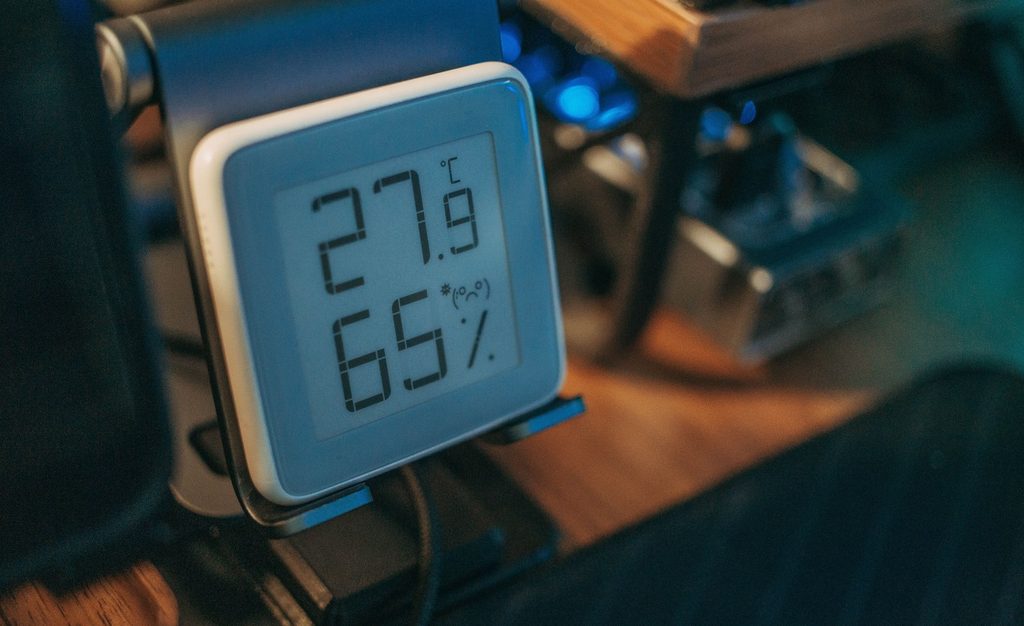
Most residential mould in Perth is not the result of water getting in. It is the result of water being manufactured inside the building by the people living there, and then being collected by the coldest surface in the room.
The wall that was never leaking
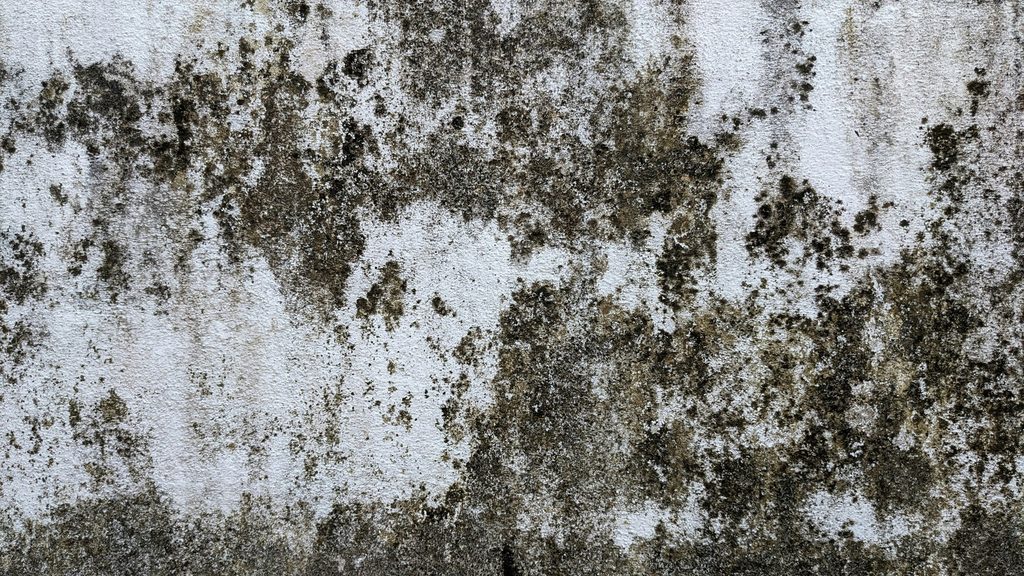
A household rings in the second week of August. There is a dark bloom in the corner of the main bedroom, on the outside wall, behind where the chest of drawers sits. It was a shadow in June. It is a shape in August. A plumber has been through and found nothing. The roof is sound. There is no bathroom on the other side of that wall.
They want to know where the leak is. The honest answer, in the great majority of these calls, is that there is no leak and there never was one. Nothing is getting in. The water on that wall arrived as vapour, released by the people and the activities inside the house, and the wall collected it because the wall was cold enough to.
We have written before that condensation produces most residential mould in this city. That was a sentence. This article is the mechanism, because the mechanism decides whether a household buys a remediation that holds or one that returns next winter in the same shape and slightly wider.
Every household manufactures water
People release moisture continuously, through respiration and through the skin, awake and asleep. Two adults in a closed bedroom for eight hours are a steady vapour source in a small volume with the door shut, and that alone raises the moisture content of that room’s air substantially by morning. A hot shower delivers a large quantity of vapour into a small room in a short time. Cooking adds more, particularly anything boiling with a lid off.
Then the one that dominates in winter, and the one households never connect to anything. A load of washing leaves the machine still carrying water, measured in litres rather than millilitres, because a spin removes most of it and not all of it. Dried outside, that water goes into the sky. Dried on a rack in a closed heated room, every gram of it goes into the air of the house and stays there until something takes it out. In a Perth August, when the line has been wet for three days, the rack in front of the heater is the largest discretionary moisture decision the household makes, and it is made as a laundry decision.
And then combustion. Burning a hydrocarbon produces carbon dioxide and water vapour, so an unflued gas heater is a water source running at the hours of highest occupancy and lowest ventilation. None of this is a fault and none of it is neglect. It is a household living in a house.
Air does not hold water, and that is the whole misunderstanding
Almost every householder carries the same mental model, which is that warm air holds more water than cold air, like a bigger sponge, and that heating a room therefore dries it. The model produces the wrong decision every single time, so it is worth replacing.
Water vapour is not held by the air. It exists as a gas in its own right, at a pressure of its own, behaving largely independently of the nitrogen and oxygen around it. What temperature changes is not a capacity. It is the pressure at which that vapour condenses back into liquid.
Two numbers follow. The first is the quantity of vapour present, usually expressed as grams of water per kilogram of dry air, and heating a closed room does not change it by a gram. You have added energy and removed nothing. The second is the dew point, the temperature at which the vapour already present would begin to condense, which is a property of the vapour rather than of the room and does not move when the heater goes on either.
What does move is relative humidity, the ratio between the two. Heat a closed room, the relative humidity falls, the air feels drier, and the household concludes the heater is drying the house. The same water is still in the room. The air is simply further from saturation, and the difference between it and the cold wall is now larger.
That is the entire reason the most diligently heated houses in this city are often the wettest.
Condensation is a property of a surface
The dew point belongs to the air. Condensation happens on a surface. Which surface gets the water is a construction question, and it was decided long before anybody moved in.
A great deal of Perth housing stock is double brick with a cavity, and much of the older stock has nothing in that cavity. Masonry has high thermal mass, so an external wall does not follow the room. It follows the outdoor temperature with a lag, and on a cold August night the inside face of that wall sits well below the air around it. That is the surface the water finds. Glass is colder still, which is why the windows are the first place a household sees moisture and also the most useful instrument in the building.
Then there are the thermal bridges, where the construction conducts heat out faster than the wall around it. A steel lintel over an opening. The edge of a concrete slab. The wall to ceiling junction, where insulation is thinnest and is frequently pushed aside. The internal corner where two external walls meet, which serves a small internal area from a large external one and runs colder than either wall alone. The pattern of the bloom is a map of the building’s heat loss.
And then the still air, which is the part most people can act on. Air moving across a surface warms it and carries away the vapour against it. Where the air cannot move, neither of those happens. Behind a chest of drawers on an external wall. Inside a built in robe on the same wall. Behind a bedhead, behind a sofa, in the back corner of a cupboard. Those are the coldest, stillest, dampest few centimetres in the house, which is where the trade finds growth and where a household never looks.
You do not need to see water
Growth does not require visible condensation. It requires sustained water availability at the material surface, and that threshold is reached well before a droplet forms. The dry tolerant species that dominate indoor growth germinate at a water activity around zero point seven five to zero point eight, which corresponds to the air immediately against the material sitting at roughly seventy five to eighty percent relative humidity. A wall several degrees above its dew point, with nothing wet about it to the eye or the hand, can hold that boundary layer for most of the night, every night, for three months.
So the criterion is not whether the wall gets wet. It is how many hours a day the air in the millimetre against the wall spends above about eighty percent relative humidity, and how many weeks in a row it does it.
So a household checking for moisture by hand finds nothing and concludes there is nothing. And the material does the remembering, because the paper liner on plasterboard is hygroscopic and gives vapour back slowly. The night loads it. The day does not fully unload it. Across a season the trend runs one way.
The dehumidifier nobody specified
A refrigerant dehumidifier works by presenting a surface below the dew point of the room, condensing vapour onto it, and draining the water to a tank.
A cold external wall in a closed house does the first two of those perfectly well. It has no tank and no drain. Its condensate goes into the paper liner of the plasterboard and into whatever is pressed against it.
That is the article in one image. The house has been running a dehumidifier all winter, in the corner of a bedroom, with no collection vessel, in the room with the most vapour and the least air movement. It runs quietly and on schedule, and the only part of it anybody has ever been sold is the stain.
Telling the three apart
Three mechanisms put moisture into a wall, the correction for each belongs to a different trade, and the signatures are distinct enough that nobody should be guessing.
Condensation follows surface temperature and still air. External walls rather than internal ones, corners, ceiling junctions, window reveals, behind furniture, inside robes. Strongly seasonal, worst in the closed months, and it frequently appears in several rooms at once on the same aspect of the building, which no leak does. On a meter the material reads damp in the first few millimetres and dry behind that.
Bulk water follows gravity and plumbing. Localised, tracking downward or outward from a source, worse after rain or after a particular fixture is used, elevated deep into the material. Moisture moving up from the ground presents as a band low on a wall, consistent in height along its length, often with a whitish crystalline bloom at the top of it, and it does not respond to ventilation at all.
The test that settles the first of those takes two minutes and is almost never performed. Read the room air with a hygrometer and calculate its dew point. Read the suspect surface with an infrared surface thermometer. Read an unaffected surface of the same construction for comparison. If the surface sits at or near the dew point of the room air, the conversation about leaks is over, and if the gap is only a few degrees it is still over, because of the eighty percent criterion above.
Those instruments have their own error families, which is Saturday’s article.
The Crusader condensation investigation
Stage one. Establish whether the building is receiving water or making it. Walk the aspect, read the pattern against surface temperature and air movement, and ask the occupancy questions rather than the plumbing ones.
Stage two. Measure the gap. Room temperature and relative humidity, the dew point calculated from them, and surface temperature at each affected location and at an unaffected reference of the same construction, recorded with the time.
Stage three. Find the vapour sources by behaviour. Where the washing dries. Whether the wet area extraction terminates outside the building or in a roof space. Whether there is unflued combustion heating. How many people sleep behind closed doors, and whether the robes on external walls are packed solid.
Stage four. Scope the contamination properly. The IICRC S520, the standard for professional mould remediation, separates actual growth from the settled material around it, and the second zone is always larger than a household expects. A condensation problem that has run three winters is not a mark on a wall. It is a distribution.
Stage five. Name the corrections and the trades they belong to, in writing. Ventilation and extraction discharging outside the building. Surface temperature, which is insulation and a builder’s work. Furniture clearance and the laundry habit, both free. Where a building is manufacturing its own water, the cleaning component is the smallest part of the spend and we say so.
Stage six. Set the verification criteria and a seasonal review. A remediation driven by condensation cannot honestly be judged in September. It is judged across the following winter, and we say so before we quote.
Eco chemistry, and the limits of a bottle on a cold wall
Our bench is plant derived surfactants, readily biodegradable under OECD 301 within twenty eight days, unfragranced, with no quaternary ammonium compounds in routine work, and hydrogen peroxide based oxidative chemistry only where a disinfection step is genuinely indicated. Here the bench matters less than a plain statement of what chemistry cannot do.
There is no product for a cold surface. An antimicrobial coating on a wall that will sit above eighty percent surface humidity every night for three months is a purchase of about twelve weeks. The physics is unchanged, the material is unchanged, and all that has been added is a film between the next operator’s meter and the truth. Our oxidative step, where it is indicated at all, follows physical removal rather than replacing it.
The unfragranced rule carries unusual weight here. A household’s own nose is their condensation detector, and it works best in the first thirty seconds walking into a closed bedroom on a cold morning. That reading, taken free, every day, for the life of the building, is worth more than any instrument we own, and a fragranced product destroys it at the moment it is about to become useful.
Long lasting client tips
Six rules for a Perth house in the closed months.
First. Read the glass. Water on the inside of the windows on a winter morning is not a window fault. It is a reading of the room, telling you the air has reached its dew point on the coldest surface available. Note which rooms do it and how often. That record is a diagnosis and it is free.
Second. Dry the washing outside, or in a space ventilated to outside, never on a rack in a closed heated room. The water left in the load after the spin goes into the air of that room and stays there until something removes it.
Third. Run the wet area extraction during the shower and for twenty minutes after it, and follow the duct with your own eyes until you see where it ends. A fan terminating in the roof space has moved the vapour out of a room you heat and into one you do not.
Fourth. Leave a gap behind furniture on external walls and do not pack a built in robe solid. A few centimetres of air movement raises the surface temperature and carries away the vapour against it, and it is the cheapest intervention anybody has.
Fifth. Heat and ventilate together or accept that you are doing neither. Warming a closed room lowers the relative humidity, removes no water, and widens the gap between the warm air and the cold wall. Warmth helps only when the moisture has somewhere to go.
Sixth. Treat an unflued gas heater as a water source, because it is one. Burning gas produces water vapour, and the unflued appliance puts it into the room with the heat, in the evening, with the house shut tight.
The bold position
The Australian mould trade quotes treatment for a condition produced by thermodynamics, and it does so because thermodynamics does not generate an invoice and a stain does.
We will name the failure mode plainly. It is the mould quote written without a surface temperature. An operator attends, sees growth on an external wall, prices the visible area, applies something and leaves. No reading of the room air. No reading of the wall. No question about where the washing dries or where the bathroom fan discharges. The work is performed competently, the wall is clean for a season, and the household is billed again next August for the same square metre.
There is a second failure that costs more and attracts no blame at all, which is the hunt for a leak that does not exist. Two plumbers. A ceiling opened. A section of wall cut out and made good. All of it chasing a source that was never there, while the cause sat in plain sight as a wall at fifteen degrees and a bedroom with a dew point of sixteen. Nobody in that chain did anything wrong. They answered the question they were asked, and the question was wrong.
Cleaning Crusader reads the room and the surface before it reads the stain. We calculate the dew point, measure the wall, measure an unaffected reference, and write both numbers down. We tell households when the correction is ventilation, insulation and a clothes line rather than a service, including when that makes the cleaning the smallest line on the page. We will not coat a surface that will be damp again in a fortnight.
Your house has been making its own rain all winter, on the coldest surface it owns, in the stillest corner of the room with the door closed. The mark on the wall is not the problem. It is the receipt.
Most platforms give you information. We give you leverage.
Cleaning Crusader. Built for impact. Driven by excellence. Guided by purpose.