The Eleventh Manifesto. Ten Sundays have argued about one firm and the people it serves. This one argues that the standard is a chain, and that a firm which will not build the hand off has capped its own quality at the level of the worst operator next to it.
Ten Sundays inside one boundary
Ten Sunday manifestos now stand behind this series. Engineering, because preservation is the actual work. People, because the operator is the method. Documentation, because a claim without a record is air. Education as an obligation. Discipline, because a standard only exists at the moment it is inconvenient. Scale, because scale is a standards problem before it is a growth problem. Trust, because trust is the product. Time, because the clock has to be long. The client, as a participant rather than an endpoint. And restraint, because the strongest available intervention is almost never the right one.
Read them together and they share a boundary. Nine are about the inside of a firm. One is about the line between a firm and the household it serves. Not one of them crosses the line that actually decides whether our work holds, which is the line between us and the other trades in the same building.
This eleventh manifesto is about that line. The proposition is that the standard in this category is a chain rather than a performance, that most of what we do begins in another trade’s failure and ends in another trade’s scope, and that a firm which treats the hand off as somebody else’s problem has accepted a ceiling on its own quality and decided to call that ceiling bad luck.
One defect, nine trades
Count the hands on one ordinary failure.
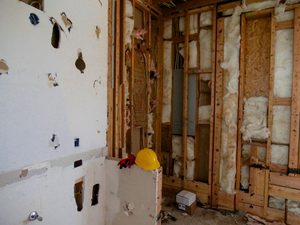
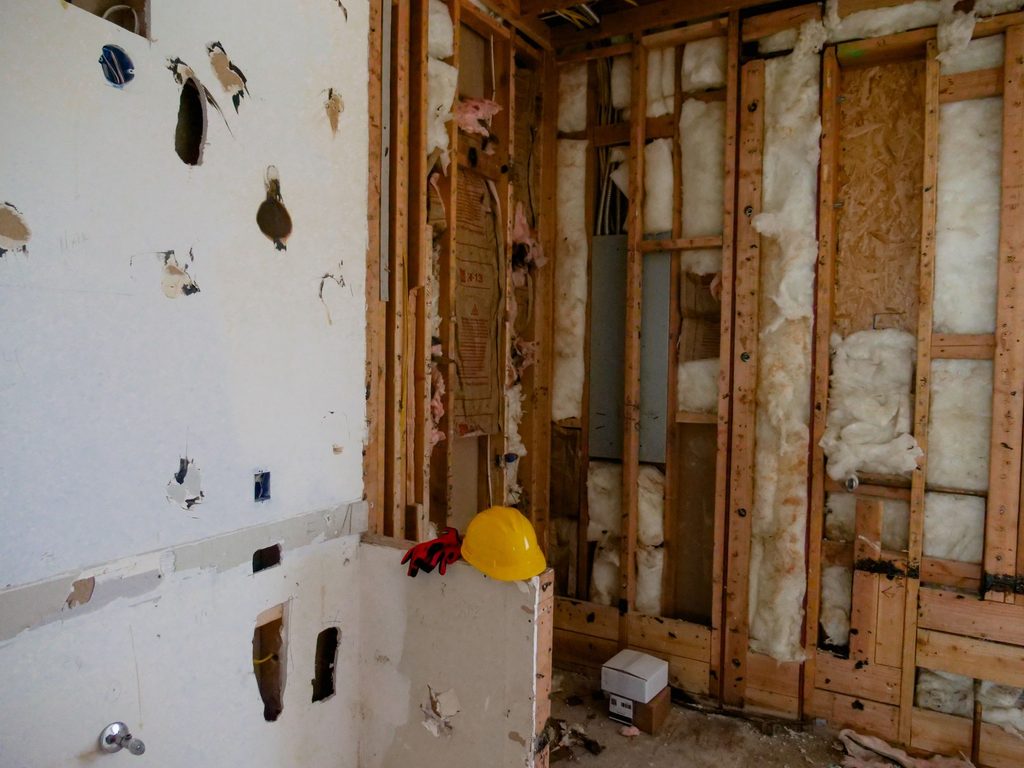
A shower was built against an external wall with no extraction path worth the name. A designer drew it. A builder built it. A waterproofer applied a membrane. A tiler tiled over the membrane and ran a sealant bead at the junction. Years later the bead released from one face and water entered the wall base.
The household noticed a smell. A plumber attended and found no leak in any pipe, because there was no leak in any pipe. We read the wall base, mapped the extent and scoped a remediation. A carpenter will reinstate the wall. A floor layer will replace a cushion in the adjoining bedroom. A waterproofer will redo the membrane, or the junction will fail again. An independent assessor should verify the result.
Nine parties. One defect. And nobody in that list whose scope covers the outcome.
Every one of those trades can do competent work and the building can still fail, because what fails is not any single piece of work. It is the junction between them, the sequence they happen in, and the information that does or does not travel. The household does not experience nine jobs. They experience one problem with their house, and they are the only party present at every stage, holding it together with no technical vocabulary and no authority over anybody.
The adjacencies come in three kinds. Upstream are the trades whose work created the condition we were called to, where our obligation is accurate reporting without blame. Downstream are the trades whose work completes ours, where our obligation is a hand off good enough to act on. Alongside are the parties working at the same time or verifying afterwards, where our obligation is sequence discipline and a willingness to be checked.
A hand off is a document, not a phone number
Most of this trade believes it is handling adjacency when it gives a client a name. A name is a transfer of the problem. A hand off is a transfer of the information required to solve it, and six things have to travel, all of them in writing.
The diagnosis, in the receiving trade’s language rather than ours. A waterproofer does not need our Condition 2 scope. They need to know water is entering at a specific junction, what we measured, and where.
The evidence. Readings with their points and dates, photographs, and the extent as we found it, so the next trade starts from measurement rather than from the household’s recollection.
The boundary. What we are doing, what we are not, and precisely where our scope stops. A scope that names only its inclusions has left the gaps for somebody else to discover.
The sequence and the dependency. What has to happen before what, and why. This is the element almost always missing and it is the one that costs the most.
The re attendance trigger. What has to be true before we come back, who confirms it, and how.
And what we need back, because our completion depends on their work.
Six items, half a page, no cost. The reason it is rare is not difficulty. It is that writing it down creates an obligation, and an obligation in writing is harder to walk away from than a phone number.
The three ways a hand off fails
The first is the dead end. We identify a cause outside our scope, tell the household, and leave them to find somebody. They are upset, they are not a builder, they do not know what to ask for, and the wall stays wet for five weeks while they work it out. Technically we discharged our duty. Practically we handed a diagnosis to the least equipped party in the chain.
The second is the blind referral. We give a name because we have one, without having checked the work, without criteria, and often because they refer work to us. That transfers our credibility to an operator whose standard we have not verified, and when it goes badly the household is right to hold us partly responsible, because the only reason that operator was in their house is that we said so.
The third is the sequence failure, and it is the expensive one, because every party in it does good work. Reinstatement before the affected materials have reached the drying goal, which seals wet material inside a finished wall. Tiling before the membrane is right, which buries the defect under the most expensive surface in the room. New carpet over old cushion, which lays a fresh floor covering onto a reservoir. Paint over a wall still receiving water, which is the most common and the most pointless. Nobody was negligent and the building failed, because the sequence belonged to nobody.
The part of a building nobody owns
There is a category of problem in this work with no trade attached to it, and it is where the real money disappears.
The air path behind a skirting that is filtering particulate into the edge of a carpet. The vapour load produced by a household’s winter habits. The thermal bridge at a wall to ceiling junction. A wet area designed without a ventilation route in a decade when nobody thought about it. None of those appears in any trade’s scope, and no operator in Perth quotes on them, because there is no line item, no product and no obvious qualification.
So they do not get done. They keep generating work for the plumber, the painter, us and the next owner, and they are solved by nobody, year after year, while every invoice in the sequence is for competent work.
A firm serious about the hand off has to own the orphan at least to the point of naming it. Writing it down. Saying which trade could do it even though none of them will quote it. Telling the household plainly that this part belongs to nobody and will have to be bought deliberately. It is unpaid work that makes somebody else’s invoice larger, and it is the most valuable thing we put in a report.
The standard assumes a chain
Here is the part that turns this from a courtesy into a compliance question.
The IICRC S500, the standard for professional water damage restoration, assumes that somebody stops the source. It does not make the restorer the plumber. It assumes the plumber exists and has been engaged, and a drying operation performed while water is still arriving is not a lesser version of the standard. It is outside it.
The IICRC S520, the standard for professional mould remediation, goes further. It describes two separate roles, the remediator and the indoor environmental professional who determines whether the objective was met. It assumes the moisture source is corrected by whoever owns it, and reinstatement by somebody else afterwards. We have argued the independence of that assessor before and we hold it. What matters today is the structural point underneath it, which is that the standard was written for a chain.
Both documents are executed, in practice, by one link. Which means the operator who refuses to build the hand off cannot deliver the standard they quote in their marketing. They can deliver their own part of it, to an excellent level, inside a sequence nobody completed. That is a fragment of compliance in a building that will fail anyway.
The money, and what you say about another operator
None of this holds if it is only an ethic, so here is the commercial side.
Referring work away costs revenue. Telling a household the first call belongs to a waterproofer, and that our own component is the smallest part of their spend, is a smaller invoice than not telling them. There is no version of this in which the firm does better in the quarter.
Reciprocity is where it gets dangerous. Referrals that arrive with an unspoken expectation of leniency. A relationship that becomes a meaningful share of our work, after which we cannot report that operator’s defects without putting our own pipeline at risk. So, no payment in either direction for a referral, ever, because a fee converts a professional recommendation into a sale and the household cannot tell the difference. We refer on criteria we can state out loud and we accept referrals on the same basis.
Then the hardest obligation in the manifesto, which is what we say about another operator’s work.
A household whose building we have assessed is entitled to everything we found. They are not entitled to our character assessment of somebody we have never met. So the rule is to report measurements, not verdicts. The reading, the point, the date, the standard it is measured against, and the physical observation. What was wet. What was buried. What was coated. What was not corrected. Then stop, and decline the invitation to characterise, however understandably the household presses for it.
The corollary keeps it honest. One day we will be the prior operator in somebody else’s report, and somebody will open a wall we dried with us not in the room. The only defence we will have is the record we left, and the way we would want to be described then is exactly the way we are obliged to describe everybody else now.
How we hold it
Four commitments rather than a stated value.
We name the other trade in writing, with the diagnosis in their language, the evidence, the boundary, the sequence and the re attendance trigger. Every time, including on small jobs where nobody would notice its absence.
We refer on stated criteria and take no payment in either direction. Where we do not know an operator well enough to vouch for them, we say so and tell the household what to ask rather than inventing a recommendation.
We hold the sequence even when it delays our own invoice. We will not stand by while reinstatement happens over materials that have not reached the goal, and we put the objection in writing so the household has it.
And we name the orphan. The air path, the vapour load, the ventilation route, the detail nobody will quote on, in the report, with the reason.
Eco chemistry as a decision made for the next operator
Our bench is plant derived surfactants, readily biodegradable under OECD 301 within twenty eight days, unfragranced, with no quaternary ammonium compounds in routine work, and hydrogen peroxide based oxidative chemistry only where a disinfection step is genuinely indicated. On a Sunday about the chain it reads differently than it does in a technical article.
Everything we leave in a building becomes somebody else’s starting condition. A persistent cationic residue alters how a surface reads to the next operator’s instruments. A coating over a substrate that is still receiving water hides a live condition from whoever investigates it next, and we have been that operator often enough to resent it properly. A fragrance applied on the way out disables the olfactory criterion an assessor and an occupant will both rely on for months.
There is a sharper version, which is the habit of applying a product to cover an adjacent trade’s unfinished work. A biocide because the waterproofing was never corrected. A sealer because the bed is moving. A deodoriser because the structure is still wet. Each is chemistry bought to paper over a gap in the chain, and it only makes the gap harder to find.
Long lasting client tips
Six ways to read the chain in your own building.
First. Ask every operator what part of the problem belongs to somebody else, and get it in writing. An operator who says it is all theirs is either outside their competence or inside a sales process.
Second. Ask for the sequence, not just the scope. What happens before what, and who confirms each step is finished. A list of tasks with no order will be executed in whatever order is convenient.
Third. Ask who is paying whom. A referral fee between trades is not illegal and it is not a professional recommendation, and you are entitled to know which you are getting.
Fourth. Insist that the readings and photographs travel with you to the next trade. They are yours, and a trade starting from measurements quotes more accurately than one starting from your description.
Fifth. Do not allow reinstatement, retiling or repainting until the party who measured confirms in writing that the criteria were met. It is the most expensive mistake available in a damp event and it is usually made to save a fortnight.
Sixth. Ask what nobody owns. The question is unusual enough to produce an honest answer, and the orphan in your building is frequently the reason you have been paying several trades for years.
The bold position
This industry has spent decades defending its own square metre and calling the rest of the building somebody else’s responsibility, and it has got away with it because the household is the only party standing in the middle and the household cannot see the chain.
We will name the failure mode plainly. It is the scope that ends at the edge of the invoice. An operator attends, does their own part competently, says nothing about the cause upstream or the work downstream, and leaves. No trade named. No sequence set. No evidence handed on. No statement of what remains undone. The work passes any inspection of itself, the building fails anyway, and nobody is identifiably at fault, which is precisely why it keeps happening.
There is a second failure that is more comfortable and just as damaging. It is the firm that extends into a trade it was never trained for, because the client is standing there willing to pay and bringing somebody else in feels like losing the job. Cutting and reinstating. Patching a membrane. Running the sealant because we are already here. Each is a firm choosing revenue over the boundary of its own competence, and it is the mirror image of the first failure rather than a cure for it.
Cleaning Crusader writes the hand off down, takes no referral fee in either direction, reports what it measured about another operator’s work without characterising them, holds the sequence even when that delays its own invoice, and names the part of the building that belongs to nobody.
Eleven Sundays now. Engineering, people, records, education, discipline, scale, trust, time, the client, restraint, and the chain. The first ten describe a firm that could be excellent on its own. The eleventh says excellent on its own is a ceiling, because the household does not receive our work. They receive the sequence, and the sequence is only as good as its worst link.
No building is restored by one trade. The only question is whether anybody in the chain is willing to act as though they know that.
Discipline creates freedom. Where Skill Becomes Legacy.
Cleaning Crusader. Built for impact. Driven by excellence. Guided by purpose.