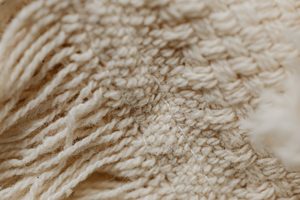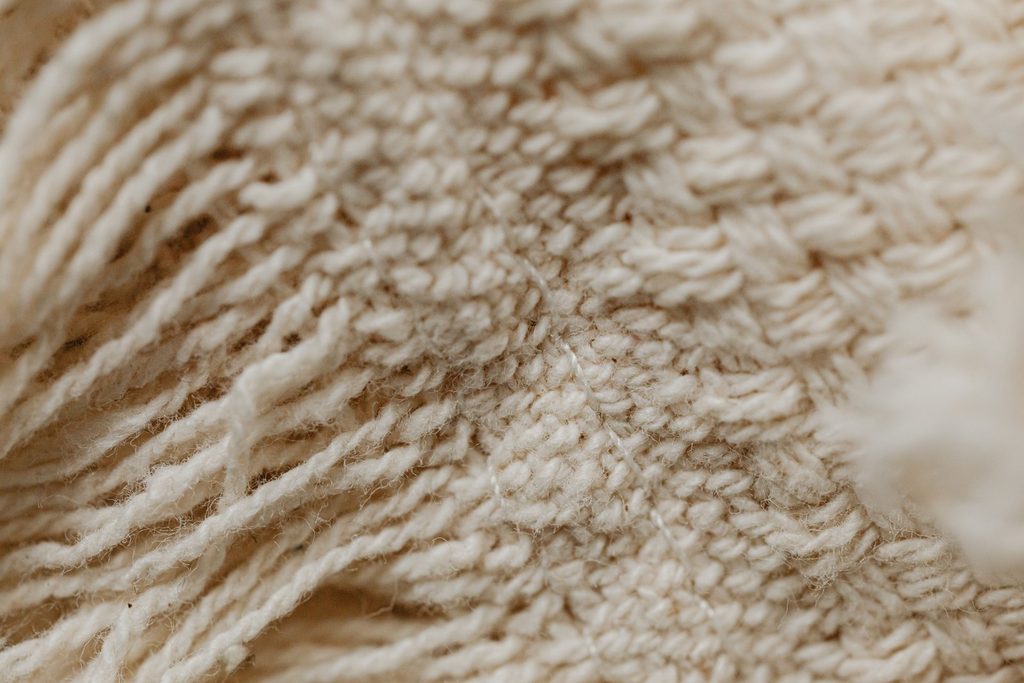
Wool is a structured protein with a narrow chemical window, which means the cheapest way to destroy the most expensive floor covering in a Perth home is to clean it with the chemistry that suits nylon.
The most expensive floor in the house
A wool carpet is usually the best floor covering in the building. It is also the only one in common residential use that can be permanently damaged by a product that is entirely correct on the floor next door.
Nobody has to be careless for this to happen. An operator arrives with the prespray they use on every job, which is a high alkaline cleaner, because high alkaline chemistry is the right answer on nylon and nylon is the overwhelming majority of what they see. They apply it at the dilution they always use, at the temperature their machine always runs at, and they agitate it the way they always do. The floor looks acceptable that afternoon. What has happened to the fibre is not visible for months, and by the time it is, it is not recoverable by any method at any price.
This article is the chemistry of that window. What keratin actually is, why alkalinity attacks it at three separate points, why the acid rinse is a chemistry step rather than a courtesy, and what an honest wool service looks like when the operator knows what is under the wand.
Keratin is a structured protein, not just a fibre
A synthetic carpet fibre is a polymer extruded through a die. It is chemically uniform, it has no internal architecture worth discussing, and it is largely indifferent to pH.
Wool is nothing like that. It is keratin, a protein, assembled into a fibre with a scaled outer cuticle over a cortex of spindle shaped cells, with a natural three dimensional crimp built in. That architecture is what gives wool its resilience, its bulk and its ability to recover from compression, and it is held together by three different kinds of bond.
The first are the cystine cross links, which are disulphide bridges joining one part of the protein chain to another. They are the covalent reinforcement, and they are the reason wool holds its shape at all.
The second are the salt links, ionic bonds between the acidic and basic side groups along the chain. These are pH dependent, which is the whole story of this article. They exist only while those groups carry the right charge.
The third are hydrogen bonds, which are weaker, numerous, and disrupted by water, which is why wool is more vulnerable wet than dry.
Alkalinity attacks all three. It hydrolyses the peptide backbone. It degrades the cystine cross links. And it deprotonates the basic side groups, which releases the salt links and allows the fibre to swell. The damage is to the molecule rather than to the appearance, which is why it does not come back when the pH is corrected afterwards.
The isoelectric point, and why the acid rinse is not a courtesy
Wool is amphoteric, meaning it carries both acidic and basic groups and can take up either an acid or a base. That gives it a point of maximum stability.
The isoelectric point of wool sits at around pH four point five to five. At that point the charges balance, the salt links are maximally intact, swelling is at its lowest and the fibre is in its own equilibrium. Wool is manufactured, dyed and finished on the acidic side of neutral for exactly this reason.
In practice the working window is roughly pH four point five to eight point five, and the damage above it is progressive rather than sudden. It also accelerates sharply with temperature, so a mildly alkaline chemistry at sixty degrees does far more harm than the same chemistry cold. High pH and heat together are not two risks. They are one compounded risk, and the trade routinely applies both.
This is why a wool service ends with a mild acid rinse, and why that rinse is a chemistry step rather than a finishing flourish. It returns the fibre to its own equilibrium, it reverses the swelling, and it leaves the carpet in the state the mill left it in. A wool floor cleaned at high pH and rinsed with plain water has been left outside its window to dry.
Three kinds of damage, three different mechanisms
Chemical damage is the alkaline attack above. Its signatures are a loss of resilience, a harsher hand, and alkaline yellowing, which is a real and named colour change in wool rather than soil that was missed. A yellowed wool carpet is reporting its own chemistry history.
Oxidative damage is separate and it is worth stating bluntly. Chlorine attacks the cystine cross links directly, which means chlorine bleach on wool is terminal, immediately, in a way that no subsequent treatment addresses. Hydrogen peroxide deserves the same caution for a reason that cuts against our own bench. Peroxide is our oxidative chemistry everywhere else in the business, and at alkaline pH it is also damaging to wool. So on a wool floor our disinfection step, where one is genuinely indicated, is either not used at all or used at a controlled acid pH, tested on a concealed area first, and never as a routine inclusion. An operator who carries one oxidative product and applies it at one pH across every fibre in the house has a problem they do not know about.
Mechanical damage is felting, and the mechanism is specific to the cuticle. The scales on a wool fibre overlap in one direction, pointing toward the tip, which means a fibre slides more easily one way than the other. Under moisture, heat and agitation together, fibres ratchet past each other in the preferred direction and lock into a dense entangled mass. That is felting, and nothing reverses it.
Alkalinity makes it worse, because a swollen fibre has lifted scales and migrates more readily. Which gives the single most useful rule in wool care. Moisture, heat, agitation and alkalinity are four inputs, and wool tolerates any one of them. It does not tolerate all four at once, and a hot high alkaline prespray worked in with a rotary brush is all four at once.
Dye releases before fibre fails
Wool and nylon are both dyed with acid dyes, which bond ionically to the protonated basic groups on the fibre. Raise the pH, deprotonate those groups, and the ionic bond weakens, so the dye begins to release.
That gives an operator an early warning instrument, free, before any permanent damage is done. Colour transferring onto a white towel during a concealed test is not merely a colourfastness issue. It is the same chemistry that is attacking the salt links in the protein, reporting itself in a form the eye can see. A wool floor that bleeds under a chemistry is a wool floor telling you that the chemistry is outside its window.
Wool holds water you cannot feel
Wool takes up moisture from the air to a degree no synthetic approaches. At ordinary indoor conditions its moisture content sits in the high teens as a percentage of its dry weight, and it can take up roughly a third of its dry weight in water before it feels wet to the hand. Nylon carries a few percent. Polypropylene carries almost none.
Two consequences follow, and both matter in August.
In a water event, a wool floor holds far more water than a synthetic of the same dimensions and releases it more slowly. A drying regime calibrated to nylon over dries the surface, forms a steep gradient, and leaves a core that reads dry at the tips and is not. Wool is the fibre where patient drying is not a preference.
And in a closed winter house, a wool carpet is a moisture buffer. It takes vapour out of humid air and holds it, which is pleasant to live on and means that a wool floor in a condensing building sits at an elevated moisture content all season, with its soil load, in a warm room. Wool also releases heat as it takes up moisture, which is one of the reasons it feels comfortable and is not a reason to leave it damp.
There are two further risks worth naming briefly. Traditional woven wool carpet frequently has a jute secondary backing, which is cellulose, and over wetting a cellulosic backing produces browning that wicks to the face. And wool is a protein, which makes it food for keratin feeding insects. It is the larvae that feed, the damage happens in the undisturbed strip under furniture and along the edges rather than in the traffic lanes, and soiled wool carrying body oils and food residue is more attractive than clean wool. On a wool floor, soil removal at the perimeter is a protection decision rather than an appearance one.
The Crusader wool protocol
Stage one. Confirm the fibre before anything is opened. Tag and documentation where they exist, then a burn test on a single yarn from a hidden allowance, because wool identifies itself by how it burns, what it smells like and what residue it leaves. It costs one thread.
Stage two. Test dye stability with the exact chemistry and method intended, in a concealed area, with a white towel blot and a timed dwell. Any colour transfer changes the chemistry rather than the technique.
Stage three. Work inside the window and verify it. Chemistry selected to sit within roughly pH four point five to eight point five rather than assumed to. The WoolSafe Organisation operates an independent approval scheme for products used on wool and wool rich carpet, and an approved product is a reasonable starting point rather than a substitute for testing.
Stage four. Cap the temperature and the agitation. Reduced heat at the tool, mechanical energy chosen for the construction rather than for the operator’s habit, and no rotary agitation on a wool pile. The IICRC S100, the standard for the professional cleaning of textile floor coverings, frames carpet care as a maintenance system in which method follows the fibre. On wool that is not a guideline. It is the difference between a service and a loss.
Stage five. Control the moisture. More recovery passes than wet passes, extraction preferred to evaporation at every point, and the objective of leaving the pile damp rather than wet.
Stage six. Finish with a mild acid rinse and verify the pH rather than assuming it. The floor leaves at its isoelectric point.
Stage seven. Dry mechanically and promptly, with air movement across the pile, and inspect the floor dry before the job closes. A wool floor signed off wet has not been inspected.
And the refusals. We will not use a high alkaline prespray on wool, we will not put chlorine chemistry anywhere near it, we will not run our oxidative step on it at alkaline pH, and we will decline to wet clean a wool piece whose dye will not hold.
Eco chemistry for a protein fibre
Our bench is plant derived surfactants, readily biodegradable under OECD 301 within twenty eight days, unfragranced, with no quaternary ammonium compounds in routine work, and hydrogen peroxide based oxidative chemistry only where a disinfection step is genuinely indicated. On wool the bench adds one hard constraint and removes three product families.
The constraint is pH, held inside the fibre’s window and verified at the rinse rather than estimated.
What we exclude is chlorine chemistry, oxidative chemistry at alkaline pH, and optical brighteners. The last of those is worth a sentence because it is sold as a benefit. An optical brightener does not clean anything. It absorbs ultraviolet light and re emits it, which makes a fibre read whiter under some light and not others, and on wool it deposits unevenly and cannot be removed. It is a cosmetic alteration to a natural fibre, permanent, and nobody is told it is happening.
The environmental argument here is unusually simple. Wool is a renewable protein fibre that biodegrades, and a wool carpet properly maintained is the longest lived floor covering in common residential use. The largest environmental decision available on a wool floor is not which product cleans it. It is whether the fibre survives its first careless service.
Long lasting client tips
Six rules for anybody who owns a wool floor covering.
First. Find out whether it is wool, and write it down somewhere the next operator will see it. A great many owners of wool carpet do not know, because the retailer said the brand name rather than the fibre, and nobody has mentioned it since.
Second. Tell every cleaner before they quote, and ask what pH they will be working at and what their rinse is. An operator who answers in a pH range and mentions an acid rinse has done this before. An operator who says their product is safe on everything has one bottle.
Third. Keep every household alkaline cleaner off it. Dish detergent in water, spray and wipe products, and anything sold for heavy duty cleaning are all alkaline, and alkalinity is the one thing wool does not recover from.
Fourth. Never put chlorine bleach on a wool fibre, including diluted, including on a small spot, including as a last resort. It attacks the cross links in the protein and the damage is immediate.
Fifth. Blot spills with plain water and a white cloth, working inward, and do not scrub. Agitation on wet wool is one of the four inputs that produce felting, and the first response causes more permanent wool damage in Australian homes than the spills do.
Sixth. Vacuum the edges and under the furniture, not only the lanes. That undisturbed strip is where keratin feeding insects do their damage and where the soil that attracts them accumulates, and it is the one part of a wool floor that no occupant ever reaches.
The bold position
The carpet cleaning industry owns one prespray and assesses every floor in the state against it. That is the honest explanation for most of the wool damage in Perth homes, and it is a structural problem rather than a character problem. Wool is a minority of the market, high alkaline chemistry is correct on the majority, and an operator who has learned one chemistry will apply it to a hundred floors before they meet the one it ruins.
We will name the failure mode plainly. It is the fibre that was never identified. Not the wrong product, which is downstream, but the absence of the one minute of work that would have determined what the floor was made of. A burn test on a single yarn, or even a question at the point of booking, separates the floor that tolerates a hot alkaline prespray from the floor that is permanently altered by it. That minute is skipped on most jobs in this market, which means the chemistry is being selected by the contents of the van.
There is a second failure that belongs further up the chain. A household spends a great deal of money on a wool carpet, and nobody in the transaction ever says the word wool again. Not the retailer, not the installer, not the warranty document in the drawer. The owner is handed a protein fibre with a narrow chemical window and no instruction that it has one, and then blamed by implication when it yellows.
Cleaning Crusader identifies the fibre before it opens a bottle, tests the dye with the chemistry it intends to use, works inside the pH window and verifies it at the rinse, caps the heat and the agitation, and recovers more moisture than it applies. We will not run chlorine or alkaline oxidative chemistry on wool at any dilution, and we will tell an owner when the honest service is a smaller one than they were expecting.
Wool has been holding its shape for as long as there have been sheep, and it will hold it for thirty years on a floor. It will not hold it through one hot afternoon with the wrong bottle.
We engineer the benchmark. We do not follow.
Cleaning Crusader. Built for impact. Driven by excellence. Guided by purpose.