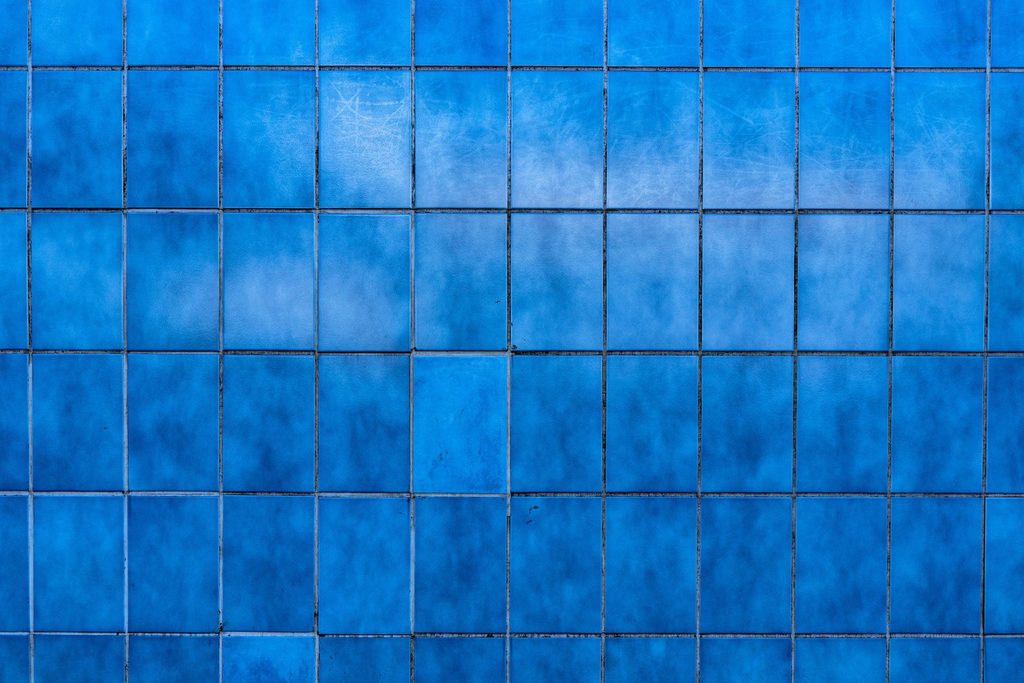
Three completely different white films get called the same thing in a Perth wet area, and the product that removes one is useless against the other two. The shower that never comes clean is almost always a materials identification failure rather than an effort failure.
The floor that resists everything
There is a tiled wet area in most Perth homes that has defeated its owner. The surface has a dull film on it that will not come off. It feels faintly rough under a hand, slightly waxy in places and chalky in others. The grout is pale and crusted along the bottom of the wall and dark in the corners. Four or five products have been tried. Two of them did nothing at all and one of them made the grout look paler for a fortnight.
The owner has concluded that the tiles are ruined, or that the previous occupant did something to them, or that bathrooms simply go like that. None of those is correct. What is actually on that surface is not one material. It is three, deposited by three different mechanisms, requiring three different chemistries, and the reason nothing has worked is that every product tried was the right product for one of them and the wrong product for the other two.
This article is the chemistry of that film. Where the minerals come from, how a bar of soap manufactures a waxy solid on your wall, why alkaline chemistry cannot touch mineral scale, and what the single narrow legitimate use of acid in this trade actually looks like when it is controlled rather than improvised.
The water arrives carrying solids
Water hardness is a measure of dissolved calcium and magnesium. It is not a contaminant and it is not a fault. It is what water picks up moving through ground that contains those minerals, and the Water Corporation publishes water quality information, hardness included, by supply area for anyone who wants the figure for their own suburb. A significant portion of the metropolitan supply in this state draws on groundwater, and groundwater carries dissolved mineral content.
What matters for a tiled surface is simple. When water evaporates, the water leaves and the dissolved solids do not. Every droplet that dries on a tile deposits its entire mineral content in place. One droplet is invisible. A shower wall receives several thousand a day, in the same places, and the deposit accumulates in layers.
Two factors accelerate it. The first is heat. Calcium carbonate has the inconvenient property of becoming less soluble as water gets warmer, which is the opposite of most solids and the reason scale forms preferentially on hot surfaces and in hot water. The second is time at the surface. Water that sits and evaporates deposits everything it carries. Water that runs off takes its minerals with it.
That single fact governs every practical recommendation at the end of this article. The deposit is formed at the moment of evaporation, so the only prevention available is removing the water before it dries.
Three white films, three different materials
The first is mineral scale. Crystalline calcium and magnesium carbonate, hard, built in layers, chemically inorganic. It is insoluble in water and it is not touched by surfactants, because there is no oil to emulsify and no particle to suspend. It responds to one thing only, which is chemistry that converts the carbonate into something soluble.
The second is metallic soap, which most people call soap scum, and it is the one almost nobody understands. Traditional soap is a salt of a fatty acid, usually a sodium salt. In hard water, those fatty acid molecules meet dissolved calcium and magnesium and swap partners. The product is calcium or magnesium stearate, a waxy, sticky, water insoluble solid that bonds to tile and grout and traps everything else that arrives afterwards. It is not dirt that has been missed. It is a material that was manufactured on your wall, by the interaction between the soap in your hand and the water out of the tap.
Metallic soap wants the opposite treatment to scale. It responds to alkaline chemistry that can saponify and emulsify the fatty component, to surfactants that can suspend the result, and to mechanical energy. An acid does very little to it.
The third is a microbial film, which is the pink or grey slime in the corners, along the base of the wall and in the grout line. Micro organisms colonise a wet surface that holds nutrient, and in a wet area the nutrient is soap residue and skin oils. This one needs physical removal, oxidative chemistry where a disinfection step is genuinely indicated, and a change in how long the surface stays wet. Neither acid nor alkaline cleaning alone resolves it while the surface is still wet for twenty hours a day.
There is a fourth deposit worth naming and not developing here. Efflorescence, the whitish crystalline bloom produced when water moving through a cementitious assembly carries soluble salts to the surface and evaporates. That is a signal about moisture moving through the structure rather than about anything on top of it, and we have treated it previously as the moisture question it is. Scrubbing it is answering the wrong question.
Why the bottle under your sink cannot win
Almost every product sold for a tiled wet area in a supermarket is one of two things. An alkaline surfactant cleaner, or an acidic descaler, usually hydrochloric based and usually marketed on speed.
The alkaline cleaner handles metallic soap and skin oils competently and does nothing whatever to mineral scale. The acidic descaler dissolves mineral scale efficiently and barely touches metallic soap, while attacking the grout. So the owner alternates between them, each product partially succeeding, neither product completing, and the surface keeps its film.
The chemistry of the mineral half deserves a proper explanation, because there are two legitimate routes and the trade only talks about one.
The first route is acidification. Add hydrogen ions and calcium carbonate converts to a soluble calcium salt, releasing carbon dioxide. That is the fizz. It works and it is indiscriminate, because cementitious grout is held together by a calcium based binder and the acid cannot tell the difference between the deposit and the material underneath it.
The second route is sequestration, and it is the one worth learning. A chelating agent is a molecule with several binding sites arranged so that it can wrap around a metal ion and hold it in a stable, soluble complex. Citric acid and gluconic acid both do this, as do several other readily biodegradable chelants. The calcium is captured and carried away in solution rather than being dissolved by brute acidity. The result is slower than hydrochloric, it requires dwell time and mechanical energy, and it is far less destructive to everything it is not aimed at.
The one honest use of acid, and the material that forbids it
We have previously described the routine use of acid as a grout cleaner as slow demolition sold as a service, and that remains our position. The narrow legitimate use is the controlled removal of mineral deposit, and the word controlled is carrying the whole sentence.
Controlled means a weak organic acid rather than a strong mineral one. It means a known dilution rather than a splash from the bottle. It means the shortest dwell that will do the work, timed rather than estimated. It means pre wetting the substrate, so the acid cannot wick deep into dry pore structure and keep working after the surface has been rinsed. It means protecting adjacent materials. And it means a neutralising rinse afterwards with the pH actually verified rather than assumed, because an acid left in a pore network at low concentration continues to work on the binder for weeks.
Hydrochloric acid satisfies none of that in ordinary use. It is fast, which is why it persists. It attacks the cement paste as readily as the deposit, it fumes in a small unventilated room, and it etches a polished surface permanently.
Then there is the material that rules acid out entirely. Calcareous stone, which includes marble, limestone and travertine, is itself largely calcium carbonate. On a calcareous stone tile, the deposit and the substrate are the same chemical compound. No acid in existence can distinguish between them, and any acid strong enough to remove the scale will etch the stone in the same instant. On those surfaces the deposit is addressed by a controlled chelant at a safe pH, or mechanically by honing, and never with a descaler.
Which is why the first question before anything is opened is not what is on this floor. It is what is this floor made of.
The Crusader wet area protocol
Stage one. Identify the substrate before identifying the deposit. Glazed ceramic, porcelain, or stone, and if stone then whether it is calcareous. A drop of weak acid on an inconspicuous area answers the question in seconds, and on a calcareous stone that single test prevents an irreversible mistake.
Stage two. Identify the films. A weak acid drop that fizzes on the deposit confirms carbonate scale. A waxy smear under a thumbnail that softens with alkaline chemistry is metallic soap. A film that wipes away easily and returns within a week is microbial. Most wet areas have all three, in different proportions in different zones, and the zones are treated separately.
Stage three. Dry removal and the metallic soap first. Alkaline chemistry matched to the fatty residue, real dwell, mechanical agitation shaped to the surface rather than dragged across it. Removing the waxy layer first is what gives any subsequent treatment access to the mineral beneath it, and an operator who descales before degreasing is treating the deposit through a wax coat.
Stage four. Controlled descaling. A weak organic acid or a chelant system, correct dilution, pre wetted substrate, timed dwell, worked mechanically, then a neutralising rinse with the pH verified. No hydrochloric. Nothing at all on calcareous stone beyond a chelant at a safe pH.
Stage five. The microbial film and its cause. Physical removal, oxidative chemistry where a disinfection step is genuinely indicated, and a plain statement to the owner that this one returns unless the surface spends less of the day wet.
Stage six. Hot pressure rinse with contained capture, so that suspended soil and released minerals leave the building rather than being relocated within it.
Stage seven. Protection and the maintenance change. A penetrating impregnator where the grout is sound and has been restored first, with the reapplication interval stated in writing. And the two habit changes that actually stop recurrence, which cost nothing and which we explain before we invoice.
Eco chemistry for mineral deposit
Our bench is plant derived surfactants, readily biodegradable under OECD 301 within twenty eight days, unfragranced, with no quaternary ammonium compounds in routine work, and hydrogen peroxide based oxidative chemistry where a disinfection step is genuinely indicated. For mineral work the bench adds organic acids and chelants selected for biodegradability, principally citric and gluconic, used at known dilution and neutralised afterwards.
The environmental argument in this category is unusually blunt, because the alternative is not a milder product. The alternative is hydrochloric acid, used routinely, in small unventilated rooms, by people without respiratory protection, rinsed straight into the drainage system, on a substrate it is actively dissolving. Replacing that with a weak organic acid that works by dwell and mechanical energy is a plain improvement in occupant exposure, in operator exposure and in what leaves the building.
The unfragranced rule earns its place here too. Grout in a wet area is frequently the first place a building tells you it is wet behind the tiles, and the signal it uses is a musty note. A wet area that smells strongly of product is a wet area where nobody can read that signal. We leave it smelling of nothing, because nothing is both the correct result and the only condition an occupant can verify for themselves.
Long lasting client tips
Six rules that will keep a tiled wet area serviceable for a decade.
First. Work out which film you have before you buy anything. Put a little white vinegar on a small area out of sight. If it fizzes, you have mineral scale and you need mineral chemistry. If it smears and feels waxy, you have metallic soap and you need alkaline chemistry and a brush. Guessing is what has produced the collection of bottles under your sink.
Second. Stop using bar soap in a hard water shower. Metallic soap is manufactured by the reaction between traditional soap and dissolved calcium, so a synthetic detergent body wash does not form the same insoluble film. This one change does more for a shower wall than any product you can buy to clean it.
Third. Get the water off the surface before it evaporates. A quick wipe or a squeegee of the wall and floor after the last shower of the day removes the water while the minerals are still in it. Deposition happens at the moment of drying, which means this is the only genuine prevention available.
Fourth. Ventilate during the shower and for twenty minutes after it. A surface that is wet for two hours a day grows very little. A surface that is wet for twenty hours a day grows a film no cleaning schedule will hold.
Fifth. Keep hydrochloric products away from cementitious grout, and keep every acid away from marble, limestone and travertine. On stone the deposit and the stone are the same compound, and the acid cannot tell them apart.
Sixth. Ask any operator what your floor is made of before they bring acid into your bathroom. If they cannot answer, or they have not tested, they are about to run an experiment on a surface you cannot replace in part.
The bold position
The tile category sells one bottle for three materials and has never corrected the confusion, because the confusion is commercially convenient. A product that works on one of the three films will always produce a visible improvement somewhere in a wet area, which is enough for a satisfied purchase and not enough for a finished job. The owner buys the next bottle, and the next, and eventually concludes the surface is beyond help.
We will name the failure mode plainly. It is the use of hydrochloric acid as the universal answer in domestic wet areas, applied without identifying either the deposit or the substrate. It is fast, it looks decisive, and it works by removing a thin layer of the material it was hired to clean. Every cycle leaves the grout rougher, more absorbent and quicker to resoil than before, which guarantees the next call. The practice survives because the result is judged on the day and the cost arrives across a decade.
Cleaning Crusader identifies the substrate before anything is opened, separates the three films and treats them in the right order, uses weak organic acids and chelants at known dilution with a verified neutralising rinse, and will not put acid of any kind on a calcareous stone. We tell owners which of the three films they are looking at, which bottle under their sink is useless against it, and which two free habits will stop it coming back.
Hard water writes on tile every single day, in thin invisible layers, exactly where the water was allowed to dry. Read what it wrote before you try to erase it.
We engineer the benchmark. We do not follow.
Cleaning Crusader. Built for impact. Driven by excellence. Guided by purpose.