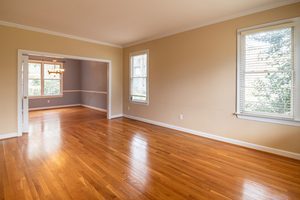
Almost every household tidies frantically before a specialist arrives, and a surprising number damage the thing they are about to pay us to assess. The reason is not housekeeping. It is that this country reads cleanliness as a verdict on a person rather than a condition of a material.
The most predictable thing in this trade
We arrive at eight. Somebody has been up since six. The carpet we have come to restore has been vacuumed twice. The grout we have come to treat has been scrubbed with whatever was under the sink. A window has been opened in the room with the odour problem. And there is an apology at the front door, delivered before we have taken a step inside, usually in the form of a sentence beginning with the words sorry about.
It happens in modest houses and in very expensive ones, with roughly equal frequency. It happens when the problem is a water event that was nobody’s fault. It happens when the appointment was made that morning. People brush their teeth before the dentist and tidy the house before the cleaner, and in both cases the professional knows exactly what they are looking at.
We have stopped finding it amusing, because we have worked out what it costs. The pre clean is not a small social ritual. It is the visible edge of a much larger behaviour, and the larger behaviour is the reason specialist work in this category gets deferred for years. If a household believes the state of a floor is a statement about their character, then calling us is a confession, and people put confessions off.
This article is about that mechanism. Why it happens, what it does to the work, how parts of our own industry have learned to monetise it, and what an operator should do differently when they arrive.
A material condition read as a moral one
A carpet with a crushed traffic lane is in a particular mechanical state. A grout line loaded through its pore volume is in a particular material state. A wall with growth on it is a building with a moisture source. None of those is information about the people living there, any more than worn brake pads are information about a driver’s character.
That is not how it is experienced. Cleanliness in this culture sits inside a vocabulary of virtue. Clean, filthy, disgusting, spotless, immaculate. Those are not engineering terms, and most of them are used about people as readily as about surfaces. A household looking at a dark grout line is not thinking about pore volume. They are thinking about what a visitor will conclude.
The confusion is compounded by two facts specific to the work we do. The first is that most of the conditions we deal with are invisible in their early stages and only become obvious once they are advanced, so by the time a household is certain there is a problem, the problem looks bad. The second is that the conditions are almost all caused by physics rather than by effort. Fine particulate deposited by air movement at a wall junction. Capillary loading in a cementitious material. Condensation on a cold surface in July. Uric acid salts in a cushion. None of those responds to how hard anybody tried.
So the household is in a bind. The condition looks like a verdict, the verdict feels unfair, and the only available defence is to tidy harder, which does nothing to the condition and a great deal to the embarrassment.
What the pre clean does to the work
The social cost would be reason enough to address this. The operational cost is what makes it our business.
Dry soil removal before we arrive is harmless and occasionally helpful. Everything else on the list does damage, and three categories of damage come up constantly.
The first is destroyed evidence. A supermarket spot remover applied the night before leaves a residue that changes how the pile responds to our chemistry and frequently creates a ring we then have to explain. A steam mop run over tile drives suspended soil further into the grout’s pore network. A deodoriser or a plug in unit applied to a room with an odour problem removes our ability to localise the source at floor level, which is the single most reliable diagnostic instrument we have. Dry vacuuming a wall with visible growth, or pointing a fan at it, moves spores through the whole house and converts a contained problem into a distributed one.
The second is a hidden diagnosis. A room tidied for a visit is a room where the affected materials have been covered. Contents get stacked against the wall that has the moisture problem. The wardrobe that smells is closed. The window in the affected room is opened to air it, which is well intentioned and destroys the first thirty seconds of olfactory reading, which is the only honest sensory data available to anyone who has not been standing in the house all morning.
The third is a mislabelled fault. A household that has cleaned before we arrive is presenting the cleaned version of the problem and asking us to price it. That produces an under scoped quote, a disappointing result and a client who concludes the trade is unreliable, when in fact we were shown a different room from the one we were hired to fix.
The inverse relationship nobody talks about
Here is the part that matters most, and it is not really about tidying.
The likelihood that a household calls a specialist is inversely related to how much they need one. A room with a modest, recent, easily resolved issue gets a phone call quickly, because there is nothing embarrassing about it. A room with three years of accumulated contamination behind a door that stays shut does not get a phone call at all, because the condition has become a statement about the household and the phone call is an admission.
We hear the sentence constantly. We were too embarrassed to ring anyone. It is usually said quietly, in the hallway, after the inspection, by someone who has just been told that the cause was a failed shower membrane and had nothing to do with them.
The cost of that delay is not sentimental. It is measured in material condition. A urine deposit found in the first day is a spot. The same deposit found three years later is frequently a cushion replacement. A colony addressed in the first week is a contained remediation. The same colony in year three has seeded the dust of every adjoining room. In every service we offer, the cost curve is steep and the shame curve runs in exactly the wrong direction against it.
An industry that wanted to serve its customers well would be spending its energy flattening that shame curve. A good deal of our industry has instead discovered that the curve can be climbed for profit.
The marketing of disgust
There is a genre of content in this trade that most people have seen. The bucket of black water held up to camera. The before and after pair, shot in different light, at different angles, with the before taken before any dry soil removal. The macro photograph of something magnified several hundred times with an alarming caption attached. The phrase you would not believe what was in your carpet.
It works. It works because disgust is one of the most reliable motivators available, and because a household already carrying unease about the state of their home will act on a jolt of it. We understand exactly why operators make that content.
We also think it is corrosive, and the reason is not squeamishness. That content teaches every household that watches it that the condition of their floors is shameful, that a professional arriving will be appalled, and that the appropriate response to a surface problem is horror rather than maintenance. It raises the barrier to the phone call for everybody. The operator who runs the dirty water reveal gets a booking this week and makes the next five households wait another year.
It also mislabels the evidence. Extraction water looks dark in almost every house, including recently maintained ones, because the material being lifted is fine particulate and dispersed oil and the volume of visible colour has almost nothing to do with the condition of the floor. Presenting it as a revelation is a theatrical choice. Presenting it as a measurement is not honest.
The Crusader arrival standard
Our method here is as defined as any of our technical protocols, because the first four minutes in a house set up everything that follows.
We tell clients in writing, at the point of booking, not to clean before we arrive, and we give the reason. Dry vacuum if you like. Apply nothing. Open nothing. Move nothing you were not going to move anyway.
We ask for the room to be emptied rather than tidied, where that is practical. Emptied means the contents are out so the materials can be inspected. Tidied means the contents are in neat piles on top of the evidence.
We do not comment on the condition of a home. Not with an expression, not with a question in the wrong tone, and not with the sentence when was this last done. Every operator who has ever said that sentence has made the next operator’s job harder.
We explain the mechanism before we explain the price. A household that understands that a filtration band is produced by air pressure, or that condensation is produced by vapour meeting a cold surface, has somewhere to put the condition other than their own character. Attribution to physics is not a kindness. It is the accurate account, and it happens to be the one that allows people to make a decision.
We photograph for the file and not for an audience. The images go in the record with dates and readings, they belong to the client, and they are not used in our marketing.
And we say the sentence that matters most, as early as possible. This is a maintenance state, not a verdict. It is what this material does under these conditions. It is not what you did.
Eco chemistry, and the bottle bought out of embarrassment
Our bench is plant derived surfactants, readily biodegradable under OECD 301 within twenty eight days, unfragranced, with no quaternary ammonium compounds in routine work, and hydrogen peroxide based oxidative chemistry only where a disinfection step is genuinely indicated. The connection to this article is more direct than it looks.
A very large proportion of the chemistry that ends up in Australian homes is purchased in response to embarrassment rather than to a condition. The plug in unit before visitors. The aerosol in the hallway. The spot remover applied in a hurry the night before a professional arrives. None of that product is bought because somebody assessed a material and selected a treatment. It is bought to manage a feeling, and it is applied to surfaces that will hold it for months.
Asking a household not to apply anything before we attend is therefore a chemistry decision as well as a diagnostic one. It reduces the total chemical load in that building, it leaves the occupants’ own noses working as the instrument we rely on afterwards, and it removes residues we would otherwise have to clean out before we could begin.
We also leave nothing fragranced behind, for the same reason in reverse. A household that has been taught to associate a perfumed room with a clean one has been given a false instrument. A house that smells of nothing is the correct result, and it is a result the occupants can verify for themselves over the following months without buying anything.
Long lasting client tips
Six rules for the week before a specialist attends.
First. Do not wet clean anything you are about to have professionally treated. Dry vacuuming is useful. Mopping, steaming, scrubbing and shampooing in the days before an inspection change the material condition and frequently make the work harder.
Second. Apply no product at all in the week before. No spot removers, no deodorisers, no plug in units, no supermarket foam. Every one of them leaves a residue that alters the chemistry, and some of them create permanent marks that the household then believes we caused.
Third. Leave the room as it has been. Do not open the windows an hour before we arrive. The first thirty seconds in an unventilated room is the most honest sensory reading anybody will get, and airing it out discards the only olfactory evidence available.
Fourth. Empty rather than tidy. Contents out of the room, off the affected floor and away from the affected wall. A stack of boxes in the corner is not a tidy room, it is an uninspected one.
Fifth. Tell the history honestly, including the attempts. What was applied, how long ago, whether a previous operator treated it, whether the leak happened twice. We are not keeping score and we cannot work without it.
Sixth. Describe the problem with dates rather than adjectives. It has smelled like this since the laundry flooded in May is a useful sentence. It is disgusting is not, and it costs you accuracy you would otherwise get for free.
The bold position
The cleaning industry has spent decades selling against shame, and it has worked so well that it has become the main obstacle to the work getting done. Disgust in the advertising. A raised eyebrow at the door. The before and after pair presented as a moral transformation rather than a change in a material condition. Every one of those is a small transfer of discomfort onto the customer in exchange for a booking, and together they have produced a market in which the households who most need a specialist are the least likely to call one.
We will name the failure mode plainly. It is the operator who treats a maintenance state as a finding about a person. Sometimes that is deliberate marketing. More often it is thoughtless, a habit of speech learned in a trade that has never examined it, delivered by someone who genuinely does not realise that the sentence when was this last done will cost that household another two years of a closed door.
Cleaning Crusader tells clients not to clean before we arrive and explains why in writing. We never remark on the condition of a home. We attribute every condition to the physics that produced it, out loud, before we discuss price. We photograph for the file and not for an audience, and we do not run before and after content or dirty water reveals in our marketing, even though both are effective.
Your house is not a statement about you. It is a set of materials behaving exactly as materials behave when air moves, water arrives and feet land. We would rather be the operator you called early than the one you were finally embarrassed enough to ring.
Authenticity is the ultimate competitive advantage.
Cleaning Crusader. Built for impact. Driven by excellence. Guided by purpose.