Carpet pile behaves as a reservoir for the fine allergen load a household sheds every day, and every footstep across it releases a fraction of that reservoir back into the air people are actually breathing, a mechanism that has nothing to do with browning or the soiling pattern at a carpet’s edges and everything to do with what a room feels like to live in.
The room that looks clean and still feels heavy
A carpet can look freshly vacuumed, show no visible soiling, carry no odour a visitor would notice, and still be quietly shaping how the people living on top of it feel by the end of most days. Households in this situation often describe the room in vague, hard to pin down terms. The bedroom feels stuffy even with the window cracked. Someone in the house always seems to be a little congested. Sleep in that room feels lighter and less restorative than sleep somewhere else in the same home. None of these complaints point obviously at the carpet, because none of them look like a cleaning problem in the way a stain or an odour does. They are, very often, exactly a carpet problem, just one operating through a mechanism most households have never been told to look for.
This is a different mechanism entirely to browning, the alkaline residue wicking issue that shows up as a visible tan discolouration after a poor rinse, and different again to filtration soiling, the grey line that forms at a carpet’s edge where air is forced through the pile against a skirting board or a doorway threshold, depositing airborne soil along that specific path over time. Both of those are visible problems with a visible cause. What this article addresses is invisible, and it concerns not what settles onto a carpet, but what a carpet holds onto and periodically gives back.
The reservoir mechanism
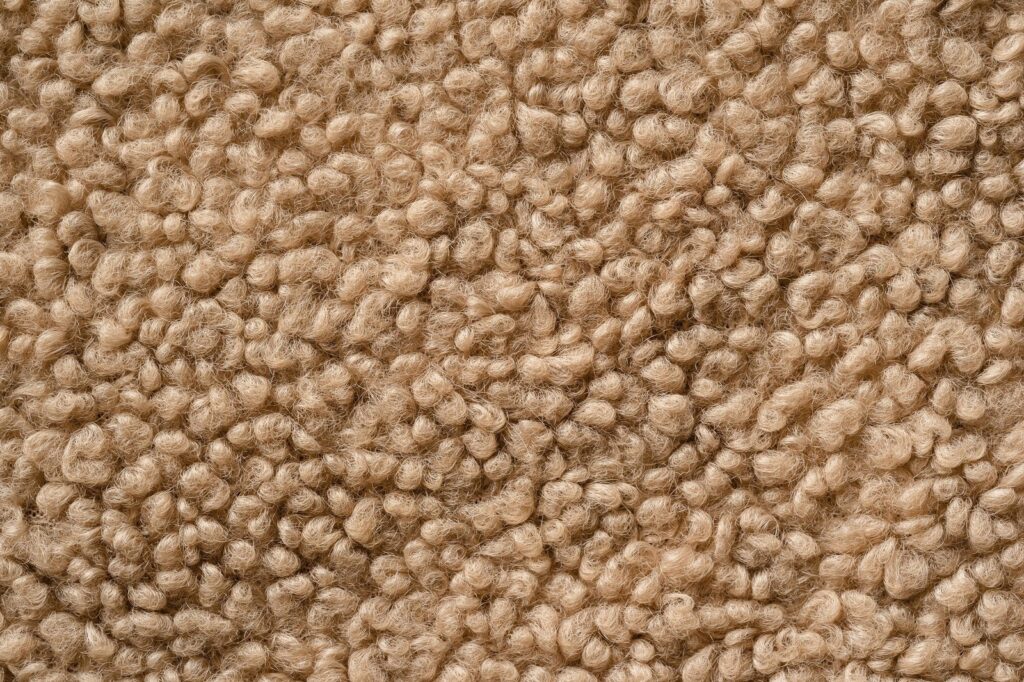
Carpet pile is, structurally, an extraordinarily effective trap for fine particulate matter. A cut or loop pile carpet presents a dense three dimensional fibre structure with far more surface area per square metre of floor than a hard surface offers, and that structure is precisely what makes carpet so good at capturing airborne particles as they settle, house dust, skin cells, pet dander, pollen tracked in on shoes and clothing, and the microscopic faecal particles produced by house dust mites that live within soft furnishings feeding on shed skin cells. All of this fine material settles into the base of the pile, below the level a casual glance or even a fairly thorough vacuum easily reaches, and it accumulates there over weeks and months of normal household life.
For a period, this is a genuine air quality benefit rather than a problem. Research from bodies including the Carpet and Rug Institute has long noted that carpet’s capacity to trap fine particulate can keep material out of the breathing zone compared with a hard floor, where the same particulate, having nowhere to settle and bind, remains more readily airborne and available to be inhaled. Carpet, in this sense, behaves as a filter, and a filter that is regularly and properly cleaned continues functioning as a net benefit to the room’s air quality.
The mechanism changes once the pile’s capacity to hold material begins to approach its practical limit, which happens gradually and without any single dramatic event marking the transition. A carpet that has captured months of fine particulate without a deep extraction clean is no longer simply storing that material passively. It becomes what building scientists and allergists describe, in different language depending on their field, as a reservoir, a store of fine allergenic and irritant material sitting within reach of ordinary foot traffic, ready to be disturbed.
Resuspension. What a footstep actually does
Every footstep across a loaded carpet compresses the pile briefly and then releases it, and that compression and release cycle acts mechanically on the fine material trapped within the fibre structure the same way squeezing a sponge forces water out of it. A portion of the fine particulate held within the pile, disturbed by that compression, becomes briefly airborne again in what indoor air researchers describe as resuspension, particulate matter that had settled out of the air being lifted back into it by mechanical disturbance rather than by any new source entering the room.
This resuspended material sits, for a period after each disturbance, in the breathing zone of anyone standing or walking in that part of the room, roughly the height at which an adult or child actually inhales room air rather than the floor level where the particulate began. A single footstep releases only a small fraction of what the pile holds. A household walking across the same carpeted area repeatedly through an ordinary day, children playing on a lounge room floor, a family walking the same hallway dozens of times, produces a far larger cumulative resuspension event than any single step would suggest, a steady low level release rather than one dramatic one.
House dust mite allergen specifically, the protein found in the faecal particles the mites produce, is one of the most extensively documented indoor allergens linked to asthma and allergic rhinitis symptoms, and the World Health Organization’s guidance on indoor air quality identifies damp affected and heavily soiled soft furnishings as a meaningful contributor to indoor allergen exposure. The Australian Institute of Health and Welfare reports that close to one in nine Australians lives with asthma, one of the highest rates among comparable countries, and household allergen exposure, including from carpet and soft furnishings, sits among the environmental factors clinicians and public health bodies consistently point to as modifiable.
Why this belongs to the psychology of a room, not just its air quality
The reason this mechanism sits under the psychology of space rather than purely under indoor air science is that its effects rarely announce themselves as an air quality complaint. They surface as a subjective, hard to articulate sense that a room is not quite restful, that sleep in it is lighter than it should be, that someone in the household always seems to be a little below their best there without an obvious explanation. Sleep science consistently links overnight respiratory comfort, uninterrupted breathing free of low level congestion or irritation, to sleep quality and next day cognitive function, and a bedroom carpet acting as an allergen reservoir, disturbed by every roll over and every walk to the ensuite overnight, is a plausible and rarely investigated contributor to exactly that kind of subjective heaviness.
A restorative room, in the language increasingly used across environmental psychology, is one where the physical environment reduces rather than adds to a person’s baseline cognitive and physiological load. A carpet quietly releasing allergenic and irritant particulate with every footstep is doing the opposite of that job without anyone in the household necessarily connecting the two. The room looks clean. It is not functioning as a restorative environment, and the gap between how a space looks and how it actually behaves is precisely the kind of hidden variable that shapes wellbeing more than most households realise.
The Crusader deep extraction cycle
The response to a reservoir carpet is not a surface vacuum performed more frequently, useful as regular vacuuming is for slowing the accumulation rate. A standard household vacuum, even used diligently, reaches only the upper portion of a loaded pile and leaves the deeper reservoir largely undisturbed, which is exactly why a carpet can be vacuumed regularly and still be functioning as a significant allergen store. The mechanism that actually addresses the reservoir is hot water extraction performed at a genuine depth, forcing water and an appropriately formulated pre spray down through the full pile height and then extracting it back out under vacuum, physically removing the fine particulate load that a surface vacuum cannot reach rather than simply redistributing it.
Cleaning Crusader schedules this deep extraction cycle based on the household’s actual living pattern rather than a single generic interval. A high traffic family room with children and pets, or a bedroom used nightly by someone with diagnosed asthma or allergic rhinitis, reaches reservoir capacity faster than a rarely used formal sitting room, and the appropriate cleaning frequency should reflect that reality rather than a one size fits all annual schedule. Between full extraction cycles, a household vacuum fitted with a high efficiency particulate air filter, capturing fine particulate rather than exhausting a portion of it straight back into the room through the vacuum’s own exhaust, meaningfully slows reservoir accumulation and reduces resuspension in the days between professional cleans.
Eco chemistry for a household breathing the result
Because this particular problem is fundamentally about what a household breathes, our chemistry choice for deep extraction work carries extra weight here. The Cleaning Crusader bench of plant derived surfactants, unfragranced and biodegradable within twenty eight days under OECD 301, matters specifically in allergen sensitive rooms because a strongly fragranced or harshly formulated cleaning chemical, applied to address one irritant, can introduce a second irritant of its own into a room already under scrutiny for its air quality. An unfragranced, gentle chemistry does the extraction work without adding a new variable to a room a household is trying to make more restorative rather than less.
Long lasting client tips
First. Schedule deep extraction cleaning by actual room use, not a single fixed annual date across the whole home. A child’s bedroom or a family room with pets needs a shorter interval than a guest room used a handful of nights a year.
Second. Fit your household vacuum with a high efficiency particulate air filter rather than a standard bag or filter, and confirm the seal around the filter housing is intact, since a leaking seal allows fine particulate to bypass the filter entirely regardless of its rated efficiency.
Third. If someone in your household has diagnosed asthma or allergic rhinitis, treat their bedroom carpet as a priority room for deep extraction frequency, since overnight exposure in a room used for seven or eight hours a night compounds differently to daytime exposure in a living area.
Fourth. Do not judge a carpet’s allergen load by whether it looks clean. A carpet with no visible soiling, no stains and no odour can still be carrying a substantial fine particulate reservoir, because that reservoir sits below what a visual inspection or a light vacuum can detect.
Fifth. Notice patterns rather than single incidents. A room that consistently correlates with congestion, restlessness or poorer sleep across different people and different nights is worth investigating as a carpet and air quality question before assuming the cause lies elsewhere.
Sixth. Treat pet bedding areas and high traffic pathways as reservoir hotspots requiring closer attention than the rest of a carpeted room, since both concentrate fine particulate deposit and mechanical disturbance well above the room’s average.
The bold position
We will say this plainly. Households consistently judge a carpet’s cleanliness by what they can see, and a carpet with no visible stain or odour is routinely assumed to be in good condition regardless of what has accumulated below the surface of the pile. That assumption misses an entire category of the problem, because the fine allergen reservoir this article describes is, by its nature, invisible until someone specifically measures for it or until a household connects a pattern of subjective symptoms back to the room where they consistently occur.
The consequence is a genuine, if quiet, wellbeing cost carried by households who believe their home is clean because it looks clean, while a carpeted room they spend hours in every day is functioning as a slow, steady source of resuspended allergen with every footstep across it. This is not a dramatic failure requiring alarm. It is an ordinary, gradual process that a properly scheduled deep extraction cycle addresses effectively, provided a household knows to schedule for it rather than waiting for a visible sign that, in this specific case, may never actually appear.
Cleaning Crusader schedules carpet cleaning around what a pile is actually holding, not around whether it looks like it needs attention. A room can look finished and still be doing quiet work against the people living in it. Our job is to reach the reservoir a vacuum cannot, on the schedule the household’s actual life requires, before the room’s air becomes the thing nobody thought to blame.
Restraint matters more than noise.
Cleaning Crusader. Built for impact. Driven by excellence. Guided by purpose.