Mould does not begin as a cleaning problem. It begins as a moisture problem that nobody measured in time. This is the biology of dormancy and germination, and the case for treating water, not spores, as the variable we actually control.
A wall that smelled wrong before it looked wrong
A home in Rivervale calls us in the middle of winter. There is a faint smell in the main bedroom that the owner cannot place. There is no visible mould. There is no visible water anywhere in the room. There is, on close inspection with a moisture meter pressed to the skirting board, a reading well above the timber’s safe equilibrium. The wall has been damp for weeks, from a slow weep behind a shower recess two rooms away. The smell the owner noticed was mould already active inside the wall cavity, invisible, patient, and entirely predictable to anyone who understood what mould actually needs in order to grow.
This is the reframe the industry rarely bothers to make. Mould is not a substance that arrives from nowhere and must be hunted down and destroyed. Mould is a biological outcome that occurs when a spore that was already present, as spores nearly always are, encounters conditions it can use. The spore does not need to be introduced into a home. It needs permission. The permission is water.
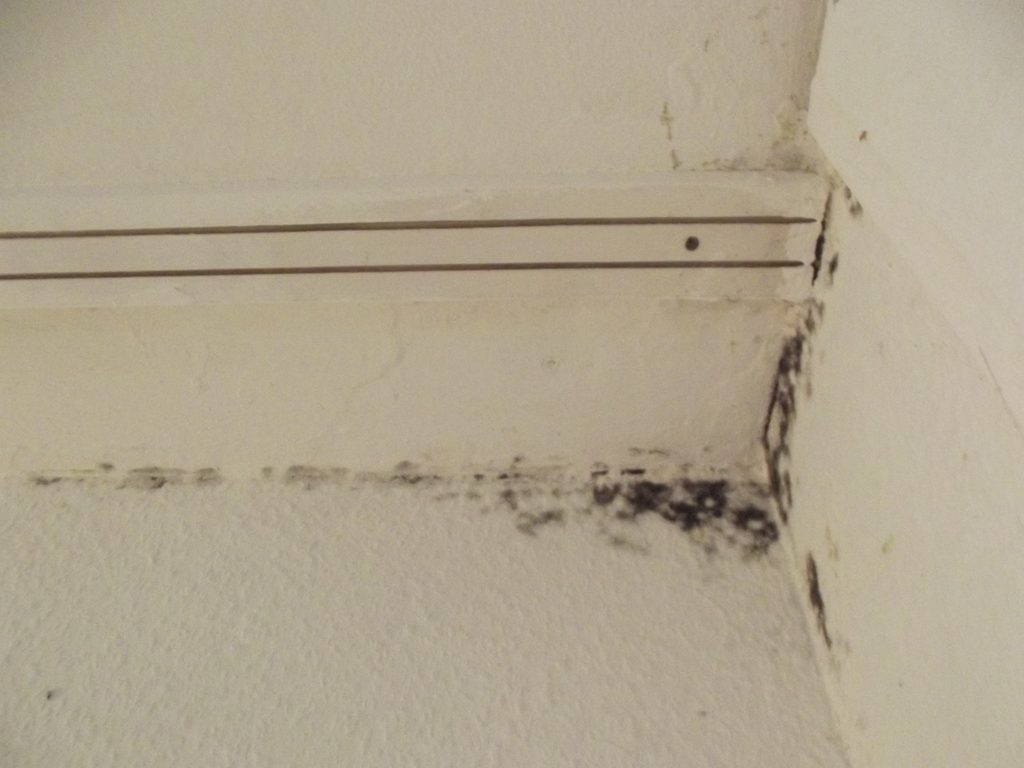
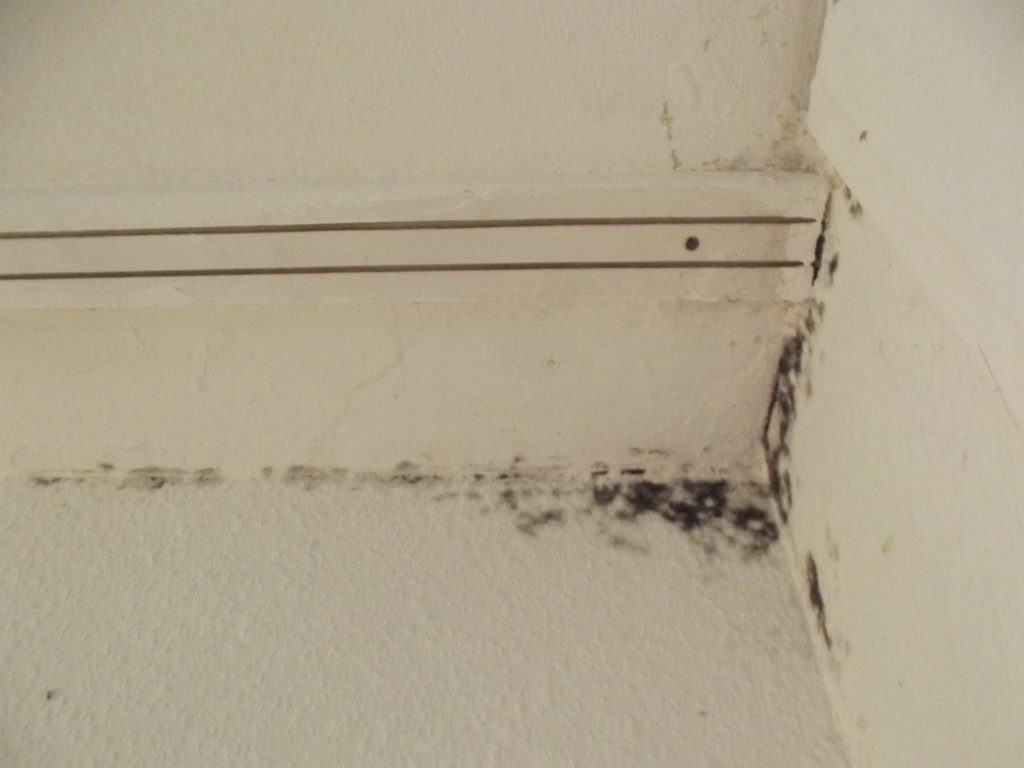
We will say this plainly. Most residential mould conversations in Perth start in the wrong place. They start with the visible patch of grey or black growth on a wall or ceiling, and they treat that patch as the problem to be solved. The patch is the symptom. The problem, in every case we have investigated, is a moisture event that preceded the visible growth by days or weeks, and that in most homes remains uncorrected even after the visible patch is cleaned away. Clean the patch, leave the moisture, and the spore simply waits again.
This article sets out the biology of spore dormancy and germination, anchors the discussion to the World Health Organization’s 2009 guidance on dampness and mould, and makes the case that a mould investigation should begin as a moisture inquiry, not a biological one. The biology only becomes relevant once the moisture question is understood. Get the moisture right and the biology never gets the chance to matter.
What a spore actually is
Fungal spores are reproductive units, far smaller and lighter than the visible colonies that eventually form from them. Ordinary indoor air commonly carries spore counts in the hundreds to low thousands per cubic metre, depending on season, ventilation, and proximity to outdoor sources such as leaf litter, mulch, and garden beds. This is not a defect in a particular home. It is the baseline condition of virtually every home. Outdoor air continuously seeds indoor air through open doors, gaps around external fixtures, ventilation intakes, and simply the movement of people and pets.
The practical consequence of this baseline is one that the cleaning industry, and much of the public, has been slow to accept. You cannot clean the spores out of a home’s air on any lasting basis. You can filter some. You can reduce the load somewhat with good ventilation and careful air handling. You cannot eliminate spores from ordinary indoor air, because the outdoor environment continuously reseeds it. Any remediation approach that promises a spore free home is promising something biology does not allow.
What you can control, entirely and decisively, is whether a spore that lands on a surface finds the conditions it needs to germinate. A dormant spore is metabolically almost inert. It can persist in that dormant state for a long period, waiting. Germination requires three things to align. Available moisture at the surface, a food source, and a permissive temperature range. Perth homes supply the food source constantly, in the form of dust, skin cells, cellulose in paper faced plasterboard, timber, and the organic component of many building adhesives. Perth’s climate supplies a permissive temperature range for most of the year. The only variable genuinely in question, in almost every residential case we investigate, is moisture.
The germination interval
The World Health Organization’s 2009 publication on indoor air quality, addressing dampness and mould specifically, is unambiguous on this point. The guidance treats moisture control as the central preventive strategy, precisely because its authors recognised that spore presence in ordinary air is close to universal and that the exposure risk the document is written to reduce arises from sustained dampness, not from the mere presence of spores. The guidance does not ask building owners to eliminate spores. It asks them to eliminate the conditions spores need.
The germination timeline matters because it defines how much time a moisture event gives you before it becomes a biological event. Under favourable temperature and a genuine food source, germination in common indoor fungal genera can begin within roughly twenty four to forty eight hours of sustained dampness. This is not a fixed law identical across every material and every genus. It is a documented, practically useful range, and it means that a water event responded to promptly, inside that interval, with drying equipment and moisture verification, is a water problem with a low probability of becoming a mould problem. A water event left unaddressed past that interval is no longer only a water problem.
This is why our flood restoration teams and our mould investigation teams share the same instrument, the moisture meter, before either team reaches for anything else. Structural drying that begins inside the germination interval is prevention. Structural drying that begins after the interval has passed is often running alongside an active colonisation that now needs its own containment response under IICRC S520, the industry standard for professional mould remediation.
What building materials offer as food
Not every surface offers the same opportunity to a landed spore. Non porous, sealed surfaces such as glazed tile offer very little cellulose or organic residue for a spore to consume, and a spore landing there, even if damp, typically finds thin pickings. Porous and semi porous materials are a different proposition entirely. Paper faced plasterboard, the paper being essentially compressed cellulose, is an excellent food source. Carpet fibre, carpet backing, and the felt or foam layers beneath upholstery all carry enough organic material, from soiling, dust, and skin cells, to support germination once moisture is present. Timber framing behind a wall cavity, if it stays damp long enough, offers both food and, critically, a hidden location where the moisture event can persist unnoticed for weeks.
This is the reason porosity is such a decisive factor in how we assess a job. A damp tiled shower recess with no grout failure is a comparatively low risk surface. The same recess with degraded, porous grout, sitting against a paper faced plasterboard wall on the other side, is a materially different risk, because the moisture has a pathway to a food source that will hold it far longer than a hard glazed surface ever could.
The Crusader moisture first investigation
When a Cleaning Crusader team is called to a suspected mould situation, the first instrument out of the vehicle is not a chemical treatment. It is a moisture meter, and in more involved cases a thermal imaging camera used to identify temperature differentials consistent with damp material behind a finished surface. The visible mould patch, if one is present, is documented and photographed, but it is treated as evidence of a moisture event, not as the target of the job.
The investigation maps the extent of elevated moisture across the affected area and beyond it, because moisture migrates laterally through porous materials well past the boundary of any visible staining. Readings are taken at the surface and, where safe and appropriate, at deeper points using a penetrating probe. The map that results tells us three things. How far the moisture has actually travelled. What materials it has reached. And, most importantly, where the moisture is coming from, because a remediation that removes visible growth without correcting the source produces a recurrence, typically within the same seasonal cycle.
Only once the moisture map and the source are understood does containment begin, following IICRC S520 principles appropriate to the scale of the job. Containment isolates the work area with physical barriers and negative air pressure where warranted, so that disturbing affected material does not distribute spores into the rest of the home. Affected porous material that cannot be reliably cleaned is removed. Non porous and semi porous material that can be cleaned is treated. Drying equipment is deployed and moisture readings are tracked to a documented dry standard before the area is closed out. The job is not complete when the visible patch disappears. It is complete when the moisture reading confirms the material is dry and the source has been corrected.
Eco chemistry for a moisture led job
Our chemistry bench for mould affected surfaces is built around the same principles we apply across every service line. Plant derived surfactants, biodegradable within twenty eight days under OECD 301, unfragranced, with no quaternary ammonium compounds used in routine cleaning. Where genuine biological contamination requires a sanitising step, our bench uses a hydrogen peroxide based sanitiser rather than a chlorine based product. Hydrogen peroxide breaks down into water and oxygen after use, leaves no persistent residue on the treated surface, and does not carry the respiratory irritation risk that chlorine fumes present in a contained work area where operators are already wearing respiratory protection.
The chemistry does one job in this process. It addresses the biological residue on a surface once the moisture question has already been answered. Chemistry sprayed onto a surface that remains damp is a temporary cosmetic fix. The spore population is knocked back, the surface looks clean, and within the same germination interval described above, the same conditions produce the same outcome. This is why we will not quote a mould job as a simple spray and wipe service without first confirming, with an instrument, that the moisture source has been identified and can be corrected.
Long lasting client tips
First. Buy a simple moisture meter and use it after any spill, leak, or appliance failure near a wall or floor. A twenty four to forty eight hour delay in noticing sustained dampness is the exact interval in which a water event can become a mould event.
Second. Run extraction fans in bathrooms during and for a period after any activity that generates humidity, particularly through the cooler Perth months when doors and external fixtures stay closed for longer.
Third. Inspect grout and sealant around wet areas twice a year. Grout that has lost its seal is a pathway for moisture into the cavity behind it, and the pathway is invisible until the damage behind it is already established.
Fourth. If you find a musty smell without a visible cause, treat the smell as a moisture signal, not a fragrance problem. Do not mask it. Investigate it, because a smell precedes visible growth more often than it follows it.
Fifth. After any flood or significant water event, insist on documented moisture readings before anyone declares the area dry. A visual assessment that a carpet or wall feels dry to the touch is not the same as an instrument reading confirming the material has returned to a safe equilibrium.
Sixth. If mould recurs in the same location after a clean, treat the recurrence as confirmation the moisture source was never corrected, not as evidence the cleaning failed. Call for an investigation of the source, not a repeat of the same surface treatment.
The bold position
The Perth mould remediation market has a persistent failure mode, and we will name it plainly. A great deal of mould work performed in this city is a spray, a wipe, and an invoice, with no moisture instrument used at any point in the job. The visible patch disappears. The customer is satisfied for a season. The underlying moisture source, uninvestigated and uncorrected, produces the same patch again the following winter, and the customer pays for the same surface treatment a second time, believing the first job simply did not last.
It lasted exactly as long as the untreated moisture source allowed it to last. This is not a mystery. It is basic biology, documented in the same World Health Organization guidance that has been available since 2009. Moisture is the variable. Spores are not the variable, because spores cannot be removed from ordinary air on any lasting basis and never could be.
Cleaning Crusader treats every mould call as a moisture investigation first. We arrive with instruments before we arrive with chemistry. We map the moisture before we touch the visible growth. We correct or clearly identify the source before we close out the job, and where the source sits outside the scope of a cleaning company, in plumbing or building fabric, we tell the customer plainly rather than treating a symptom we know will return. The spore waits patiently for water. Our discipline is to make sure it never gets the chance.
We do not partner. We forge. We do not run programs. We run standards.
Cleaning Crusader. Built for impact. Driven by excellence. Guided by purpose.