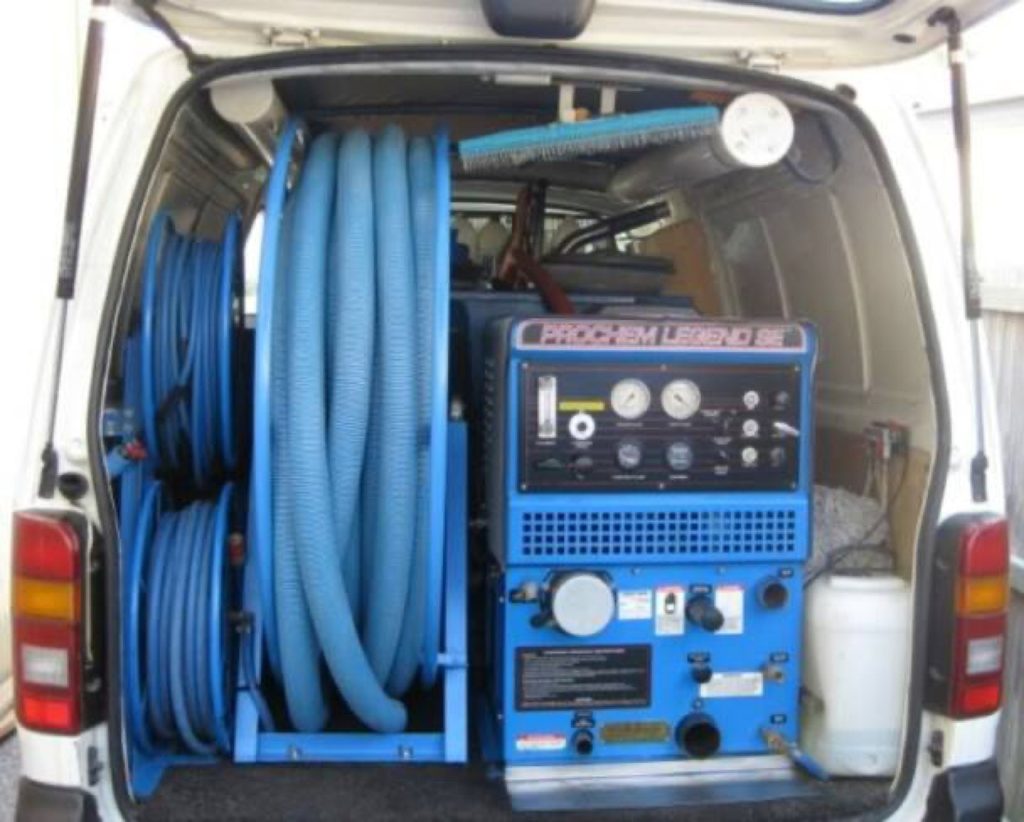
Every carpet job starts with a decision, encapsulation or hot water extraction, and that decision is made against a fixed set of criteria before a single tool is switched on, not by habit and not by which machine happens to be in the van that day.
A decision, not a default
Ask most cleaning operators why they used a particular method on a particular carpet and the honest answer, more often than the trade would like to admit, is that it is the method they always use. The van carries one machine. The technician was trained on one process. The client receives whatever method the operator happens to default to, regardless of whether the fibre, the soil load, or the drying constraints of the property actually suit it. This is not a chemistry failure or an equipment failure. It is a systems failure, and it is the specific failure this article is written against.
Cleaning Crusader treats the choice between low moisture encapsulation and hot water extraction as a decision, made fresh on every job against a defined set of criteria, aligned to the framework the IICRC S100 carpet cleaning standard sets out for method selection. The decision is not a preference. It is an output of specific, checkable inputs, fibre type, soil load, and drying time constraint, assessed in that order before a technician opens a kit bag. This article walks through that decision tree, and then through the quality assurance scoring process that checks the finished result against the standard the job was meant to meet.
Input one, fibre type
The first branch in the decision tree is the carpet fibre itself, because different fibres respond to moisture and heat in materially different ways. Nylon, the most common fibre in mid to premium Australian residential carpet, tolerates both hot water extraction and encapsulation well, since it is a resilient synthetic that resists water staining and dries predictably. Polyester, increasingly common at the budget end of the market, tolerates hot water extraction but retains oil based soils more stubbornly, which shifts the pre treatment chemistry regardless of which method is ultimately selected. Wool and wool blend carpet, common in premium and older Perth homes, requires a materially more conservative approach to both moisture volume and water temperature, since wool fibre can felt, shrink, or lose colour fastness under aggressive heat and extended wet dwell time, which pushes the decision toward encapsulation or a carefully moderated extraction more often than toward an aggressive hot water pass.
A technician who has not correctly identified the fibre before selecting a method is making every subsequent decision on an unverified assumption. Fibre identification is therefore the first checkable item in the Crusader system, confirmed by a simple burn test or manufacturer documentation where available, and recorded on the job file before any chemistry is opened.
Input two, soil load
The second branch is the soil load actually present in the fibre, which is a materially different question from how the carpet looks. A carpet with a light, evenly distributed soil load, typical of a well maintained home on a regular extraction schedule, often does not need the deeper intervention that hot water extraction provides and can be adequately serviced by low moisture encapsulation, which uses a polymer based cleaning agent that crystallises around suspended soil particles as it dries, allowing them to be vacuumed away rather than rinsed out with water.
A carpet with a heavy, embedded soil load, the kind this series has previously described as accumulating a wear accelerating abrasive grit reservoir at the base of the pile, requires the deeper reach of hot water extraction, since encapsulation’s lighter moisture volume and shorter dwell time are not designed to flush particulate from the base of the pile the way pressurised hot water extraction is. Selecting encapsulation for a heavily soiled carpet produces a surface improvement without addressing the deeper reservoir, exactly the surface versus volume failure this series has described in the context of grout. The soil load assessment, performed by visual inspection and a simple fibre parting check at several points across the carpet, determines which method actually matches the job in front of the technician, rather than which method is faster to deploy.
Input three, drying time constraint
The third branch is the drying time available, which is often the deciding factor in a commercial timetable or a household with limited tolerance for an extended wet period. Hot water extraction, properly performed, typically leaves a carpet requiring six to twelve hours to dry fully depending on ventilation, humidity, and the volume of water used, though a skilled technician using appropriate extraction equipment can manage this toward the shorter end of that range. Low moisture encapsulation, by contrast, typically leaves a carpet dry to the touch within one to two hours, since the moisture volume introduced is a fraction of what hot water extraction requires.
Where a fast return to normal use is required, and where the fibre type and soil load assessment do not rule it out, encapsulation is the correct method on drying time grounds alone, even where hot water extraction would otherwise have been the preferred choice on soil load grounds. This is a genuine trade off, not a compromise, and naming it plainly to the client as part of the pre job conversation is part of the Crusader method. Where the soil load is heavy enough that encapsulation alone will not adequately address it and drying time is genuinely constrained, the honest position is to say so and to plan a hot water extraction for a time when the property can tolerate the longer drying period, rather than delivering an inadequate method simply because it fits the calendar.
How the three inputs combine
In practice, the decision tree resolves as follows. A nylon or polyester carpet with a light soil load and no drying time constraint can be serviced by either method, and encapsulation is often selected for efficiency. A nylon or polyester carpet with a heavy soil load, regardless of drying time preference, is directed toward hot water extraction, because the soil load assessment overrides the convenience of a faster drying method. A wool or wool blend carpet, regardless of soil load, is directed toward a more conservative approach, frequently encapsulation or a moderated low moisture extraction, because the fibre tolerance assessment overrides both other factors. Any carpet in a property with a hard drying time constraint, such as a household needing the room usable within hours for a specific reason, is directed toward encapsulation unless the soil load genuinely requires the deeper reach of extraction, in which case the trade off is discussed openly with the client before work begins.
This is what a systemised decision looks like in practice; not a flowchart recited from memory, but three specific, checkable assessments performed in a fixed order, each capable of overriding the next, producing a method selection the technician can explain and defend rather than default to.
The quality assurance scoring process
Selecting the correct method is only half the discipline. The Crusader system requires every completed job to be scored against a defined quality assurance checklist before it is considered closed, which is the second half of what separates a systemised operation from an operator working from habit.
The first scoring element is a visual inspection performed under directional light, typically a handheld lamp held at a low angle across the carpet surface. Raking light at a low angle reveals residual soiling, streaking, or uneven pile lay that is invisible under standard overhead lighting, since the shadow cast by any remaining soil or uneven fibre becomes visible at a grazing angle in a way it is not from directly above. This inspection is performed methodically across the full treated area, not spot checked in a single convenient corner, and any area failing the visual standard is retreated before the job is marked complete.
The second scoring element is a moisture reading taken with a calibrated moisture meter before any furniture is returned to the treated area. Furniture legs placed onto carpet that has not yet returned to an acceptable moisture range risk transferring residual moisture into the furniture itself, risk leaving indentation marks that set into a still damp pile, and in cases of genuinely excessive residual moisture, risk creating a localised condition suitable for microbial growth beneath the furniture footprint. The moisture reading is taken at several points across the treated area, not only at the centre, since drying rate varies with airflow and proximity to walls or furniture that was not moved.
The third scoring element is a pH check of the rinsed fibre, performed with a simple pH testing strip pressed against a damp section of carpet. Carpet cleaning chemistry, whether the pre treatment or the rinse agent, should leave the fibre close to a neutral pH once the process is complete. A fibre testing outside the neutral range, whether too alkaline from an under rinsed alkaline pre treatment or too acidic from an over concentrated rinse agent, indicates a chemistry residue remains in the fibre, which will accelerate future resoiling and can, over repeated occurrences, affect fibre integrity and colour stability. A failed pH check triggers an additional rinse pass before the job is closed.
Every job is recorded against these three scoring elements on the job file, creating a documented record that the method selected was appropriate and that the finished result met the defined standard, rather than relying on the technician’s memory of how the job felt on the day.
Eco chemistry across both methods
Both encapsulation and hot water extraction on the Crusader system draw from the same chemistry bench, plant derived surfactants, biodegradable within twenty eight days under OECD 301 testing, unfragranced, and free of quaternary ammonium compounds in routine use. This matters specifically for the pH scoring element described above, since a plant derived surfactant formulated to rinse to a neutral pH is significantly easier to bring back into range during the quality assurance check than a harsher alkaline degreaser common in lower cost commercial chemistry. Where biological contamination requires it, a hydrogen peroxide based treatment is used within either method, selected to match the fibre tolerance already established in the initial fibre type assessment.
Long lasting client tips
First. Ask which method will be used on your carpet and why, before the appointment. A technician who can explain the fibre, soil, and drying reasoning behind the choice is working from a system. A technician who cannot is working from habit.
Second. Mention any drying time constraint clearly at the time of booking, such as needing a room usable the same evening. This is a genuine input into the method selection and naming it early allows the correct method to be planned rather than adjusted awkwardly on the day.
Third. Ask to see the moisture reading taken before furniture is returned to the treated area. A technician working to a genuine quality assurance standard will have the reading available and will be glad to share it.
Fourth. Request that furniture not be returned to a treated area until you have confirmation the carpet has reached an acceptable dryness. Rushing furniture back onto a still damp carpet is one of the most common causes of preventable indentation and localised moisture problems.
Fifth. Have your carpet’s fibre type on hand if you know it, particularly if it is wool or a wool blend, since this materially changes the appropriate method and chemistry and speeds up the technician’s initial assessment.
Sixth. Keep a simple record of which method was used and when across successive cleans. A carpet’s soil load and appropriate method can shift over years as traffic patterns change, and a documented history helps each future technician make a more informed decision rather than starting from nothing.
The bold position
The carpet cleaning industry, broadly, sells one method per operator rather than the method the job actually requires. Some operators own only extraction equipment and extract every carpet regardless of fibre tolerance or drying constraint. Others have adopted encapsulation as a faster, lower cost delivery model and apply it regardless of soil load, leaving heavily soiled carpets under serviced while calling the job complete. Neither failure mode is due to bad intentions. Both are due to the absence of a system that forces the method to follow the job rather than the other way around.
We will say this plainly. A cleaning company that owns one machine and one process is not offering a service tailored to your carpet. It is offering its own operational convenience and hoping the fit is close enough. The client rarely has the information to notice the mismatch until the wool rug has been over wet, or the heavily soiled hallway still looks tired within a fortnight of a light encapsulation pass.
Cleaning Crusader operates both methods, trains every technician in the decision tree that selects between them, and scores every finished job against a documented standard before it is closed. This is more systems overhead than a single method operation carries. It is also the only structure under which the method actually matches the carpet in front of the technician, every time, rather than most of the time. We engineer the process so the outcome does not depend on which van happened to arrive.
We engineer the benchmark. We do not follow.
Cleaning Crusader. Built for impact. Driven by excellence. Guided by purpose.