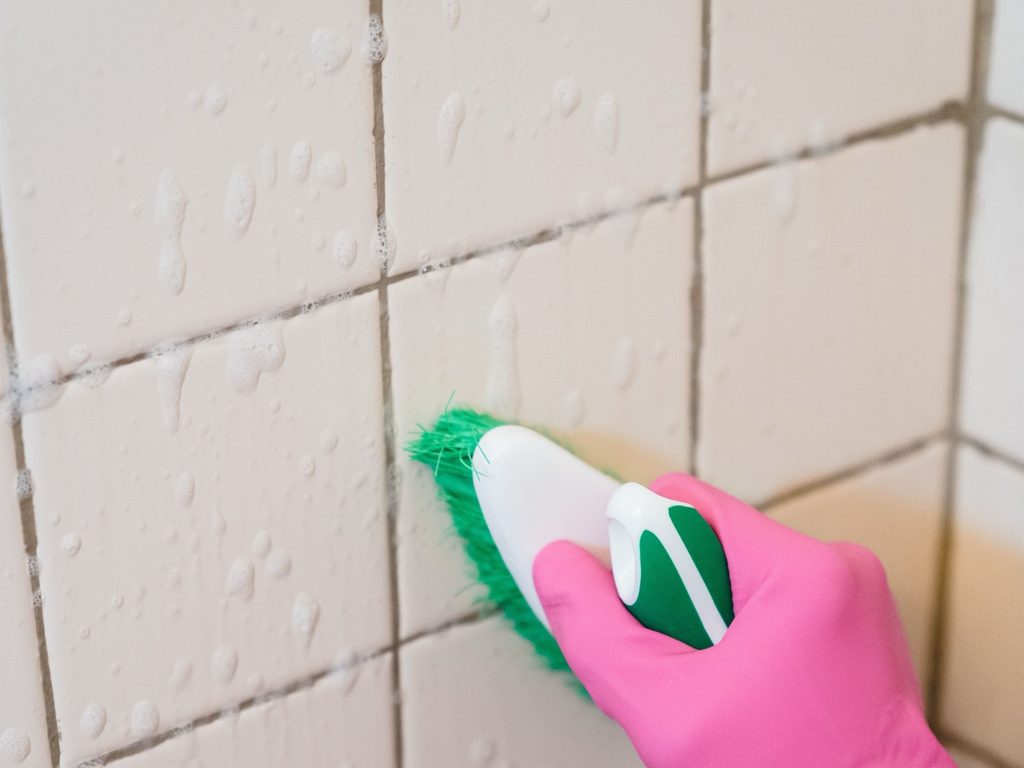
Vinegar is not a neutral cleaner. It is a mild acid, and cement based grout is exactly the kind of surface a mild acid slowly destroys. Here is the pH neutral routine that protects grout and sealer between professional visits instead.
The bottle everyone trusts and shouldn’t
Ask ten homeowners what they use to clean their grout and a good number will say vinegar and water, sometimes with a paste of bicarbonate of soda added for the tough spots. It is cheap, it is already in the pantry, and it carries a reputation as the gentle, natural alternative to harsh chemical cleaners. That reputation is doing real, measurable damage to tiled surfaces across Perth, one wipe down at a time, and almost nobody doing it realises it.
The problem is not that vinegar fails to clean. It cleans reasonably well in the short term, which is exactly why the habit persists. The problem is what it is actually made of and what that substance does to cement based grout over repeated exposure. This is not a hygiene issue or a cosmetic one. It is straightforward materials chemistry, and once a homeowner understands it, the case for a different routine becomes obvious rather than an imposed rule to follow on faith.
This article gives Perth homeowners the routine we would want our own families using between our professional resealing and deep cleaning visits. It is pH neutral, it is cheap, it takes a few minutes a week, and it protects both the grout and the sealer sitting on top of it, which most household cleaning habits actively work against without anyone intending harm.
What grout actually is
Standard sanded and unsanded grout used in the great majority of Perth tiled surfaces is a cement based material, a blend of Portland cement, fine sand or polymer additives, and water, cured into a porous solid that fills the joint between tiles. Cement chemistry is fundamentally alkaline. Freshly cured cement paste sits at a pH close to twelve or thirteen, and even well aged, fully cured grout remains distinctly alkaline, typically in a range from around nine to eleven, well above the neutral point of seven.
This matters because cement based materials are chemically stable within an alkaline to neutral range and become progressively unstable as the surface is repeatedly exposed to acid. Grout has a documented void fraction, meaning a proportion of its total volume that is open pore space rather than solid material, commonly cited in the fifteen to twenty five percent range for standard sanded grout. That pore structure is what makes grout absorbent, and it is also what makes it vulnerable, because every acidic exposure reaches deep into that pore network rather than sitting only on the surface.
Why an acid attacks a cement surface
Vinegar is a solution of acetic acid, typically around five percent concentration, sitting at a pH of roughly two to three depending on strength. When an acidic solution contacts cured cement, it reacts with the calcium compounds that give the cement its strength, principally calcium hydroxide and calcium silicate hydrate, dissolving a thin layer of the material with every exposure. A single wipe with vinegar does negligible visible damage. The damage is cumulative, and it is the cumulative case that matters, because a homeowner using vinegar weekly for two or three years is running hundreds of small acid exposures across the same joint, each one dissolving a microscopic layer of the surface, each one invisible on its own, all of them adding up to a grout line that has visibly softened, lightened in colour, and begun to crumble at the surface years before it should.
The same acidic exposure attacks any acid sensitive natural stone in the tiled surface as well. Marble, travertine, and limestone are all calcium carbonate based and etch on contact with any acid, including vinegar, lemon juice, and many supermarket bathroom sprays that list citric acid as an active ingredient. A single vinegar wipe on a travertine floor produces a visible dull patch within the pH reaction time of a few minutes. This is a distinct problem from the grout issue but shares the same root cause, an acidic product applied to an alkaline sensitive, calcium based material.
Why the other supermarket habit fails just as badly
The opposite mistake is just as common and just as damaging, though it damages a different part of the system. Many general purpose supermarket degreasers and bathroom sprays sit at the high alkaline end of the scale, in some cases above pH eleven, formulated to cut through soap scum and grease efficiently. Applied directly to grout, a high alkaline product is less immediately destructive to the cement itself, since cement tolerates alkalinity reasonably well. The damage instead falls on the sealer.
Penetrating grout sealers, whether silicone based or fluoropolymer based, are formulated to resist a defined pH range, and repeated exposure to strongly alkaline cleaners breaks down that polymer film faster than normal wear would, stripping the sealer’s protective capacity years ahead of schedule while leaving no obvious visual sign that it has happened. The homeowner does not see sealer failure directly. They see a grout line that suddenly starts staining and darkening faster than it used to, months or years after the sealer was applied, without connecting the change to the degreaser they have been using in the meantime. The sealer failed quietly, and the grout underneath it is now exposed exactly as if it had never been sealed at all.
Sanded, unsanded, and why the joint width matters
Not every grout line behaves identically, and the routine above assumes a standard cement based grout, which covers most Perth homes but not all of them. Sanded grout, used for joints wider than about four millimetres, contains fine sand aggregate that adds mechanical strength across a wider gap. Unsanded grout, used for narrower joints and most wall tile installations, lacks that aggregate and is slightly more prone to surface abrasion from a stiff brush, which is one more reason a soft bristle brush is the correct tool rather than anything marketed as heavy duty.
Epoxy grout, increasingly common in newer installations, behaves differently again. It is a polymer based material rather than a cement based one, considerably more resistant to both acid and alkaline exposure than standard grout, and does not require sealing at all because the epoxy itself is non porous. A household with epoxy grout has more chemical tolerance than one with standard cement grout, though the pH neutral routine remains the safest default because it does no harm to either material and removes the need to identify which type is installed before every clean.
The routine that actually protects both surfaces
The correct maintenance routine sits deliberately in the middle of the pH scale, close to neutral, because that is the range both cement based grout and polymer sealers tolerate indefinitely without degradation. This is not a compromise between two extremes. It is the chemically correct answer.
Weekly wipe down. A pH neutral tile and grout cleaner, diluted according to the label, applied with a soft bristle brush or a microfibre cloth, focused on grout lines and any visibly soiled tile surface. Agitate gently along the joint rather than scrubbing hard across it, since the grout surface, while durable, is softer than the glazed tile surrounding it and takes scratches more readily under aggressive mechanical action.
Rinse and dry. Wipe the treated area with a clean, damp cloth to remove any product residue, then dry with a separate cloth. Leaving cleaning product residue to dry on the surface leaves a film that attracts soil faster than a properly rinsed surface, which is one of the most common reasons a grout line looks dirty again within days of cleaning it.
Monthly deeper attention. For grout lines carrying more visible soil, particularly in showers and around cooktops, a slightly longer dwell time with the same pH neutral product, three to five minutes before agitation, lifts embedded soil without needing a stronger chemistry. A soft nylon brush designed for grout lines reaches into the joint more effectively than a general purpose cloth.
Sealer check. Twice a year, run a simple water test on a small area of grout. Place a few drops of plain water on the grout line and watch whether it beads on the surface or absorbs within a minute or two. Beading indicates the sealer is still performing. Absorption indicates the sealer has degraded and a professional resealing visit is due sooner rather than later.
Choosing the right tools for the job
The chemistry matters most, but the tools applying it either support or undermine it. A soft nylon grout brush, sold specifically for this purpose, is worth the small cost over a general purpose scrub brush, since its bristle stiffness is calibrated to lift soil from the joint without abrading the grout surface itself. A microfibre cloth outperforms a cotton cloth or a sponge for the wipe down and rinse stages, lifting more soil per pass and leaving less lint and residue behind.
Spray bottles matter more than homeowners expect. A cleaning product diluted correctly and applied as a controlled mist covers the grout line evenly without oversaturating the surrounding tile or flooding the joint with more liquid than it can absorb and later release. A product poured directly from a bottle or applied with a heavily soaked cloth tends to pool in low points along the joint, extending contact time well beyond what the routine calls for and increasing the chance of any product, even a pH neutral one, sitting on the surface longer than intended before it is rinsed away.
The chemistry bench
Our pH neutral tile and grout maintenance product is a plant derived surfactant blend, unfragranced, biodegradable within twenty eight days under OECD 301 testing, formulated specifically within the range that protects both cement based grout and the polymer sealers commonly used across Perth homes. There are no quaternary ammonium compounds in this routine formula, since the cleaning task here is soil and soap scum removal, not microbial control, and the surfactant chemistry alone handles that task effectively without the added compound.
This same chemistry underpins our professional deep cleaning and resealing visits, which means the homeowner routine and the professional service are chemically compatible rather than working against each other. A household using a harsh acidic or highly alkaline product between professional visits is quietly undoing part of what the professional service achieved. A household using the routine described here extends the effective life of every professional visit instead of eroding it.
Long lasting client tips
First. Replace vinegar and bicarbonate of soda paste with a pH neutral tile and grout product for all routine cleaning. Keep the vinegar in the kitchen for cooking, not the bathroom for cleaning. Second. Check any supermarket product’s label for a stated pH or the word neutral before using it on grout or natural stone. If the label does not state it, treat the product as unsuitable for grout and stone surfaces. Third. Use a soft bristle brush rather than a stiff wire or abrasive scourer on grout lines, since mechanical abrasion adds to chemical damage rather than replacing it. Fourth. Run the simple water bead test on your grout twice a year to catch sealer failure early, before staining sets in rather than after. Fifth. Address any acidic spill, wine, citrus juice, or a vinegar based cooking splash, on tiled surfaces immediately with a plain water rinse, rather than leaving it to dry in place. Sixth. Book a professional deep clean and resealing visit on a schedule appropriate to the traffic the surface carries, typically every twelve to eighteen months for a shower or kitchen, longer for lower traffic areas, rather than waiting until staining is visible to call.
The bold position
The naturalist cleaning advice culture that has grown across the internet over the past decade has done real damage to tiled surfaces in homes that were never told any different. Vinegar is marketed as gentle because it is not a synthetic chemical, and that framing has nothing to do with whether it is chemically compatible with the surface it is being used on. A mild acid is still an acid, and cement is still alkaline sensitive, regardless of which aisle the product came from.
We give this routine away freely because the honest answer for most Perth households is that the professional visit and the homeowner routine are two halves of the same maintenance system, and a homeowner who protects the surface properly between visits needs less intervention at each professional visit, not more. That is a genuinely different incentive to the one much of the industry runs on, where a damaged surface generates a bigger job later. We would rather the surface never need the bigger job. The small, correct habit, repeated weekly, is worth more to the tile and grout than any single deep clean, professional or otherwise.
Silent strategy. Visible legacy.
Cleaning Crusader. Built for impact. Driven by excellence. Guided by purpose.