The mould a homeowner can see is rarely what keeps them awake. What keeps them awake is the mould they cannot see, and the not knowing is a heavier weight than almost any measured result turns out to justify.
A smell, a shadow, and a mind that fills in the rest
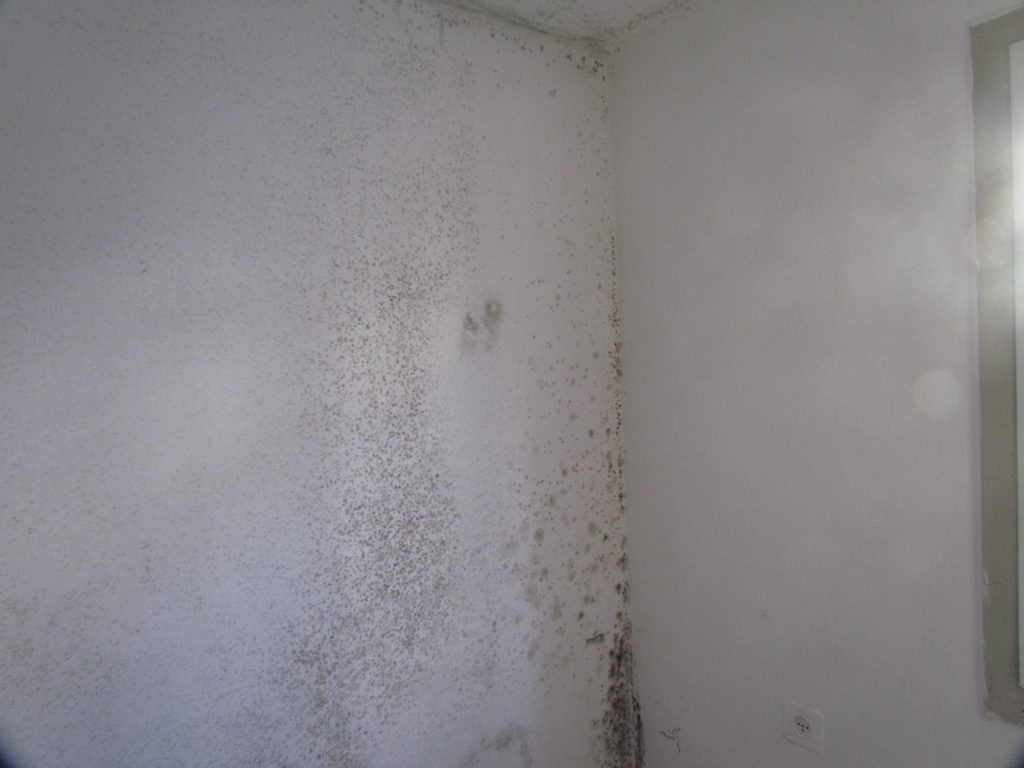
A client calls about a faint musty smell near a bedroom wall. There is no visible mould. There is no obvious water source. There is only a smell, noticed most strongly at night, and a growing sense that something is happening behind the plaster that cannot be seen or measured without help. By the time a Crusader technician arrives, the client has often already imagined the worst version of the problem, an entire wall cavity thick with growth, a health risk to their children they cannot quantify, a remediation bill they cannot estimate, and a house they no longer feel is theirs to the extent they thought.
This is the psychological territory this article is written for. Suspected mould behaves differently in the mind than almost any other household maintenance concern, because it combines three specific uncertainties at once, not knowing the extent of the problem, not knowing what it means for health, and not knowing what it will cost to resolve. Each uncertainty on its own is manageable. Combined, and left unmeasured, they produce a level of anxiety that frequently exceeds what the eventual, instrumented finding actually warrants.
The case this article makes is not that mould concern is irrational. Mould is a genuine indoor environmental health issue, and the World Health Organization’s 2009 Dampness and Mould guidance is explicit that there is sufficient evidence linking damp and mouldy indoor environments to respiratory symptoms, asthma exacerbation, and other health outcomes to warrant taking the issue seriously wherever it is found. The case is that the anxiety a household experiences before a proper investigation is disproportionate to almost any specific finding, because anxiety fed by uncertainty grows to fill the space uncertainty provides, and that a documented, instrumented investigation is itself a psychological intervention, not only a technical one.
Why uncertainty produces more distress than the problem itself
There is a well established pattern in how people respond to ambiguous threats compared with defined ones. A defined problem, however serious, has edges. It can be measured, described, costed, and scheduled for resolution. An ambiguous problem has no edges. The mind, in the absence of measurement, tends to imagine the largest plausible version of the threat rather than the most likely one, because the cost of underestimating a health risk feels higher than the cost of overestimating it, so the imagination defaults upward.
This is precisely what happens with suspected mould behind a wall, under flooring, or above a ceiling. The homeowner cannot see the extent, so the mind supplies an extent, usually a worse one than an instrumented investigation is likely to confirm. The homeowner cannot assess the health implications with any precision, so the mind supplies an implication, often more severe than the WHO guidance actually establishes for a typical, contained residential occurrence. The homeowner cannot estimate the cost, so the mind supplies a cost, frequently anchored to the worst remediation story they have heard from a friend or read online rather than to what a typical contained job actually requires.
None of this is a character flaw in the homeowner. It is a predictable response to an information vacuum, and it explains why clients calling about suspected mould are often more distressed on the phone than clients calling about a visible, extensive, but already understood problem such as storm damaged flooring. The visible problem has already supplied its own edges. The suspected, hidden problem has not, and the household is left to generate those edges themselves under stress, which they generally do badly.
What an instrumented investigation actually measures
The Crusader mould investigation protocol exists to replace the household’s imagined edges with measured ones as quickly and as clearly as possible. The first instrument is a moisture meter, used to map the affected area systematically rather than to confirm a single suspected point. Moisture readings are taken at a grid of points across and beyond the suspected area, on the wall surface where accessible, and where appropriate, using a non invasive or minimally invasive method to assess conditions immediately behind a wall lining. This produces a moisture map, a concrete, visual representation of exactly where elevated moisture exists and, just as importantly, exactly where it does not, which is often the single most anxiety reducing piece of information a client receives in the entire process, because it replaces a formless fear of an entire wall cavity with a specific, bounded area on a diagram.
The second instrument is a visual and surface inspection, extended wherever safely possible beyond the immediately visible area, using a borescope or a small access point to assess conditions inside a cavity without full demolition. Where visible growth is present, its extent is photographed and measured, not estimated. Where surface sampling is warranted to characterise the type or extent of biological growth present, it is taken according to a defined protocol rather than a visual guess, and the result is reported back to the client as a specific finding rather than a general reassurance.
The combination of the moisture map and the visual and sampling assessment produces something the household did not have before the technician arrived, a defined problem with edges. Not always a small problem. Sometimes the instrumented finding confirms an extent larger than initially visible. But even a larger than expected finding is psychologically easier to carry than an undefined one, because it can now be scoped, costed, and scheduled, and a defined process for resolution replaces an open ended fear with a project plan.
Consider a specific, common case. A client fears an entire rear wall of a living room is compromised. A moisture map might show elevated readings across a strip roughly one metre wide near a single external corner, tracing back to a failed seal above a nearby external doorway, with every other section of that same wall reading within a normal, healthy range. The client who feared the whole wall was affected now has a specific section identified, a specific likely cause, and the remaining majority of the wall confirmed unaffected by an actual reading rather than a guess. This is not a reassurance offered to calm the client down. It is the measured finding itself, and it happens to also be the most effective reassurance available, because it can be shown rather than simply asserted.
The IICRC S520 framework as psychological structure, not only technical structure
The IICRC S520 mould remediation standard sets out a structured sequence, assessment, containment planning, remediation, and post remediation verification, that exists primarily to ensure technical thoroughness and to prevent cross contamination during the work itself. It has a secondary function that is less often discussed and equally important. The structure itself is reassuring to a household in a way that an unstructured, ad hoc response is not.
A client told that their home will proceed through a defined containment plan, a specific remediation scope tied to the instrumented findings, and a post work verification step that confirms the work has actually resolved the condition, is a client who can see the shape of what happens next. This matters because one of the most persistent sources of ongoing anxiety in a mould case is not knowing whether the problem has actually been resolved once work is complete. A defined post remediation verification step, typically a further moisture check and, where appropriate, a further surface assessment once remediation work is finished, closes that loop explicitly rather than leaving the household to simply hope the smell does not return.
Delivering the finding, not just the fix
How an instrumented finding is communicated back to a client matters almost as much as the finding itself. A Crusader technician walks the client through the moisture map directly, showing them where elevated readings were found and where they were not, in plain language rather than technical shorthand. Where visible growth was documented, the photographs are shown, with a clear explanation of scale, since an extreme close up photograph of a small area of growth can look far more alarming than the actual physical extent it represents, and clarifying scale explicitly prevents the imagination from once again filling in a worse picture than the measured one.
Where health implications are discussed, the conversation stays grounded in what the WHO 2009 guidance and the broader indoor environmental health literature actually establish, that damp and mouldy conditions are associated with an increased risk of respiratory symptoms and asthma related outcomes at a population level, rather than asserting a specific individual health outcome that the evidence does not support for a specific, contained residential finding. This distinction, between a documented population level association and a certain individual outcome, is one a household rarely hears clearly, and hearing it stated honestly and without either alarm or dismissal is itself part of the psychological relief the service provides.
Eco chemistry in mould remediation
Our mould remediation chemistry bench uses plant derived surfactants for general surface preparation, biodegradable within twenty eight days under OECD 301 testing, unfragranced, which matters specifically in a mould affected environment where a household member may already be experiencing respiratory sensitivity and does not need an additional fragrance load introduced during remediation. We do not use quaternary ammonium compounds in routine surface cleaning during remediation. Where active fungal contamination requires a biocidal treatment, our chemistry bench uses a hydrogen peroxide based formulation, which is effective against the biological contamination present and decomposes to water and oxygen, avoiding the persistent chemical residue and the sharp chemical odour that a chlorine based alternative would leave in a home the household is trying to make feel safe again, not just clean.
Long lasting client tips
First. Note when a musty smell is worse, such as after rain or when air conditioning has run for extended periods, and mention this timing detail when booking an assessment, since it often points a technician directly toward the moisture source rather than requiring a broader search.
Second. Resist the urge to open up a wall or ceiling lining yourself before an assessment. Uncontrolled disturbance of a suspected mould affected area can release spores into the living space that a properly contained investigation is specifically designed to avoid.
Third. Photograph any visible discolouration or staining as soon as you notice it, including a common object nearby for scale, so a technician has a reference point for how the area has changed by the time of the appointment.
Fourth. Address the moisture source, not only the visible mould. A patch of mould that is cleaned without correcting the leak, condensation point, or ventilation failure that caused it will return, and the investigation should always identify and address the source alongside the growth itself.
Fifth. Ask for the moisture map and the photographic record at the end of the investigation, not only a verbal summary. Having the actual document to refer back to reduces the tendency to re imagine a worse version of the finding in the days that follow.
Sixth. Improve ventilation in any area with a history of elevated humidity, particularly bathrooms and any room with limited airflow, as an ongoing preventative measure once the immediate concern has been resolved, since sustained humidity control is what keeps a defined, resolved problem from quietly becoming an undefined one again.
The bold position
Much of the mould remediation industry sells a service built around fear rather than measurement, a quick visual glance, a broad and often vague warning about health risk, and a scope of work that is priced to the client’s anxiety rather than to any instrumented finding. This approach is effective at closing a sale in the moment. It leaves the household no better informed than they were on the phone, and often more frightened, having now paid for a service that never actually told them what was really there.
We will say this plainly. A homeowner’s fear about mould is almost never irrational on its own terms. It is under informed, because most of the industry has no interest in reducing that uncertainty when the uncertainty itself is what closes the sale. The result is a trade that profits from the fear it should instead be resolving.
Cleaning Crusader measures before it prices, maps before it contains, and verifies after it remediates, because the instrumented finding is the actual product the household is paying for, not simply the physical work that follows it. A defined problem, however large, is a problem a family can live alongside while it is resolved. An undefined one is not. The psychological relief that arrives with a moisture map and a clear photograph is not a side effect of the service. It is a substantial part of what the service is for.
Discipline creates freedom.
Cleaning Crusader. Built for impact. Driven by excellence. Guided by purpose.