A firm that holds itself to five services only will, on a meaningful share of its jobs, meet a problem that sits outside every one of them, a burst pipe, a failed waterproofing membrane, a wall that needs rebuilding. What happens next is the real test of the discipline. Staying narrow only works, and only stays honest, if there is a trusted ecosystem of other trades standing ready to take the job the moment it leaves our five.
The leak underneath the job
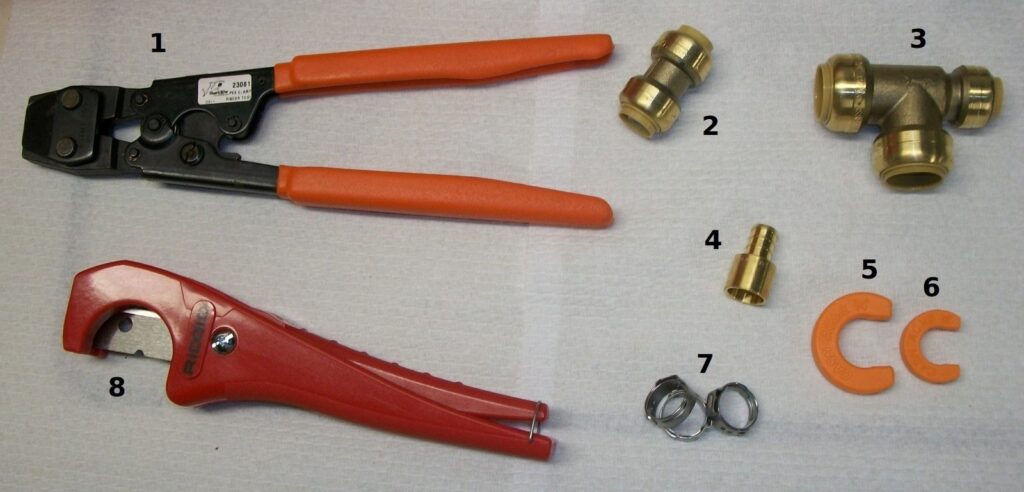
A technician arrives to dry a flooded laundry, moisture mapped, equipment placed, the job proceeding exactly as a structural drying job should. Partway through, the actual source of the water becomes clear. It is not a one off event, a washing machine hose that let go and has now been fixed. It is a slow, ongoing failure in the copper pipe running under the slab, still active, still adding water to a structure the job is meant to be drying. Cleaning Crusader does not fix a burst pipe under a slab. That is licensed plumbing work, governed by its own standard, requiring its own trade, and attempting it would be exactly the kind of overreach the five service discipline exists to prevent.
The obvious, disciplined response is to say so, finish the drying work that is genuinely ours to do, and stop there. But stopping there, without anything more, leaves the homeowner holding a half solved problem. The room may be dry. The pipe is still broken. In a matter of weeks the same job will be back, worse the second time, because nobody who touched it actually addressed the cause. This is the tension this manifesto exists to resolve. Discipline about scope is only a virtue if it is paired with something else entirely, a working, trusted relationship with the trades that pick up exactly where our five services stop. Without that second half, narrow scope is not honesty. It is abandonment dressed up as professionalism.
Ten manifestos, and the boundary none of them named
This series has built a connected argument across ten Sunday manifestos, each one describing a dimension of what it takes to run a serious restoration and cleaning firm rather than a van with a squeegee in it. Cleaning as preservation engineering. The trade as people, and training as the lever that separates craft from guesswork. Documentation as the spine that holds a firm’s knowledge together across the years. Education as a debt owed to the customer rather than a marketing exercise. Discipline as the line between a craftsman and an operator chasing volume. Scale as something only worth having if the standard survives it. Trust as the asset every other discipline ultimately compounds into. Restraint, the standard held when nobody is watching, as the truest competitive advantage a firm can build. And, most recently, the long horizon, the case that a firm should be built for the next thirty years rather than the next invoice.
Every one of those arguments assumed something they never stated outright, which is that the firm making them stays inside a defined and disciplined scope of work. None of them addressed what happens at the edge of that scope, the moment a genuine restoration job runs into a problem that is not carpet, not tile and grout, not upholstery, not flood drying, and not mould. That edge is not a rare event. It is a routine feature of real property damage, because a flood is very often caused by something a plumber needs to fix, a mould problem is very often traced to a waterproofing failure a licensed waterproofer or tiler needs to correct, and serious water damage sometimes reaches into genuine structural repair that only a builder, and sometimes a structural engineer, should touch. The eleventh manifesto is about that edge, and about what has to exist on the other side of it for the discipline behind the first ten to remain something other than a convenient excuse to walk away.
Two ways to fail at the boundary
There are exactly two ways a restoration firm gets this wrong, and they sit at opposite ends of the same failure.
The first is overreach. A firm without genuine scope discipline, under commercial pressure to keep a customer relationship and capture every dollar of a job, quietly takes on work it has no training, licensing, or genuine competence in. A cleaning technician attempts a plumbing repair because calling a plumber feels like losing the job. A drying crew patches a failed waterproofing membrane with a sealant rather than referring it to a licensed waterproofer, because admitting the job is bigger than the firm’s scope feels like admitting weakness. This is not rare in a trade built on thin margins and generalist expectations, and it produces exactly the outcomes you would expect. Work performed by someone without the licensing, the training, or the standards knowledge the job actually requires, on the parts of a home that matter most when they fail, structural integrity and water ingress control.
The second failure looks like the opposite of the first, and it is just as damaging in its own way. A firm with genuine scope discipline, holding tightly to its five services, does the drying, the cleaning, the remediation that sits inside its actual expertise, correctly and to standard, and then simply stops the moment the job’s true cause sits outside that scope. No referral. No handover. No name to call. The customer is left with a dried room and an unresolved cause, and has to find their own way to a plumber, a waterproofer, or a builder, often without the benefit of the moisture map, the job history, or the diagnostic understanding the restoration firm has already built during its own work on the site. This second failure is quieter, more respectable looking, and every bit as much an abandonment of the customer as the first. Narrow scope without a functioning ecosystem behind it is not restraint. It is the discipline of the first ten manifestos applied selfishly, protecting the firm’s own liability and expertise boundary while leaving the customer to solve the harder half of their problem alone.
The ecosystem as the thing that makes discipline honest
The position this manifesto argues is that a genuinely narrow, disciplined firm has an obligation, not an optional nicety, to build and maintain a trusted network of the specialist trades its own boundary regularly meets. Licensed plumbers, for the burst pipes and the slow leaks that so often sit behind a flood job. Licensed waterproofing specialists and tilers, for the failed membranes that so often sit behind a recurring mould problem in a wet area. Builders and, where the damage genuinely warrants it, structural engineers, for the rebuild work that follows serious water damage once drying and remediation are complete. This is not a casual list of names kept somewhere in case they are needed. It is an actively maintained relationship, built the same way the firm’s own standard was built, deliberately and over years rather than assembled the day a job needs it.
The criteria for that relationship matter as much as the fact of it. A trade worth referring a customer to carries the licensing its work legally requires, current insurance, and a genuine, checkable history of workmanship rather than a name pulled from an advertisement. Building this list is slower and less glamorous than building the firm’s own service standard, and it is just as much a part of the discipline this series has spent ten manifestos describing, because a customer referred to an unreliable or unlicensed trade on the recommendation of a firm they trusted carries that failure back to the firm that made the referral, whether or not the referring firm ever touched the actual work.
What a genuine handover actually looks like
The value of this ecosystem is not only in the referral itself. It is in what passes between the restoration firm and the specialist trade at the handover, and what happens when the customer comes back the other way once that trade’s work is complete.
A restoration firm that has spent days on a flood or a mould job has already built a genuine diagnostic picture of the property, moisture readings, the moisture map showing exactly where water travelled, photographs of the affected areas, and a clear account of when and how the problem was first noticed. Handing that documentation directly to the plumber or the waterproofer, rather than leaving the customer to describe the problem again from scratch, saves real time, reduces the chance the specialist trade misses something the restoration crew already identified, and demonstrates to the customer that the two firms are actually coordinating rather than simply existing in the same suburb.
The handover the other way matters just as much. Once the plumber has repaired the pipe or the waterproofer has reinstated the membrane, the restoration firm should be the one resuming the drying or the remediation work that was paused for the repair, picking up with the same documentation and the same job history rather than starting cold. This closes the loop properly. The customer experiences one coordinated response to their problem rather than a series of disconnected trades who each did their own piece and left. That coordinated experience is, in a very real sense, the actual product being sold, alongside the cleaning and the drying themselves.
Scope discipline extends to the chemistry too
The boundary this manifesto describes is not only a boundary of labour. It is a boundary of chemistry as well, and holding it there matters just as much. Cleaning Crusader’s plant derived, unfragranced bench, biodegradable within twenty eight days under OECD 301, is built and calibrated for cleaning, drying, and remediation chemistry, mould treatment, carpet and upholstery care, tile and grout work. It is not built for, and is never used for, the adhesives, sealants, membrane compounds, and pipe joining chemistry that belong entirely to the licensed trades on the other side of a handover. A firm that stays disciplined about which chemistry belongs to which trade is, in a small but genuine way, practising the same restraint this manifesto argues for at the level of labour. We know precisely what we are qualified to put on a surface, and we leave the rest to the people who are qualified to put something else there.
Long lasting client tips
First. If a firm attending your property for a cleaning or restoration issue discovers a cause that sits outside their stated services, expect them to name it plainly and refer you to a specific, licensed trade rather than either attempting the work themselves or simply leaving the underlying problem unaddressed.
Second. Ask any restoration firm you engage whether they have an established relationship with plumbers, waterproofers, and builders they refer to regularly, and whether that referral comes with a handover of the diagnostic work already completed, rather than starting your explanation again from nothing.
Third. Verify the licensing of any trade you are referred to, particularly for plumbing and waterproofing work, which carry specific legal licensing requirements in Western Australia, rather than assuming a referral alone is sufficient assurance.
Fourth. Keep your own simple file of the restoration work completed on your property, dates, findings, photographs where you have them, so that if a repair by another trade is needed partway through, you can hand that history on yourself if the firms involved have not already coordinated it.
Fifth. Once a specialist trade’s repair, a pipe fix or a reinstated waterproof membrane, is complete, confirm with your restoration firm that they are resuming and finishing the remaining drying or remediation work, rather than assuming the job ended when the other trade’s invoice arrived.
Sixth. Be wary of any operator willing to quietly attempt work clearly outside their stated licensing and scope rather than referring it elsewhere. A firm confident enough to say plainly that a job needs someone else is a firm more likely to be honest about everything else it tells you too.
The bold position
We will say this plainly. A firm that holds itself to five services and nothing more will meet the edge of that scope regularly, because real property damage does not arrange itself neatly to fit inside anyone’s service list. What happens at that edge is the honest test of the discipline this whole series has argued for. Scope held tightly with nowhere for the customer to go next is not restraint. It is negligence wearing the language of restraint, and it leaves the person who trusted the firm to solve their problem with only half of it actually solved.
The failure mode this trade will not name often enough sits at both ends of this boundary. The operator who overreaches into plumbing or structural work they are not licensed or trained for, because losing the job feels worse than admitting its limits. And the operator who correctly declines that same work and then simply stops, leaving the customer to rebuild the diagnostic picture from scratch with a trade they have no reason to trust. Neither operator has actually served the customer. One has taken on a risk they had no right to carry. The other has walked away from a responsibility they still held, even after their own five services were finished.
Cleaning Crusader stays inside carpet, tile and grout, upholstery, flood restoration, and mould remediation, precisely and without exception, because narrow scope, held properly, is what makes deep expertise possible in each of those five disciplines. And we build, deliberately and over years, the same discipline into an ecosystem of licensed plumbers, waterproofers, and builders we trust enough to hand a customer to, with the diagnostic work we have already done travelling with them, and we pick the job back up the moment their work is finished. The five services are the discipline. The ecosystem around them is what keeps that discipline from ever becoming an excuse to leave a customer standing in a dried room with the actual cause of their problem still unresolved.
Silent strategy. Visible legacy.
Cleaning Crusader. Built for impact. Driven by excellence. Guided by purpose.