Every Crusader upholstery job includes a conversation before a single drop of chemistry touches the fabric, and that conversation, not the equipment that follows it, is what the client actually remembers.
The moment before the work begins
A sofa is not a floor. A floor can be extracted, dried, and inspected with relatively few consequences if a technique proves slightly too aggressive for the substrate. A sofa is upholstered in a specific fabric, chosen years earlier for its appearance, its feel, and often its price, and a wrong chemical decision on that fabric cannot be fixed by a second pass. It can only be lived with. This is why the upholstery job in the Crusader method begins with something that has nothing to do with chemistry at all. It begins with a conversation.
Before a Crusader operator opens a kit bag on an upholstery job, they sit with the client, or stand beside the piece with them, and talk through three things plainly. What the fabric is, what will be attempted on it, and what will deliberately not be attempted because the risk does not justify the outcome. This is not a formality inserted for legal comfort. It is the single moment in the entire job where trust is actually built, because it is the moment the client sees that the operator is thinking about their specific piece of furniture rather than running a standard routine regardless of what is in front of them.
This article is about that moment specifically, distinct from the arrival ritual on a flood job or the pre inspection on a carpet job elsewhere in this series. Upholstery carries its own version of the trust ritual, built around fabric identification and honest scope setting, and it deserves its own explanation because it is where an upholstery job is won or lost before any cleaning has actually occurred.
Reading the fabric before touching it
Most upholstered furniture sold in Australia carries, somewhere on the piece, a manufacturer’s care label or an equivalent fabric code, most often one of the letters W, S, WS, or X. These codes, developed originally within the furniture manufacturing industry, communicate a specific instruction about what class of cleaning agent the fabric can tolerate. A W code indicates a fabric that can generally accept a water based cleaning agent. An S code indicates a fabric that should be cleaned only with a solvent based agent, water being unsuitable due to the risk of shrinkage, ring staining, or dye bleeding. A WS code indicates a fabric tolerant of either water based or solvent based agents depending on the specific soil and the operator’s judgement. An X code indicates a fabric that should be cleaned by vacuuming and light brushing only, with no liquid agent of any kind, because the fibre or the dye is unstable in the presence of moisture or solvent.
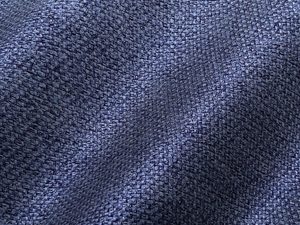
A Crusader operator locates and reads this code as the first physical step of the job, before any product is opened. Where a label is missing, faded, or was never applied, which is common on older pieces, custom upholstery, and furniture bought without documentation, the operator conducts a physical assessment instead. This includes examining the fibre construction under raking light, checking for natural fibre content such as silk, wool, or linen blends that behave very differently to synthetic microfibre or polyester blends under the same chemistry, and running a small, concealed test application on an inconspicuous area, typically the underside of a cushion or the rear panel of the piece, to observe colour fastness and fibre reaction before committing to the full surface.
This inspection is not incidental to the job. It is the determining input for every decision that follows, the chemistry selected, the agitation method used, the drying approach, and in some cases the decision to decline part of the job outright. A fabric that fails the concealed test is a fabric the operator will not proceed on with that chemistry, regardless of how soiled the visible surface is, because a soiled sofa is a solvable problem and a bleached or shrunk sofa is not.
Fabric identification is not the only physical assessment performed at this stage. The operator also notes the cushion fill type, commonly foam, feather, or a fibre blend, since fill composition changes how much moisture the piece can safely absorb before drying time becomes a genuine risk factor rather than a minor inconvenience. A feather filled cushion holds moisture differently to a foam core, and a piece built on a timber or engineered frame beneath the upholstery carries its own tolerance for dwell time before a water based product risks reaching the frame joinery. This second assessment, quieter than the fabric conversation but no less important, feeds directly into the volume of product used and the drying plan the operator sets before starting, and it is part of why the pre work conversation runs longer on an unfamiliar or older piece than on a newer, well documented one.
The conversation, not the disclaimer
This is the point in the job where the human craft of the work actually happens, and it looks nothing like the fine print at the bottom of a quote. The operator explains, in plain language, what the fabric code or the physical assessment has revealed. They explain what result the client can realistically expect on the specific stains present, whether a particular mark is likely to lift fully, partially, or not at all given the fabric’s tolerance. They explain, before starting, any area they will not treat with liquid chemistry because the fabric assessment counsels against it, and what alternative, such as dry vacuuming or light brushing, will be used there instead.
This conversation matters because it removes the single most common source of dissatisfaction in upholstery cleaning, a client’s expectation formed by a marketing claim on a bottle rather than by an honest assessment of their specific fabric. A client told plainly, before the work begins, that a decade old red wine stain on a natural fibre blend may lighten substantially but is unlikely to disappear completely, accepts that outcome calmly when it arrives, because it was named in advance. A client who was never told this, and who expected full removal because a product label implied it, experiences the same result as a failure. The chemistry did not change between these two scenarios. The conversation did.
There is a second, quieter benefit. A client who has just heard an operator decline to do something, decline to use water on a silk blend cushion, decline to attempt full stain removal on a fabric that cannot tolerate the agitation required, trusts the operator more on everything else in the job, not less. Refusal, stated calmly and explained honestly, is one of the strongest trust signals available in a service relationship, because it demonstrates the operator is prioritising the client’s asset over the appearance of an unqualified yes.
The chemistry that follows the conversation
Once the fabric class and the scope have been agreed, the technical work follows a structure matched to what was just discussed. For a W or WS coded fabric, a water based pre treatment appropriate to the soil type is applied, given adequate dwell time, followed by low moisture agitation using a soft bristle tool calibrated to the fibre’s tolerance, and extraction using controlled volume equipment that limits water introduction into the cushion fill and frame, since over wetting an upholstered piece risks a much longer drying time and a higher risk of mould developing inside the padding.
For an S coded fabric, a solvent based agent appropriate to the fibre is used instead, applied with a lower liquid volume and a shorter dwell time, since solvent chemistry generally acts faster on oil based soils than water based chemistry does. Agitation is lighter, and drying is typically faster because solvent based systems introduce less moisture into the cushion fill overall.
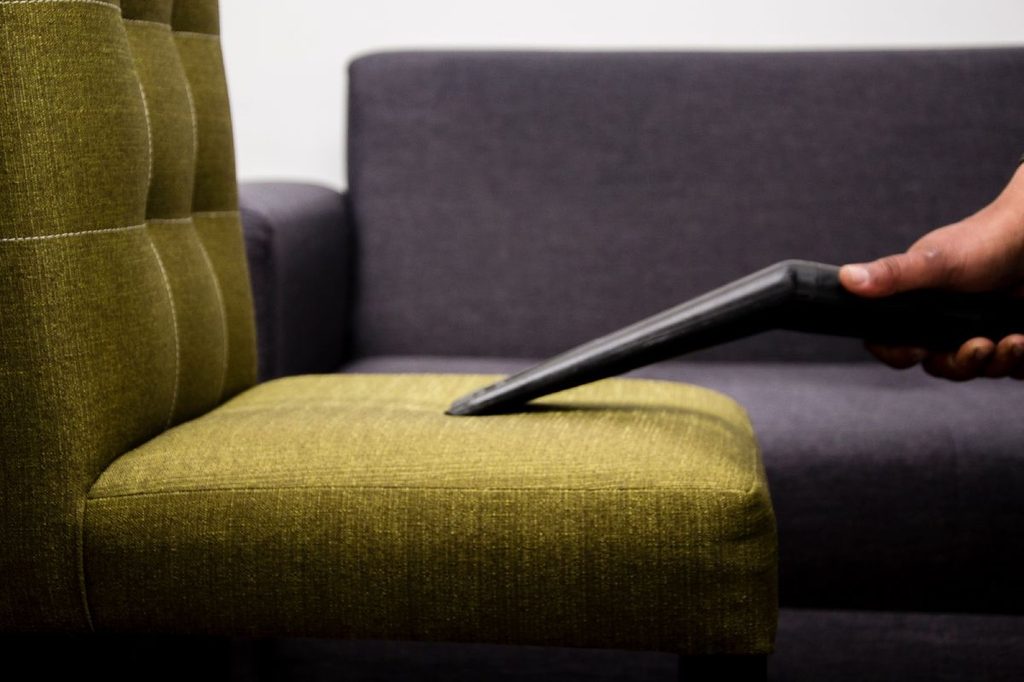
For an X coded fabric, the work is confined to dry vacuuming with a soft brush attachment and manual lifting of surface debris, with no liquid product introduced at any stage. Where a stain remains on an X coded fabric after dry methods, the honest position, delivered in the pre work conversation, is that the mark may be permanent, and the client makes an informed decision about whether to proceed with any further attempt at all.
Mattress fabric, where mattress cleaning is undertaken as a category of upholstery cleaning specifically, follows the same fabric identification and conversation sequence as any other upholstered piece, with particular attention to moisture control given the density of the internal fill and the extended drying time a mattress requires relative to a cushion.
Eco chemistry for upholstery
Our upholstery chemistry bench uses plant derived surfactants, biodegradable within twenty eight days under OECD 301 testing, and left unfragranced, which matters specifically on upholstery because a client sits, sleeps, or rests directly against the treated fabric for extended periods, often with bare skin in contact for hours at a time. We do not use quaternary ammonium compounds in routine upholstery cleaning, since a quaternary residue left in a dense fabric weave or cushion fill can irritate sensitive skin on repeated contact and attracts new soil faster than a properly rinsed fabric. Where biological contamination is present, such as a pet accident or a bodily fluid stain on a mattress, our chemistry bench moves to a hydrogen peroxide based treatment appropriate to the fabric class already identified, which breaks down the organic material and decomposes to water and oxygen rather than leaving a residue inside fabric that a household member will be in prolonged contact with.
Long lasting client tips
First. Locate your furniture’s care label before booking a professional clean and have it ready for the operator. A visible W, S, WS, or X code speeds up the assessment and gives you a more precise sense of what result to expect before the appointment even begins.
Second. Ask directly what will not be attempted on your piece, not only what will be. A trustworthy answer names specific limitations honestly rather than promising a universal result, and that answer tells you more about the operator’s competence than almost anything else in the conversation.
Third. Test any new upholstery cleaning product yourself on a concealed area before applying it broadly, exactly as a professional operator would, using a small amount, a short dwell time, and a clean white cloth to check for colour transfer before proceeding.
Fourth. Avoid rubbing a fresh stain on any upholstered fabric. Blot from the outer edge of the stain toward the centre with a dry cloth first, to prevent the mark spreading into clean fabric, before any liquid is introduced.
Fifth. Keep upholstered furniture out of direct, prolonged sunlight where practical. Ultraviolet exposure degrades dye stability over years, which narrows the range of chemistry a fabric can later tolerate and increases the likelihood that a future clean will need to be more conservative than it otherwise would.
Sixth. Schedule a professional upholstery clean before visible soiling becomes heavy rather than after. A lightly soiled fabric responds to a gentler chemistry and a shorter process, which reduces both the cost and the risk to the fabric compared with an aggressive intervention required on a heavily soiled piece.
The bold position
A large share of the upholstery cleaning sold in Australia is delivered as a standardised chemical application, the same product, the same method, regardless of what fabric happens to be in front of the operator. This approach works acceptably on the fabrics that happen to tolerate it and causes quiet, often irreversible damage on the fabrics that do not, and the client rarely learns which category their piece fell into until the damage is already visible.
We will name this plainly. An operator who does not read the fabric code, or assess the fibre where no code exists, before opening a product bottle is gambling with a client’s furniture rather than servicing it. The gamble sometimes pays off, because many fabrics are genuinely tolerant of a broad range of chemistry. The gamble sometimes does not, and the loss falls entirely on the client, who had no way of knowing the decision had even been made on their behalf.
Cleaning Crusader will not open a product on an upholstered piece until the fabric has been identified and the client has heard, in plain language, what will and will not be attempted. This is slower than walking in and starting. It is also the only version of the job where the client’s trust and the fabric’s condition are both protected at the same time. The conversation before the cushion is not a courtesy. It is the actual work of the job, and the chemistry that follows it is simply the execution of a decision the client was present for.
We do not partner. We forge. We do not run programs. We run standards.
Cleaning Crusader. Built for impact. Driven by excellence. Guided by purpose.