A lounge is bought as furniture and thrown out as rubbish, and the journey between those two moments is decided by chemistry, not by the fabric it was made from.
The most expensive thing in the room that nobody insures
Walk into most Perth living rooms and find the largest single soft furnishing purchase in the house. It is the lounge. A three seater in a mid range fabric lands somewhere between three thousand and four thousand dollars once delivery and a matching chair are counted, and a better piece runs well past five. The household treats this object as furniture, which is to say as a fixed and finished thing, bought once and forgotten. The lounge is not finished. It is a wear surface in slow motion, depreciating from the day it arrives.
The mistake is a category mistake. People price a lounge the way they price a table, and a table is a hard asset that wipes clean and holds its shape for decades because its surface is sealed and inert. A lounge is the opposite. Its value lives in a soft, porous, fibre based surface that absorbs body oils, holds soil, wicks moisture, and reacts to whatever chemistry is applied to it. Then one day it looks tired, the household decides it is finished, and four thousand dollars goes to the verge.
This article is the economics of that decision, told without the showroom gloss. What the cleaning code on the label actually means and why the wrong letter browns and rings a fabric. How the depreciation curve of a lounge really runs. And why interval extraction with fibre correct chemistry, followed by a fabric protector, turns a seven year lounge into a fifteen year one. We arrive to clean a lounge that could have lasted another decade, and find one that three wrong products already condemned.
The four letters that decide the fabric’s fate
Under the cushions of almost any manufactured lounge is a small tag with a cleaning code on it. Four letters carry the chemistry of what can safely touch that fabric. It is the single most important piece of information about the asset, printed in a place designed to be forgotten.
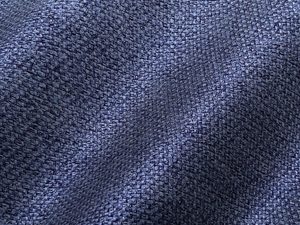
W means the fabric is rated for water based cleaning, and a properly formulated water based agent, correctly diluted, can be used on the fibre. This covers most synthetic upholstery, the polyesters and olefins that make up the bulk of the Australian market. S means solvent cleaning only. Water is the enemy here, because these fabrics, which include many rayons, some cottons, and a range of delicate blends, will water stain, shrink, or ring if a water based product is applied, so the soil has to be lifted with a dry solvent instead. WS means the fabric tolerates both, and it is the most forgiving code. X means neither. X coded fabrics are rated for vacuum only, or for light brushing, because the backing, the weave, or the dye will not survive a wet or solvent process, and there the entire strategy is prevention, because there is no safe correction.
Here is the part the showroom never mentions. The code is not advice. It is a boundary. Cross it and the fabric does not politely underperform. It browns, it shrinks, it rings, or it bleeds. The letter on the tag is worth more than the brand name on the label, because the brand tells you what you paid and the letter tells you what you may do about it for the next fifteen years.
Why the wrong solvent browns, shrinks, or rings a fabric
Each failure has a cause a chemist would recognise, and each is avoidable if the fibre is identified before anything wet touches it.
Browning is the most common and the most misunderstood. It is usually cellulosic browning, on natural fibre fabrics such as cotton and rayon and on cotton backed synthetics. When a fabric is overwet, water travels down through the pile to the backing and then wicks back up as it dries, carrying dissolved cellulose breakdown products to the surface, where they concentrate at the tips of the pile and oxidise into a yellow brown tide mark. The fabric was clean. The water made it dirty. Browning is a moisture control failure far more often than a soil failure, and it is why an S coded fabric must never see a wet process.
Shrinkage is a fibre and construction failure. Natural fibres such as cotton, linen, and rayon swell when they absorb water and contract as they dry, and the weave tightens with them. On a fitted cushion cover the result no longer fits the foam it was made for, and stretching will not bring it back. Once the weave has drawn in, the cover is a size smaller for the rest of its life, which is the fastest way to age an S coded lounge by a decade in an afternoon.
Rings, the water marks that form a hard edge around a cleaned area, are a drying and redeposition failure. When a wet area dries from the outside in, soil and minerals migrate to the drying perimeter and deposit in a visible line, so the centre looks clean and the edge looks worse than the original stain. A ring means too much liquid went in and not enough came back out, and the correction is controlled moisture and full extraction, which is precisely what a hire machine in untrained hands cannot deliver. Dye migration completes the list, because some upholstery dyes are water or solvent soluble, and the wrong agent lifts the colour along with the soil, bleeding one colour into the next in a single pass.
The depreciation curve nobody draws for you
Think of a lounge the way an accountant thinks of a vehicle. It has a purchase price, a useful life, and a curve between the two. The difference is that nobody hands the household a depreciation schedule for the couch, so nobody manages the curve, and if they did, the maintenance case would make itself.
A well made lounge in a family home carries a natural useful life of roughly ten to fifteen years. The fabric is the variable that decides everything, and it is the part most exposed to the household’s daily chemistry. Body oils, perspiration, hair products, food, and the slow grinding of airborne soil into the pile all attack the fabric long before the frame or the foam gives out. Left unmaintained, that curve collapses. Soil is abrasive, and every particle ground into the fibre under body weight acts as microscopic sandpaper, cutting the fibre and dulling the colour, while body oil oxidises and yellows. The high contact zones, the seat, the arms, and the headrest line, darken while the rest stays fresh, so the lounge does not fade evenly, it fails in patches. One that should have lasted fifteen years starts looking finished at seven, written off at half its life.
Now draw the maintained curve on the same axis. Professional hot water extraction with fibre correct chemistry at a sensible interval, typically every twelve to eighteen months in a family home and more often in heavy use, removes the oils and abrasive soil before they can do structural damage to the fibre. A fabric protector applied after cleaning slows the rate at which new soil and oil bond to the pile, which buys time between cleans and reduces the wear each clean has to correct. The combined effect is not cosmetic. It flattens the depreciation curve, because the high contact zones stop failing early once the oil and grit that were destroying them are removed on schedule, and disciplined maintenance commonly extends the usable life of a lounge by five to ten years. A four thousand dollar lounge kept fifteen years instead of discarded at seven has halved its annual cost of ownership, and the maintenance across those years costs a fraction of the replacement it prevents. The household that skips it is not saving money. It is bringing the next four thousand dollar purchase forward by most of a decade, which is the most expensive kind of saving there is.
The Crusader upholstery protocol
A lounge cleaned properly is a sequence of controlled steps, and the order is not negotiable, because the fibre decides the method and moisture control decides the outcome.
First. Identify the fibre and read the code. Before anything else we locate the code tag and identify the fibre, and where the tag is missing we run a fibre identification check, because guessing the fibre is guessing the method, and the wrong method is the damage. Second. Test in a hidden zone. Every fabric is tested for colourfastness and for its reaction to the chosen agent in a concealed area, and if it bleeds or browns the method changes before any visible surface is touched. Third. Dry soil removal. The piece is thoroughly vacuumed and, where needed, dry brushed before any liquid is introduced, because wet cleaning over dry grit drives the grit deeper and abrades the fibre.
Fourth. Pre treatment matched to the fibre and the soil. A fibre correct pre spray is given a controlled dwell to break the bond between the oils, the soil, and the fibre. On a W or WS fabric this is water based, on an S fabric a dry solvent process, and on an X fabric there is no wet stage at all. Fifth. Extraction with controlled moisture. On water rated fabrics, hot water extraction rinses the suspended soil and pre treatment out of the pile while a matched vacuum recovers the moisture in the same pass. The discipline here is moisture balance, enough solution to carry the soil out and enough recovery that the fabric is left damp rather than wet, and that balance is what prevents browning, shrinkage, and rings. Sixth. Grooming and controlled drying. The pile is groomed to lie correctly and air movers speed the fabric through the wet phase evenly, because slow drying is where tide marks are born. Seventh. Protector and quality check. Once dry, a fibre appropriate protector resets the soil and stain resistance for the next cycle, and the finished piece is examined under directional light and recorded.
What is not in this protocol is a single product used on every fabric. There is no universal upholstery cleaner in serious work, because there is no universal fibre. The method follows the material.
Eco chemistry for upholstery
Our upholstery chemistry bench is built for a surface people sit on, sleep against, and breathe next to for hours every day, so the indoor air dimension is a design constraint, not a marketing line.
The water based agents are plant derived surfactant blends, biodegradable within twenty eight days under OECD 301, unfragranced, and free of quaternary ammonium compounds. They are formulated to lift body oil and soil and then rinse cleanly out under extraction, which matters more on upholstery than almost anywhere else. Residue left in a lounge is residue held against skin, and a cleaning agent that does not rinse fully becomes a sticky film that attracts soil faster than the untreated fabric did, which is how a poorly chosen product makes a lounge dirtier in the month after it is cleaned. For solvent rated fabrics we use dry solvent chemistry that carries the soil without wetting the fibre, and for the sanitising step we use a hydrogen peroxide based approach rather than a fragranced masking agent, because the object is to remove the source, not to perfume it. Unfragranced is deliberate, because a lounge sits inside the breathing zone of the room, and a persistent fragrance on it is a persistent volatile load in the air the household breathes. The correct smell of a properly cleaned lounge is no smell at all.
Long lasting client tips
Six rules that decide whether your lounge reaches half its life or all of it.
First. Read the code before you buy a bottle. Turn the cushion over, find the W, S, WS, or X tag, and photograph it. That single letter tells any cleaner what is safe, and if your fabric is S or X, keep every water based supermarket upholstery cleaner away from it, because on those fabrics the water is the damage.
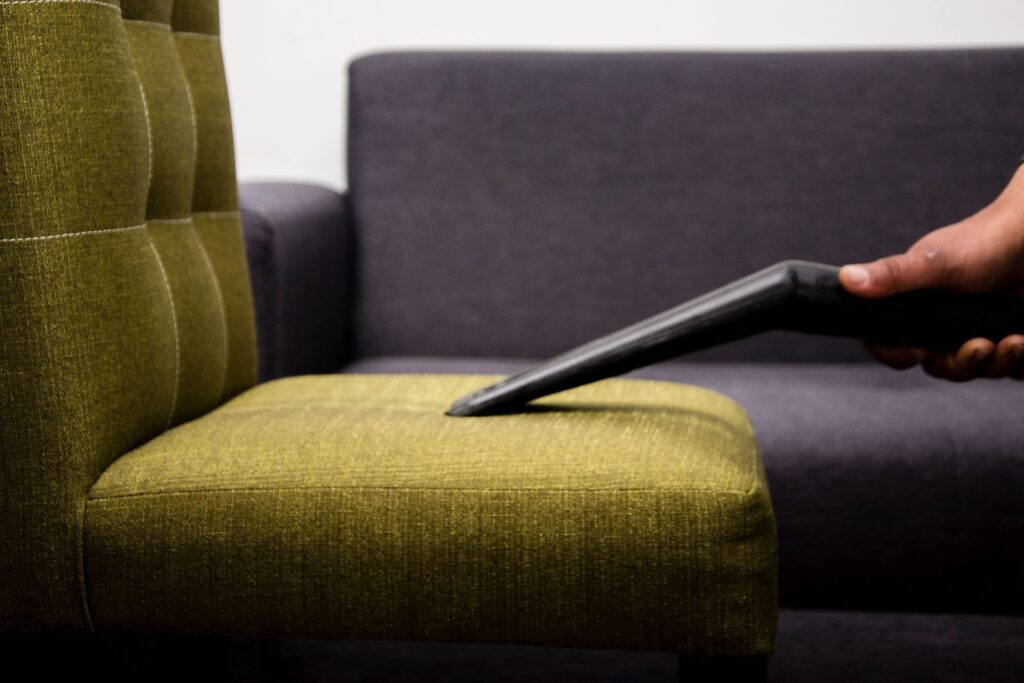
Second. Vacuum the lounge weekly, and reach the crevices. Most of what ages a fabric is dry abrasive soil ground in under body weight, and weekly vacuuming with the upholstery tool, including the seams and the base of the backrest, removes the grit before it cuts the fibre.
Third. Blot spills within the first minute, and never scrub. Press a clean white cloth straight down onto the spill and lift, working from the outside inwards so you do not spread it. Scrubbing drives the spill deeper, while quick blotting on a protected fabric will lift most spills before they set.
Fourth. Keep the lounge out of direct sun where you can. Perth light fades upholstery dye faster than most people expect, and unevenly, because the sun only reaches part of the piece. A sheer on a sun facing window, or rotating the cushions, buys years of even wear.
Fifth. Do not treat a stain you cannot identify with a product you have not tested. Test any cleaner on a hidden panel first and wait for it to dry, because the visible seat is not the place to discover the product was wrong. When in doubt, plain water on a damp white cloth on a water rated fabric is safer than a strong product on the wrong fibre.
Sixth. Book professional extraction on an interval, not on a crisis. Every twelve to eighteen months for a family lounge, more often for heavy use, and always with the protector reapplied afterwards. Crisis cleaning, once the fabric looks finished, is asking a cleaner to reverse damage that maintenance would have prevented.
The property manager and the furnished portfolio
The economics that apply to one household apply with more force across a portfolio, and this is where upholstery moves from a domestic concern to an asset management one. A furnished rental or a serviced property carries lounges, armchairs, and bed bases that the owner is depreciating and the tenant is using hard, and every one is a soft furnishing asset on the books, subject to the same curve.
A property manager who treats furnished upholstery as a replace on failure item runs the most expensive policy there is. A lounge cleaned between tenancies, on the correct code, with the protector reapplied, presents well to the next tenant, resists the next round of soil, and stays on the books for its full life. The same lounge left to accumulate body oil, spills, and ground in soil across three tenancies reaches the verge in a fraction of the time, and the replacement lands on the owner as unbudgeted capital cost. The hospitality dimension sits inside the same logic, within scope, as the care of the furnished soft assets a venue or a furnished property depends on. Interval maintenance across a furnished portfolio is the difference between depreciating an asset over its full life and writing it off early and often.
The bold position
We will say this plainly. Upholstery is the one major household asset that is bought with care and discarded with none. A lounge is chosen over weeks, paid for over months, and then handed to whatever happens to it, until one day it looks tired and goes to the verge with four thousand dollars of remaining life still in the frame. The failure mode of this trade, and of the market around it, is that it has taught people to judge a lounge by the fabric it was made from and never by the chemistry that was used on it. That is exactly backwards.
The life of a lounge is not decided in the showroom. It is decided every time a product touches it. The wrong letter on the code, ignored. The wrong cleaner on an S fabric, browning the pile in an afternoon. The overwet hire machine that leaves a ring the household never removes. Each is a chemistry decision made badly, and each takes years off the asset. The fabric did not fail. The chemistry failed it. A cheap fabric maintained correctly outlasts an expensive fabric abused, every time, because the fibre is only ever as durable as the treatment it receives.
Cleaning Crusader treats a lounge as what it is. A soft furnishing asset with a depreciation curve that we exist to flatten. We read the code before we touch the fabric, we identify the fibre before we choose the method, we test before we commit, we control the moisture through the whole process, and we reapply the protector so the next cycle starts from strength. We will tell a client their fabric is X rated and confine ourselves to dry methods, when that is the truth, and we will refuse to put water on a solvent rated fabric no matter how much faster the wet method would be. The discipline is the asset protection. The lounge we maintain looks and lasts like the asset it was sold as, instead of the rubbish it was on its way to becoming.
Restraint matters more than noise. The work is the proof.
Cleaning Crusader. Built for impact. Driven by excellence. Guided by purpose.