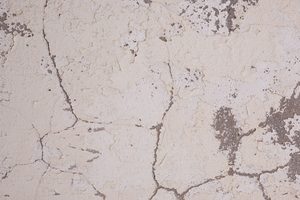
The dark bloom on a bedroom wall is not a cleaning problem. It is the building telling you the air is wrong, and wiping it away treats the symptom while the cause keeps working.
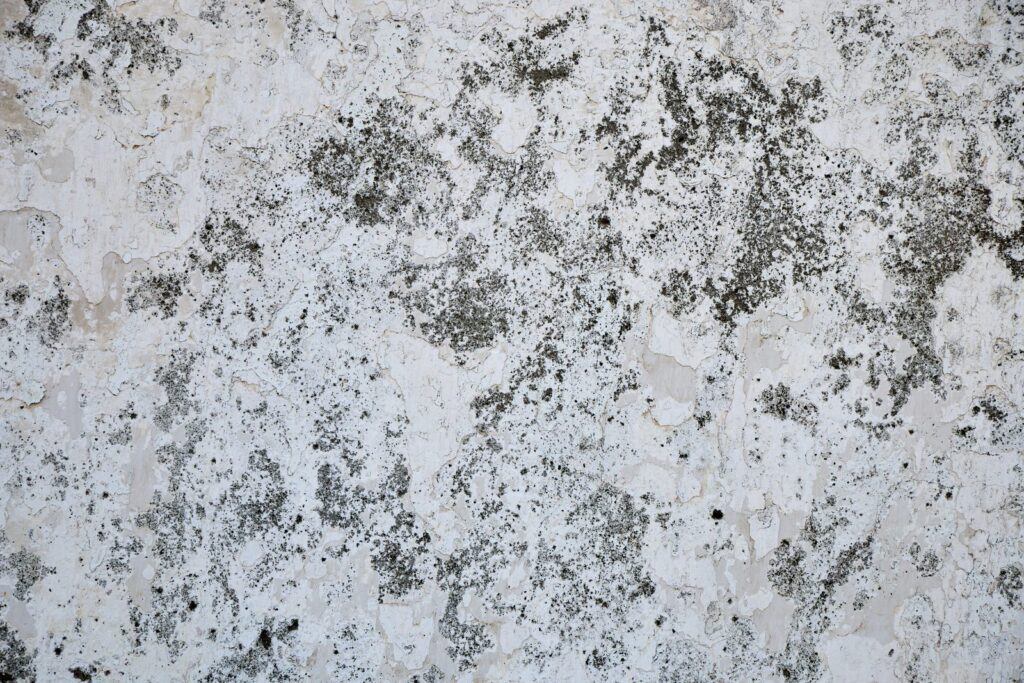
There is a particular kind of discovery that happens in Perth in July. Someone shifts a wardrobe or pulls a bed away from the wall to vacuum behind it for the first time in months, and finds a spread of black and grey speckling across the plaster. The wall behind the furniture is cold to the touch. The air feels heavy. The bloom was not there in March. It arrived with the cold, quietly, in the one part of the room nobody was looking at.
The instinct is to reach for a spray and a cloth. Most people wipe it, the surface goes clean, and the matter is filed as handled. Six weeks later it returns in the same footprint. The occupant concludes the house is simply damp, that Perth winters are like this, that there is nothing to be done beyond wiping it again. That conclusion is wrong on every count, and why it is wrong is the subject of this article.
Mould on a bedroom wall is not a stain. It is a biological readout of the building physics in that room, and it grows where it grows for reasons that are measurable, predictable, and correctable. The bloom behind the wardrobe is the most honest instrument in the house, reporting that warm humid air is meeting a cold surface and giving up its water there. Read that way, the mould stops being a mess to clean and becomes a diagnosis to act on. This is the difference between the work we do and the work most of the trade does. The trade wipes the wall. We ask why the wall was wet.
The dew point, in plain terms
Air holds water as vapour, and the amount it can hold depends on its temperature. Warm air holds a great deal. Cold air holds very little. This governs almost everything that follows.
Relative humidity is the figure most people know. It describes how full the air is, as a percentage of what it could hold at its current temperature. Warm the air and the percentage falls, because the capacity has risen while the actual water has not. Cool the air and the percentage climbs. Cool it far enough and it reaches one hundred percent. The air can hold no more. That temperature, the point at which the air becomes fully saturated and water begins to condense out of it, is the dew point.
You have watched the dew point work a thousand times. The film on the bathroom mirror after a shower. The fog on a car windscreen on a winter morning. Warm moist air has touched a surface colder than its dew point and left behind the water it could no longer carry. The mirror is not leaking. It is simply cold, and the air near it has surrendered its water on contact. A bedroom wall in winter does exactly the same thing. The difference is that the wall does not clear when the room warms up, and the mould that grows on the dampness left behind does not wipe away with the water.
Why the wall behind the wardrobe is the coldest surface in the room
Not every surface in a room is the same temperature, and the coldest surfaces are where condensation lands first. An external wall, with the Perth winter on the far side of it, runs colder than an internal wall, and it is not uniformly cold. Where the structure carries a path of higher conducting material straight through from outside to inside, that path pulls heat out of the room faster than the plaster around it. The junction where a wall meets a concrete slab is such a path. So is a steel or timber frame member, a window reveal, or the corner where two external walls meet and the room has cold on two sides. These paths are called thermal bridges, and they are where the dew point is reached first.
Furniture makes the coldest surface colder still. A wardrobe pushed flat against an external wall does two things at once. It blocks the warm room air from washing over that patch of plaster and keeping it above the dew point. And it traps a pocket of still air behind it that cannot circulate, cannot warm, and slowly loads with moisture. The surface behind the wardrobe is colder than the exposed wall and the air against it is more humid than the room, so both conditions push toward condensation. The bloom appears there because that is the single worst spot in the room for the physics involved. The same pattern produces mould in the top corners of external walls, behind a bedhead, and around an aluminium window reveal. A colder than average surface, poorly washed by room air, meeting humid air that has nowhere else to give up its water.
Where the water in the air comes from
A bedroom does not need a leak to grow mould. The occupants generate the water themselves and in winter they seal it in. A sleeping adult releases moisture across the night through breath and skin, in the order of two hundred to four hundred millilitres across an eight hour sleep, more for two sharing a small room with the door shut. Add drying laundry on a rack in the corner when the washing line is under cloud, and an unflued gas heater, which produces water vapour as a direct product of combustion. None of these is dramatic. Together they load the bedroom air with water every single night.
In summer this does not matter, because windows are open and the warm surfaces sit well above the dew point. In winter the windows stay shut, the air stops moving, and the moisture accumulates in a sealed room with cold external walls. The relative humidity peaks in the small hours, precisely when the walls are at their coldest, and somewhere on the coldest surface the air reaches its dew point and the wall gets wet. Not visibly wet. Wet at the scale mould requires, far less than a droplet you could see. Interstitial condensation, the moisture that forms within the wall build up where warm indoor air meets a cold inner layer, can feed the same problem from the cavity side, where no surface wiping will ever reach it.
Why a bedroom wall gives mould everything it needs
Mould is not exotic. Its spores are present in the air of every building on earth at all times, inert until they find what they need, and what they need is short. Moisture. A temperature that suits ordinary life, which a heated bedroom provides. And a food source, which is almost anything organic. The paper facing on plasterboard, the paint binders, and house dust are all food. Give a spore those three together and it germinates, spreads across the surface, and produces the visible colony and the next generation of spores.
Of the three requirements, two are always present in a lived in bedroom and cannot be removed. You cannot take the warmth out of a room people sleep in, and you cannot sterilise every organic trace from a wall people live against. That leaves moisture as the only variable you can control. Remove it and the spores stay inert, whatever food and warmth surround them. This is the whole game. Mould control is moisture control. Everything else is housekeeping.
The health case is not decorative
It would be easy to treat wall mould as an appearance problem. The evidence does not allow that.
In 2009 the World Health Organization published its Guidelines for Indoor Air Quality: Dampness and Mould, and reached a conclusion that is unusually direct for a body of that kind. Occupants of damp or mouldy buildings are at increased risk of respiratory symptoms, respiratory infections, and the worsening of asthma. The specific agents responsible are hard to isolate, because a damp building produces a complex mixture of mould, bacteria, and chemical and biological breakdown products. So the guidance draws the practical conclusion that follows. Because the responsible agent cannot be neatly pinned down, the sensible target is not any single organism but the dampness itself. Prevent it, or remediate it, because the health risk holds regardless of which specific mould is present.
The Australian relevance is sharp. The Australian Institute of Health and Welfare reports that around one in nine Australians has asthma. A bedroom is where a person with asthma spends roughly a third of their life, breathing that air for hours with the door shut, and children, whose airways are smaller and still developing, sit at the sharp end of it. We do not overstate this. Not every marked wall triggers illness, and we will not trade in fear. But the direction of the evidence is settled. Damp mouldy indoor air is associated with real respiratory harm, and the room where it most often occurs is the one where people sleep. That is reason enough to treat the bloom behind the wardrobe as a matter for correction rather than concealment.
The psychology of a heavy room
There is a quieter dimension to this, and it belongs to the pillar this article sits under. A room does not have to make you cough to affect you. It can simply feel wrong. People describe a damp bedroom in consistent language without being prompted. The room feels heavy. The air feels close. The bedding never quite feels dry. There is a faint earthy smell that returns no matter how often the sheets are washed, strongest when you first open the door in the morning. That smell is not imagined. It is the volatile compounds mould produces as it grows, the same signal a dog reads before a person notices anything.
A bedroom is meant to be the one space in a home that lowers the nervous system rather than taxing it. When the air in it is wrong, that function fails quietly. Correcting the moisture does more than clean a wall. It gives back a room that feels light, dry, and safe to breathe in, which is arguably the whole point of the space.
The Crusader condensation mould protocol
A wall wiped clean is a wall that will bloom again by spring. The Crusader approach treats the mould as evidence and works the cause.
Stage one. Find and measure the water. Before anything is cleaned, the moisture is located and quantified. Surface temperatures are read across the wall and its surroundings, so the cold spots and thermal bridges reveal themselves. Relative humidity and air temperature are logged, which together give the dew point and show how close the air is running to condensation. The wall and adjacent materials are checked with moisture instruments to distinguish a surface condensation problem from a hidden leak or interstitial condensation feeding the plaster from behind. A remediation that skips this step is guessing, and a guess on moisture regrows.
Stage two. Remediate under containment, to the recognised standard. The IICRC S520 Standard for Professional Mould Remediation sets the framework the developed world works to, and it is the framework we work to. Affected areas are isolated so the disturbance of a colony does not distribute spores through the rest of the home, air is managed and filtered during the work, and contaminated porous materials that cannot be properly restored are removed rather than painted over. The colony is physically removed, not merely bleached to invisibility, because a bleached colony on a damp wall is a colony waiting to return.
Stage three. Correct the conditions so it cannot return. This is the stage the rest of the trade omits, and the one that makes the difference permanent. Ventilation is corrected so the humid night air the occupants generate is removed from the room rather than sealed in against cold walls. Where a thermal bridge or a chronically cold surface is driving the condensation, the pathway is identified so it can be dealt with properly, and the furniture arrangement that trapped still air against a cold wall is changed. The aim is to lift the coldest surfaces back above the dew point and carry the moisture out, so the wall no longer gets wet at night. Fix the water and the ventilation, and the mould has nothing to grow on. Fail to fix them, and no clean will hold.
Eco chemistry for condensation mould
Our remediation chemistry removes mould from a bedroom without replacing one air quality problem with another. The bench is built on plant derived surfactants, biodegradable within twenty eight days under OECD 301, unfragranced, and free of quaternary ammonium compounds in routine work. Where a sanitising step is genuinely required after the colony is removed, we use a hydrogen peroxide based sanitiser rather than a persistent biocide, because peroxide does its work and then breaks down to water and oxygen rather than lingering.
The logic matters more in a bedroom than almost anywhere else. This is a small sealed space where a person breathes deeply for a third of their day. Fogging it with a fragranced quaternary compound to mask a mould problem loads the very air the WHO guidance is concerned with, and does nothing about the moisture, so the colony returns with a chemical residue added on top. Our surfactant blend lifts the growth, the peroxide sanitiser addresses what remains and then decomposes, and nothing fragranced or persistent is left in the room where someone sleeps. The mould leaves and the air stays clean.
Long lasting client tips
Six rules to keep a Perth bedroom dry through winter and give mould nothing to grow on.
First. Move air every day. Open the bedroom windows for ten to fifteen minutes each morning, even in the cold, to flush out the moisture the night loaded into the room. A short air change removes the water that would otherwise condense on the walls that night.
Second. Pull the furniture off the external walls. Leave a gap of a few centimetres behind wardrobes, bedheads, and drawers that sit against a wall with the outdoors on the other side. The gap lets room air wash the plaster and keeps that surface above the dew point. A wardrobe flat against a cold wall builds the very conditions mould requires.
Third. Do not dry washing in the bedroom. A drying rack in the corner puts litres of water into a sealed room every load. Dry laundry outside when the weather allows, or in a space ventilated to the outside, never in a shut bedroom overnight.
Fourth. Use the exhaust fan and give it time. Run the bathroom fan through the shower and for a good while after, so the moisture leaves the building rather than drifting down the hall into cold bedrooms. A room that blooms every winter and has no mechanical ventilation has told you the problem to solve.
Fifth. Watch the glass in the morning. Condensation running down the inside of your windows at dawn is the building telling you the air is at its dew point on the coldest surfaces. Treat streaming windows as a warning that the walls are getting wet too, and ventilate before mould appears.
Sixth. When it returns after wiping, stop wiping and investigate. Mould that comes back in the same footprint within weeks is not a cleaning failure. It is a moisture source that has never been addressed, and the signal to measure the conditions and find the water, not to buy a stronger spray.
The bold position
Most residential mould cleaning in this country treats a moisture problem as a stain problem, and it fails for exactly that reason. An operator wipes the visible growth off the wall, perhaps paints over the ghost of it, and leaves the conditions that grew the mould untouched. The wall is clean for a fortnight. Then the same cold surface meets the same humid night air, the dew point is reached in the same spot, and the colony returns in the footprint it occupied before. The occupant blames the house. The house was never the failure. The method was.
Here is the position stated plainly. Mould on a bedroom wall is the building telling you the air is wrong. It is a diagnosis, delivered in the most reliable instrument a home has. Wiping it treats the symptom and ignores the message, and a symptom treated while its cause runs on is a symptom that comes back. Until the water and the ventilation are corrected, everything done to the surface is temporary by definition.
Cleaning Crusader will not sell a wipe and a repaint as a cure for condensation mould, because it is not one. We measure the moisture and the surface temperatures before we touch the growth. We remediate under containment to the S520 standard rather than bleaching a colony to invisibility on a wall that is still wet. And we correct the ventilation and the conditions so the surface no longer reaches its dew point at night, because that, and only that, stops the mould returning. The wall is the last thing we clean and the least of the job. The air behind the wardrobe is the work.
Restraint matters more than noise.
Cleaning Crusader. Built for impact. Driven by excellence. Guided by purpose.