A descaler that lifts hard water scale off a ceramic shower base perfectly will dull a travertine foyer on contact, because the two floors are not the same material wearing different colours. One is fired clay. The other is rock. Most operators clean both with the same bottle.
The floor that came up wrong
A technician finishes a routine job in an ensuite, a porcelain tiled shower with heavy calcium buildup around the taps and along the grout lines. The acid based descaler in the kit does exactly what it is supposed to do. Within a few minutes the scale lifts, the tile comes up bright, the grout lines lighten, and the job is done to standard. The same technician, the same afternoon, is asked to give the entryway a quick going over on the way out. The entry is travertine, honey coloured, laid a few years ago, and it looks like it could use the same treatment. The same bottle goes on the same way it always does.
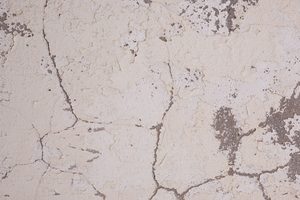
Within an hour the client calls back. The travertine has gone patchy. Where the product sat longest, the surface has lost its sheen and turned faintly matte, almost frosted. Around the drips near the skirting there are pale rings, each one a small dull halo where a drop sat a little too long. Nothing was spilled that should not have been there. Nothing was left on for an unreasonable time. The same product, applied with the same care that had just worked perfectly two rooms away, has visibly damaged the floor.
This is not a story about carelessness. It is a story about a distinction the trade does not teach well enough, and one that a surprising number of experienced operators never fully absorb. Ceramic tile and natural stone tile are grouped together under one word, tile, and treated as one category of surface requiring one category of chemistry. They are not one category. They are two entirely different materials, built by two entirely different processes, and one of the most common and most effective tools in a cleaner’s kit is safe on one and corrosive to the other. The floor did not come up wrong because the technician was sloppy. It came up wrong because the industry’s vocabulary hides a chemistry problem behind a single word.
Two materials wearing one name
Ceramic and porcelain tile are manufactured. Clay, feldspar, and silica are blended, pressed or extruded into shape, and fired in a kiln at a high temperature, typically well above one thousand degrees Celsius for porcelain. The firing vitrifies the body, meaning the mineral components fuse into a dense, glass like matrix. What comes out of the kiln is chemically inert in the way glass is inert. It does not react to the mild acids used in domestic and trade cleaning, because there is no reactive calcium carbonate structure sitting in the surface for an acid to attack. A glazed tile adds a further layer of actual glass fused onto the clay body for colour and shine, which is even more chemically stable again. This is a manufactured, engineered material, and it was engineered, among other things, to resist exactly the kind of chemical attack a bathroom sees every day.
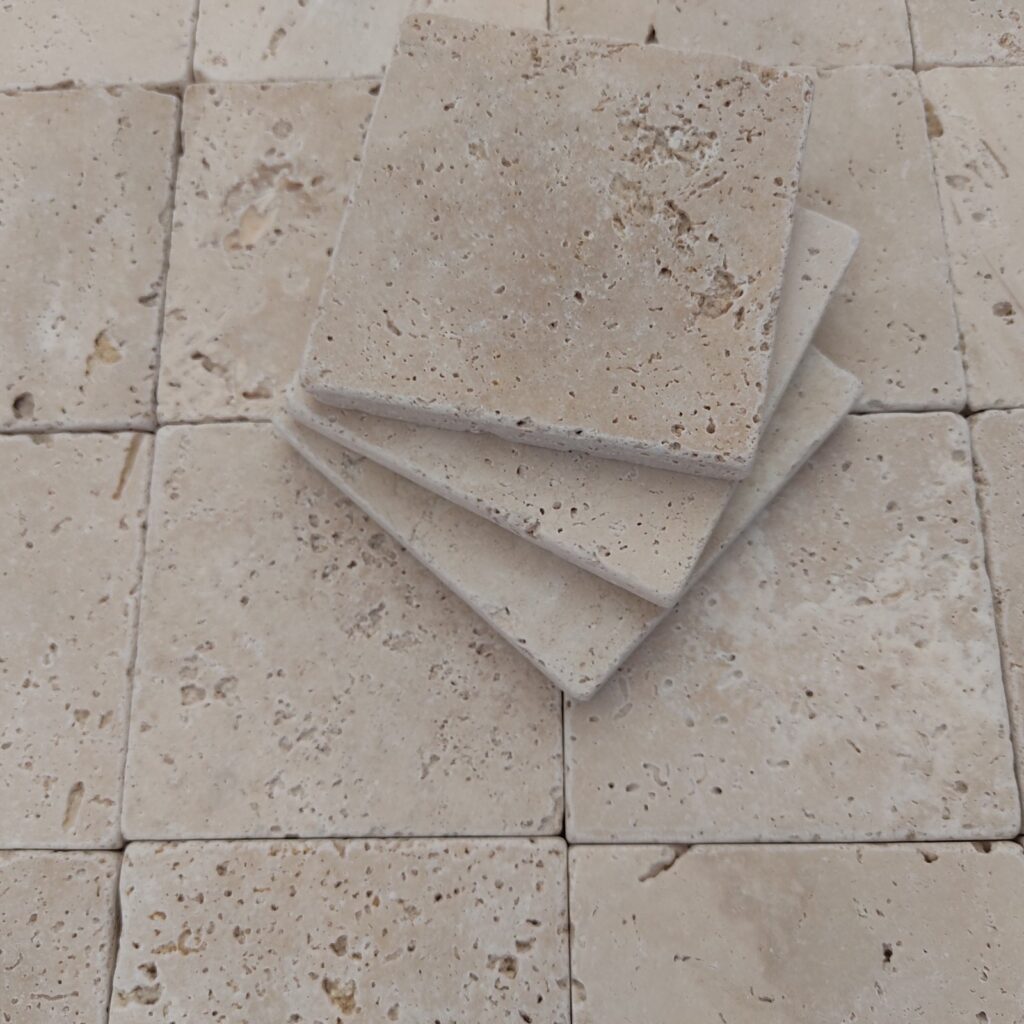
Natural stone tile is not manufactured. Marble, travertine, and limestone are quarried rock, cut into slabs and tiles, polished or honed, and installed. Chemically, all three are essentially the same mineral in different geological forms. They are calcium carbonate, the compound that also makes up chalk, coral, and the shells of countless marine organisms, compressed and recrystallised over geological time. Limestone is the most direct form, largely unaltered shell and sediment. Marble is limestone that has been subjected to heat and pressure deep in the earth and recrystallised into its familiar veined, denser structure. Travertine is a limestone variant formed from mineral springs, riddled with the small natural voids that give it its characteristic pitted texture before those voids are filled at manufacture. All three share the one property that matters here completely. Their surface, at a chemical level, is soft, reactive rock, not fired glass.
This is the distinction most cleaners never learn properly, because it is invisible to the eye and irrelevant to almost every other part of the job. Both materials come as flat rectangles called tile. Both get grouted the same way. Both get vacuumed, mopped, and walked on the same way. The difference only becomes visible the moment a specific class of chemistry meets the surface, and by then the damage is already done.
What an acid actually does to calcium carbonate
The chemistry here is not exotic. It is the same reaction taught in a school science class, run on a domestic floor instead of in a beaker. Calcium carbonate reacts with acid to produce calcium salt, water, and carbon dioxide gas. Any acid strong enough to dissolve hard water scale, which is itself largely calcium carbonate deposited from mineral rich water, will run the identical reaction against a marble or travertine surface, because the surface is made of the same compound the scale is.
The reaction is visible if you know what to look for. A drop of a moderately strong acid on a polished marble surface will often produce a faint fizz, tiny bubbles of carbon dioxide releasing as the acid consumes the surface layer of the stone. On a matte or honed finish the fizz is harder to see but the chemistry is identical. Within seconds to minutes, depending on the acid’s strength and concentration, the polished or honed surface at that spot is gone, replaced by a slightly rougher, duller patch where the reaction has etched away a microscopic layer of stone. This is called etching, and it is a permanent change to the surface, not a soil that can be washed off afterward. There is nothing left to clean. The material itself is gone.
Marble sits at roughly three on the Mohs hardness scale, softer than a fingernail file and vastly softer than the fired ceramic body it is so often confused with. Travertine and limestone sit in a similar range, softer again where the stone’s natural porosity is at play. None of the three offer any meaningful chemical resistance to acid, and none of them recover once etched. A ring left by an acidic descaler on travertine is the same category of damage as a ring left by orange juice or wine on the same surface, because the acid in a citrus fruit and the acid in a cleaning product are attacking the stone by the identical mechanism. The chemistry does not care what the acid’s original purpose was.
Why acid is the correct tool everywhere else
None of this makes acidic chemistry wrong. It makes it precise, and precision means knowing exactly where it belongs. On ceramic and porcelain tile, and on the cementitious grout that sits between almost every tile of any type, a controlled acid is often the single most effective tool available, and withholding it out of an overcorrected caution produces a worse result than using it correctly would have.
Hard water scale, soap scum with its embedded mineral load, and efflorescence, the pale mineral bloom that migrates out of cement based grout as it cures and ages, are all substantially calcium and mineral deposits sitting on top of a chemically stable ceramic body. A mild acid, commonly phosphoric acid, sulfamic acid, or citric acid in a controlled formulation, dissolves those deposits cleanly without threatening the tile beneath them, because the tile has no reactive structure for the acid to touch. The same acid reaching into a grout line will lift years of embedded mineral haze from the grout’s surface, restoring a grout colour that a neutral or alkaline cleaner alone would never fully recover. This is the correct tool doing exactly the job it was formulated for, on a surface built to withstand it.
The failure is not the acid. The failure is applying the correct tool for one material to a different material sitting one metre away, because both are called tile and the bottle in the technician’s hand does not know the difference. The chemistry is not forgiving of that assumption. It never has been.
The Crusader substrate identification protocol
Because the two materials look similar and are frequently installed in the same home, sometimes in adjoining rooms, the discipline has to sit upstream of the cleaning itself, in identification, before a single product touches the floor.
Stage one. Confirm the substrate before quoting the job. Marble, travertine, and limestone have visual signatures an experienced eye recognises, natural veining that runs through rather than sitting on the surface, the characteristic small voids of travertine, a softer and more variable sheen than a manufactured glaze. Where there is genuine doubt, an acid test is run on an inconspicuous off cut or an edge tile under a skirting rather than on the visible floor. A small drop of a mild test acid is placed and observed. A fizz or a dulling confirms carbonate stone. No reaction confirms a vitrified ceramic or porcelain body.
Stage two. Separate the chemistry pathway entirely once the substrate is confirmed. Ceramic and porcelain, and the grout between any tile type, are cleaned with the acid based descaling chemistry appropriate to the level of mineral buildup present. Confirmed natural stone is cleaned exclusively with pH neutral or mild alkaline chemistry formulated for stone, which lifts soil and grime without attacking the calcium carbonate structure underneath it.
Stage three. Hold the scope line. This is cleaning chemistry, not stone restoration. Where a natural stone floor has lost its polish through age, foot traffic, or prior chemical damage from an earlier operator’s mistake, that is a honing and polishing job, a mechanical restoration discipline using diamond abrasives at a series of grits, and it sits outside what a cleaning visit does. The honest position is to clean the stone correctly within the cleaning scope, and to say plainly when a floor’s lost sheen is a restoration conversation for a stone specialist, rather than reaching for a stronger product to chase a result that chemistry alone cannot deliver on a substrate that is already etched.
Stage four. Document the substrate on the job file. A property with mixed flooring, ceramic bathrooms and a travertine entry, a porcelain kitchen and a marble hearth, needs its substrate map recorded once so that every future visit to that address starts from the correct chemistry rather than relying on a technician’s memory or a guess made at the door.
Eco chemistry across two substrates
The Cleaning Crusader bench is built on plant derived surfactants, biodegradable within twenty eight days under OECD 301, unfragranced, with no quaternary ammonium compounds in routine work. Substrate discipline sits comfortably inside that bench rather than in tension with it. For ceramic, porcelain, and grout, the acid component used for scale and haze removal is selected at the mildest effective strength for the mineral load present, most often a citric or sulfamic acid formulation rather than a harsher industrial descaler, paired with the plant derived surfactant that lifts the loosened residue so the acid is not left to keep working on the surface longer than the job requires. For confirmed natural stone, the pH neutral stone specific cleaner draws on the same surfactant family, formulated without any acidic component at all, so there is no chemistry on that cloth capable of etching the floor even by accident. Keeping the two chemistries physically separate in the kit, clearly labelled, and never interchanged is as much a part of the environmental discipline as the biodegradability of either product, because the only sustainable clean is one that does not require a second, corrective visit to undo a damaged surface.
Long lasting client tips
First. Know what is underfoot before you clean it yourself. If a floor was sold to you as marble, travertine, or limestone, treat every acidic bathroom or kitchen product in your cupboard as unsafe for it, including descalers, some glass cleaners, and most citrus based sprays.
Second. Wipe acidic spills off natural stone immediately rather than leaving them to sit. Wine, citrus juice, vinegar based dressings, and even some fizzy drinks are acidic enough to etch a polished stone surface within minutes, and the mark left behind does not wash out afterward.
Third. Never assume a product safe in the ensuite is safe in the entry. A household frequently owns exactly one descaling spray, used on the shower where it is correct and then carried, out of habit, to the stone tiled entryway where it is not.
Fourth. Ask any cleaner attending your home which substrate they believe your tile is before they begin, and expect a confident, specific answer. A trade operator who cannot tell you whether your floor is porcelain or limestone before opening their kit has not yet earned the right to put chemistry on it.
Fifth. Store an off cut or spare tile from any natural stone installation. A genuine spare, kept in a drawer, is the safest place to test a new product or a new cleaner’s work before it ever touches the visible floor.
Sixth. If a natural stone floor has already lost its shine in patches, resist the urge to keep trying stronger cleaning products to bring it back. Etching is a loss of surface material, not a soil, and no amount of further cleaning chemistry restores it. That conversation belongs with a stone honing and polishing specialist, not with another bottle.
The bold position
We will say this plainly. Tile is not one material, and treating it as one is how good technicians produce bad outcomes with the best intentions. A calcium carbonate stone floor and a fired ceramic floor share a name and nothing else that matters to a bottle of acid, and an industry that trains its people to clean tile without first teaching them to identify what tile actually is has built a quiet, recurring failure mode into ordinary bathroom and floor work across the country.
The failure mode the trade will not name is confidence without curiosity. An operator who has used a descaler successfully on a hundred ceramic bathrooms develops a justified trust in the product, and that trust, unexamined, walks straight onto a travertine floor the hundred and first time. The chemistry has not changed. The trust simply outran the identification step that should have preceded it every single time.
Cleaning Crusader treats substrate identification as its own discrete stage of every tile and grout job, ahead of any product selection, using a genuine acid test on an inconspicuous surface wherever doubt exists rather than a guess based on colour or feel. Ceramic, porcelain, and grout receive the acid based chemistry that is correct and effective for them. Confirmed natural stone receives a pH neutral pathway that lifts soil without ever risking the surface. And where a stone floor’s lost polish sits beyond what cleaning chemistry can address, we say so, and point the client toward the restoration discipline that can actually help, rather than reaching for a stronger acid on a surface an acid should never touch again.
The work is the proof.
Cleaning Crusader. Built for impact. Driven by excellence. Guided by purpose.