Of the five services we deliver, mould investigation frightens people the most. This is the human skill of explaining what has actually been found, calmly, plainly, and without either alarming or minimising a genuine problem.
The phone call before the phone call
By the time a Crusader operator arrives at a home for a mould investigation, the client has usually already had the anxious conversation with themselves. They have looked up symptoms. They have read forum threads written by people in far worse circumstances than theirs. They have imagined a cost, a health outcome, and a disruption to their household that is frequently more severe than what the investigation will actually find. The operator arrives into that emotional state before a single tool is unpacked.
This article is about the register that matters most in that moment, more than the containment plan, more than the equipment, more than the chemistry. It is the register of plain, calibrated communication. Not reassurance for its own sake, because false reassurance is a lie the client will eventually discover and never trust again. Not alarm for its own sake, because a frightened client makes worse decisions and remembers the fear longer than the facts. The skill is translating what has genuinely been found into language a person who has never studied building science can actually use to make a decision.
Mould remediation is unusual among our five services in this respect. Nobody is anxious about their grout. A flood event produces urgency but rarely dread. Mould produces both, because it sits at the intersection of an invisible biological process and a person’s home, the place they are supposed to feel safest. Getting the human communication right here is not a soft skill bolted onto the technical work. It is a core part of doing the job properly.
What the client actually fears
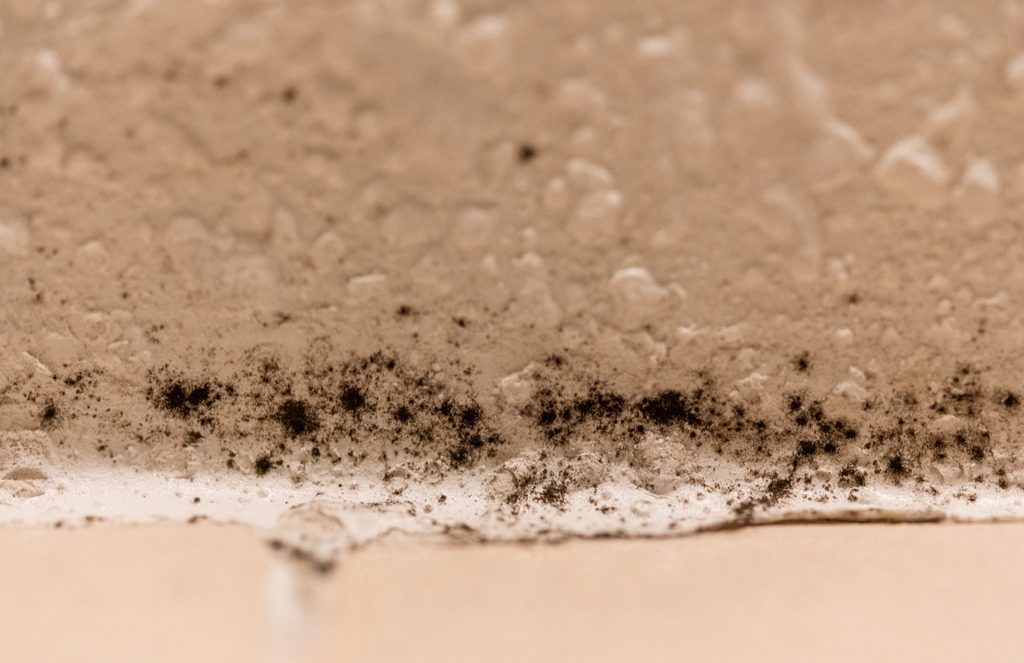
Most of the fear in a mould call is driven by uncertainty rather than by the facts of the specific case. A client who finds a patch of discolouration on a bathroom ceiling does not know if it is a superficial surface growth that a competent clean will resolve in an afternoon, or a sign of a hidden moisture source that has been running behind a wall for months. Both possibilities exist in their head simultaneously until someone with actual expertise tells them which one they are looking at.
The World Health Organization’s 2009 guidance on dampness and mould in indoor environments is useful grounding here, not because a client needs to read it, but because it establishes what a serious operator should already know before speaking. The guidance links persistent indoor dampness to a documented range of respiratory outcomes without ever suggesting that every visible patch of mould is a health emergency requiring evacuation. That distinction, between a documented association at a population level and the specific severity of one household’s specific patch, is exactly what an anxious client cannot make for themselves and exactly what a calm, technically grounded operator can make for them in under a minute of plain conversation.
Reading the case before speaking about it
An operator cannot communicate plainly about a finding they have not actually established. The investigation itself, governed by the framework in IICRC S520, comes first. Visual assessment of the extent and pattern of growth. Moisture readings at the affected surface and at surrounding materials, to establish whether the growth is linked to an active, ongoing moisture source or a historical event that has already been resolved. Where appropriate, further assessment of the affected material to understand whether the growth is surface level or has penetrated into a porous substrate.
This groundwork matters to the communication because it is what allows the operator to speak in specifics rather than generalities. Telling a client the mould is bad or the mould is fine is not communication. It is a guess dressed as an answer. Telling a client that the growth pattern and moisture readings indicate an active leak behind the wall, that the affected plasterboard will need to be removed to a documented distance beyond the visible growth, and that the timeline for the works is a specific number of days, is communication. The specificity is itself part of what calms an anxious client, because vague language reads as either evasion or ignorance, and both increase fear rather than reduce it.
Translating the containment plan without the jargon
Containment under IICRC S520 involves physically sealing the affected area, commonly with polyethylene sheeting and a negative air pressure setup that draws air out of the containment zone through a filtered exhaust, so that spores disturbed during the work are not distributed into the rest of the home. Explained in those terms to a client who has never heard the phrase negative air pressure, the explanation lands as more alarming than the situation warrants, because the vocabulary sounds like something from a hazardous materials response rather than a standard, well understood remediation technique.
The Crusader translation is built around what the client will actually experience, not the technical name for the equipment producing it. We seal off this area with plastic sheeting so dust and spores stay inside it during the work. We run a machine that pulls air out through a filter, so the air inside the sealed area is always moving toward the filter and away from the rest of your home, rather than drifting out into it. You will hear the machine running. You will not be able to use this room during the work. Everything outside the sealed area continues as normal. That is the entire technical content of the containment plan, delivered without a single piece of jargon, and it is accurate, not simplified to the point of inaccuracy.
What to expect, stage by stage
Clients manage anxiety better when they know the shape of what is coming, even before the details are confirmed. A Crusader operator walks a client through the stages before work begins. Assessment and moisture mapping first, which may take a separate visit if the extent needs further investigation. Containment setup, which is visible and audible but confined to the affected area. Removal of any affected material that cannot be remediated in place, bagged and removed through the containment rather than carried loose through the house. Treatment of the remaining surfaces. A final clearance check, ideally with air sampling or surface sampling depending on the scale of the job, before the containment is taken down. Reinstatement of any removed material, which may be a separate trade’s work depending on what was affected.
Each stage gets a plain description and, where possible, a time estimate. Clients rarely ask about the chemistry. They almost always ask how long, how much disruption, and whether it will come back. Answering those three questions honestly, including admitting where an answer depends on what is found once work begins, does more for a client’s peace of mind than any amount of technical detail about the remediation itself.
The chemistry bench, explained simply
Where treatment of affected surfaces is required, our chemistry bench uses hydrogen peroxide based treatments, chosen because hydrogen peroxide breaks down into water and oxygen after use, leaving no persistent chemical residue on the treated surface. We do not use fragranced products in a mould job, because masking an odour with fragrance is exactly the kind of theatre that undermines client trust once they realise nothing has actually changed beneath the smell. Where general surface cleaning is needed elsewhere in the containment zone, our plant derived surfactants are unfragranced and biodegradable within twenty eight days under OECD 301 testing.
Explaining this to a client takes one sentence, not a lecture. We use a treatment that breaks down to water and oxygen once it has done its job, and we do not use anything to cover a smell instead of removing its cause. Clients who hear this distinction almost always relax slightly, because it signals that the operator is solving the actual problem rather than performing a service.
Training the skill, not assuming it
Plain communication under pressure is not a personality trait that some operators happen to have and others do not. It is a skill built through repetition, and we train it deliberately rather than leaving it to instinct. New operators shadow experienced staff through mould investigations specifically to observe how a finding gets translated into plain language before they are ever sent to run that conversation alone. They hear the same technical finding explained three or four different ways depending on how a client is receiving it, and they learn to read the client’s questions as a guide to what needs unpacking further and what has already landed.
Part of the training is learning what not to say. An operator under pressure to look knowledgeable can drift into technical vocabulary as a way of demonstrating expertise, listing standards and equipment names in a way that sounds authoritative but leaves the client no better informed than before the conversation started. We train against this directly. The measure of a good explanation in this job is not how technical it sounds. It is whether the client can repeat back, in their own words, what was found and what happens next. If they cannot, the explanation has failed regardless of how accurate the underlying technical content was.
The other half of the training is emotional regulation under a client’s visible distress. A client who becomes upset during an investigation is not being unreasonable. Their home is involved, and the uncertainty is real to them even where the underlying finding turns out to be minor. Operators are trained to acknowledge that distress directly rather than talking past it, a short, genuine acknowledgement before moving into the technical explanation, because a client who feels heard listens to the facts that follow far better than a client who feels rushed past their own reaction.
When the finding is worse than expected
Not every investigation ends with reassurance, and the communication discipline matters most exactly when the finding is serious. An active leak that has been running for an extended period, affecting a larger area than the visible surface growth suggested, is a genuinely difficult conversation, and the instinct to soften it should be resisted just as firmly as the instinct to exaggerate a minor case. The operator’s job in that moment is to state the finding plainly, explain the reasoning that led to it using the moisture data already gathered, and move immediately into what the remediation plan involves and what timeline it runs on, because a client sitting with an unresolved bad finding and no next step is a client whose anxiety has nowhere to go.
We have found that clients handle a serious finding delivered plainly and paired with a clear plan far better than a minor finding delivered evasively. The plan is what converts a frightening discovery into a manageable project. Withholding the plan, or delaying it while further assessment happens, leaves the client alone with the worst version of the story their imagination can construct, which is almost always more frightening than the technical reality, however serious that reality genuinely is.
Long lasting client tips
First. Ask the operator to show you the moisture readings, not just describe them. Seeing a number next to an unaffected reference point in the same home makes the finding concrete rather than abstract. Second. Ask directly whether the growth is linked to an active moisture source or a resolved historical event, because the answer changes the whole shape of the job. Third. Ask what happens if something unexpected is found once material is opened up, and expect a straight answer about how that would be communicated and priced. Fourth. Do not accept vague reassurance that a small patch is nothing to worry about without a moisture reading to support it, and do not accept alarming language without a specific technical finding behind it either. Fifth. Ask for the clearance approach that will confirm the job is finished, whether that is a visual check, surface sampling, or air sampling, so you know what completion actually looks like before work begins. Sixth. Keep a written or photographed record of what you were told at each stage, because a documented conversation protects both you and the operator if a question arises later.
The bold position
Too much of the mould remediation trade operates at one of two extremes. Some operators lean into fear because fear sells a bigger, more expensive job, describing routine surface growth in language that suggests a household health crisis. Others minimise a genuine active leak because containment and remediation done properly takes longer and costs more than a quick surface treatment, and a client who is not told the truth about the underlying moisture source will not push back on a job that is smaller than the problem actually requires.
Both failure modes share the same root cause. Neither one is built on an operator who has actually done the investigation properly and is willing to report exactly what it found, in plain language, regardless of whether that finding is convenient. We train our operators to do the investigation first and speak second, and to describe findings in specific, checkable terms rather than in language calibrated to produce a particular emotional reaction. A client who is spoken to plainly, accurately, and without theatre in either direction trusts the next recommendation, whatever it is, because the first one was honest.
Restraint matters more than noise.
Cleaning Crusader. Built for impact. Driven by excellence. Guided by purpose.