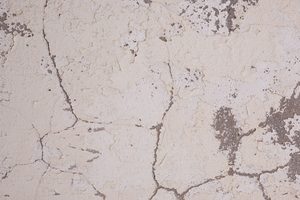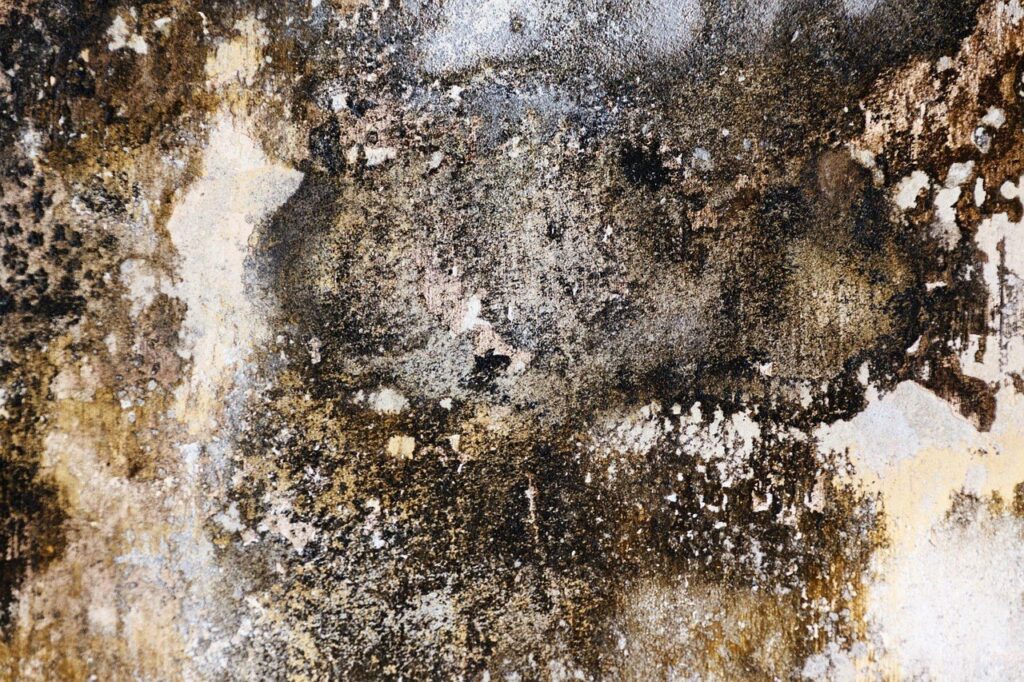
Homeowners routinely mistake soot for mould, mildew smell for mould, and genuine mould for ordinary dust, and the confusion sends some people scrubbing at a serious problem with a kitchen wipe while others call in fear over a mark that was never a health risk at all. A plain field guide, and a clear line for when it is safe to handle a spot yourself, is a genuine service to the reader.
The mark on the wall and the question nobody answers plainly
A dark patch appears in the corner of a bedroom ceiling, or a faint grey haze spreads across bathroom grout, or a musty note drifts out of a wardrobe that has not been opened in a fortnight, and the homeowner is left with the same question every time. Is this mould. Most people have no reliable way to answer it beyond guessing, and the guessing runs in both directions with real cost either way. Some scrub at genuine active mould with a supermarket spray and a rag, disturbing spores into the air of a room they then keep sleeping in. Others call out a remediation company in genuine alarm over a patch of accumulated dust, ordinary bathroom mildew, or soot residue from a candle or an oil heater, none of which carry the same implications as active fungal growth in a building material.
This is a solvable problem. Mould, soot, mildew and dust each have a distinct appearance, a distinct texture, a distinct behaviour under simple testing, and a distinct set of locations where they typically appear. None of this requires laboratory equipment to assess at a first pass level. It requires knowing what to look for, and it is worth setting out plainly, because giving this knowledge away openly is exactly the kind of practical value that earns the right to be trusted with the larger jobs later.
What mould actually looks and behaves like
Mould growing on a building surface is a colony of a living organism, and living colonies have textures and growth patterns that inert deposits do not. Active mould, viewed closely, typically shows some degree of raised or fuzzy texture rather than a perfectly flat stain, even where the colony is young and the texture is subtle. It commonly presents in irregular, spreading patches rather than a uniform even coating, because fungal growth follows available moisture and nutrient rather than distributing itself evenly across a surface. Colour varies enormously depending on species and substrate, from black and dark green through to pink, orange or white, and colour alone is a poor and often misleading indicator, a common myth being that all black growth is the same aggressive species when in fact colour says very little about the specific organism present without laboratory identification.
Location is one of the more reliable clues, because mould follows moisture and moisture in a building follows predictable paths. It concentrates around window frames and reveals, where condensation regularly forms on a cold surface. It appears along external walls, particularly at corners and behind furniture pushed against an external wall, where the wall surface runs cooler than the room air and periodically drops below its dew point. It appears in roof cavities and subfloors following an unaddressed leak, in bathroom ceilings and grout following inadequate ventilation, and in wardrobes and cupboards built against external walls where air circulation is poor and a garment or stored item is holding residual moisture against the wall lining. A patch that has appeared in one of these classic locations, and that has a soft, uneven texture under close inspection, is behaving like mould because it very likely is mould.
What gets mistaken for it, and why
Soot is one of the most common false alarms, typically arising from candles, oil burners, unflued gas heaters or, in some periods of the year, bushfire smoke drifting indoors. Soot deposits as a fine, dry, powdery black or grey film, and its defining behaviour under a simple test is that it smears. A finger or a damp cloth run across a genuine soot deposit will pick up a uniform black or grey residue that transfers cleanly, leaving a smudge rather than disturbing a colony. Soot also tends to appear in a pattern that tracks with an ignition source, meaning it concentrates on ceilings and walls near where a candle or heater sits, or as a general light film across a room following a smoke event, rather than clustering around the specific damp locations mould prefers.
Ordinary household dust accumulation is the second common false alarm, particularly in corners, along skirting boards, on top of wardrobes and behind furniture that is rarely moved. Dust is flat, dry, and uniform in texture, lifts away easily with a dry cloth or vacuum without leaving a shadow of colour behind, and shows no correlation with the specific moisture prone locations mould favours, appearing instead wherever airflow is lowest and disturbance is least frequent. Genuine bathroom mildew, the term most people use for the light grey or black growth that appears on shower grout and silicone seals, is technically a form of mould, usually a surface dwelling species growing on the thin film of soap residue and moisture that collects on tile and sealant. It behaves differently from the deeper, more established mould found in a water damaged wall cavity, in that it typically sits only on the surface film rather than penetrating the substrate, and it responds far more readily to a simple detergent clean because it has nowhere deep to hide.
The smell question deserves its own mention, because a musty or earthy odour is one of the more anxiety inducing signs and one of the least specific on its own. Old books, damp cardboard, long closed cupboards and simply stale, poorly ventilated air can all produce a musty smell with no active mould present at all. The specific earthy, sometimes described as basement like, odour genuinely associated with active fungal growth is caused by microbial volatile organic compounds released as mould metabolises its substrate, a documented phenomenon referenced in indoor air literature including the World Health Organization’s 2009 guidance on dampness and mould in buildings, but the smell by itself, without a visible patch, a moisture source, or a location consistent with mould’s typical behaviour, is not a reliable enough signal to act on alone. It is a prompt to look further, not a diagnosis.
Touch and texture, the test most people skip
Beyond appearance, colour and location, a light touch test adds a further layer of confidence that most homeowners never think to use, largely because the instinct when facing a suspected mould patch is to avoid touching it at all. Wearing a glove, a gentle press against a dry patch reveals texture information a visual inspection alone cannot. Genuine mould, even where the colony is thin, generally has some faint give or softness under gentle pressure where the fungal structure has begun to establish itself into the surface of the material, particularly on painted plasterboard or timber. Soot deposits, by contrast, feel powdery and offer no resistance at all, transferring instantly to the glove with the lightest contact. Accumulated dust feels similarly inert, lifting away cleanly with no adhesion to the surface beneath it. This is a supplementary check rather than a stand alone diagnosis, best used alongside the appearance and location clues already described, but it is a genuinely useful third data point for a homeowner trying to build confidence in what they are looking at before deciding how to respond.
A simple field test, and its real limits
A widely used field test involves applying a small amount of diluted household bleach to an inconspicuous corner of the suspected patch. Genuine mould growing on the surface will typically lighten noticeably within a minute or two as the bleach oxidises the pigmented structures of the colony, whereas soot and dust generally show little to no colour change beyond simply wetting and smearing under the same test. This test is useful as a rough discriminator and nothing more. It is worth being direct about its limits, because bleach’s action on a porous substrate such as painted plasterboard, timber or grout is largely cosmetic. It lightens the visible pigment sitting at the surface without reliably reaching or killing the fungal structure that may be established within the pores of the material itself, which is precisely why bleach is not considered an adequate remediation method for mould in porous building materials by remediation standards including the IICRC S520 mould remediation standard, even though it is a genuinely useful diagnostic aid for telling mould apart from soot or dust in the first place.
Where the line sits for doing it yourself
The clearest and most widely used practical guideline for what a homeowner can reasonably handle without professional help comes from the United States Environmental Protection Agency’s guidance for mould in schools and commercial buildings, which draws its line at an affected area of roughly one square metre. Below that size, and where the affected material is not structurally significant, a contained, small patch of surface mould on a hard, non porous or lightly porous surface such as tile, glass or painted trim can generally be cleaned by a careful homeowner using appropriate personal protection, a properly fitted P2 rated mask, gloves, and eye protection, working with the room ventilated to the outside and the area gently dampened before disturbance to reduce airborne spore release, cleaned with a plain detergent solution rather than an aggressive chemical, and dried thoroughly and promptly afterward.
Above that rough one square metre threshold, or where the growth has resulted from a category two or three contaminated water event, or where it is growing within a porous cavity material such as plasterboard or carpet underlay rather than merely on a hard surface, or where anyone in the household has asthma, a compromised immune system or a diagnosed mould sensitivity, the situation moves outside sensible do it yourself territory and into a job for a trained remediation operator working to a documented containment and clearance protocol. The size threshold is a genuinely useful rule of thumb precisely because it draws the line on the one variable, extent, that most reliably predicts whether disturbance during a home clean risks distributing spores well beyond where they started.
Long lasting client tips
First. Photograph any suspected patch before touching it, noting its size against a familiar object for scale, because that photograph is the single most useful piece of information if the situation later needs professional assessment.
Second. Run the bleach spot test on an inconspicuous corner before assuming a patch is mould, remembering that the test is a diagnostic aid for telling mould apart from soot or dust, not a remediation method in itself.
Third. Address the moisture source, not just the visible patch, because any surface mould reappearing within weeks of a clean is telling the household that the underlying dampness was never actually resolved.
Fourth. Ventilate any room where a suspected patch is being cleaned, opening a window or running an extraction fan, and wear a properly fitted mask and gloves even for a small, contained job.
Fifth. Treat anything larger than roughly one square metre, anything inside a wall or ceiling cavity rather than on its surface, and anything following a significant water event as outside the do it yourself range, regardless of how manageable it looks on the surface.
Sixth. Keep a simple record of any patch that has recurred more than once in the same location, because recurrence in the same spot after cleaning is one of the clearest signals that a structural moisture problem, not a cleaning problem, is the actual cause.
The bold position
We will say this plainly. Most homeowners have never been given a genuinely useful way to tell mould apart from soot, mildew or dust, and the cleaning industry has generally preferred that confusion because uncertainty sells call outs whether or not a call out is actually warranted. That approach does not build trust. It erodes it, one unnecessary alarm and one dismissed genuine problem at a time.
Cleaning Crusader would rather a homeowner know exactly what they are looking at, know exactly when a small patch is safely within their own hands, and call a professional only when the size, the location or the household’s health circumstances genuinely warrant it. Giving away this knowledge does not cost us the larger jobs. It earns the trust that brings us the larger jobs, because a business willing to tell a customer when they do not need us yet is a business worth calling the day they genuinely do.
The work is the proof.
Cleaning Crusader. Built for impact. Driven by excellence. Guided by purpose.