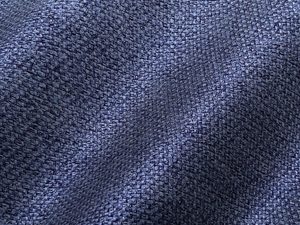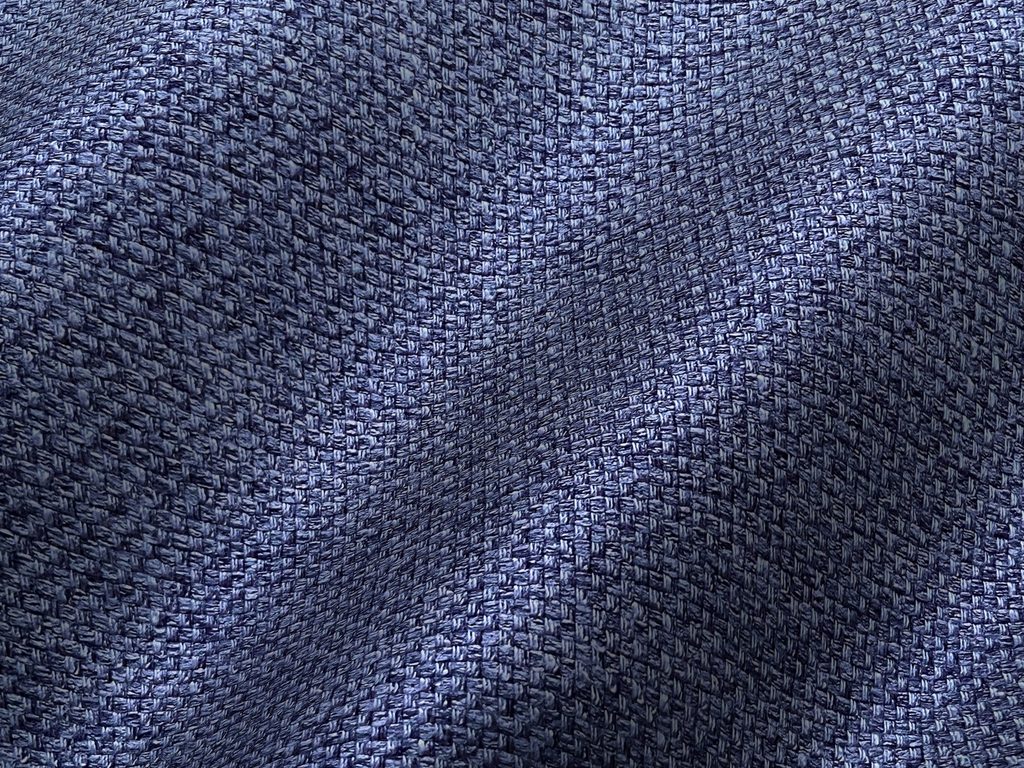
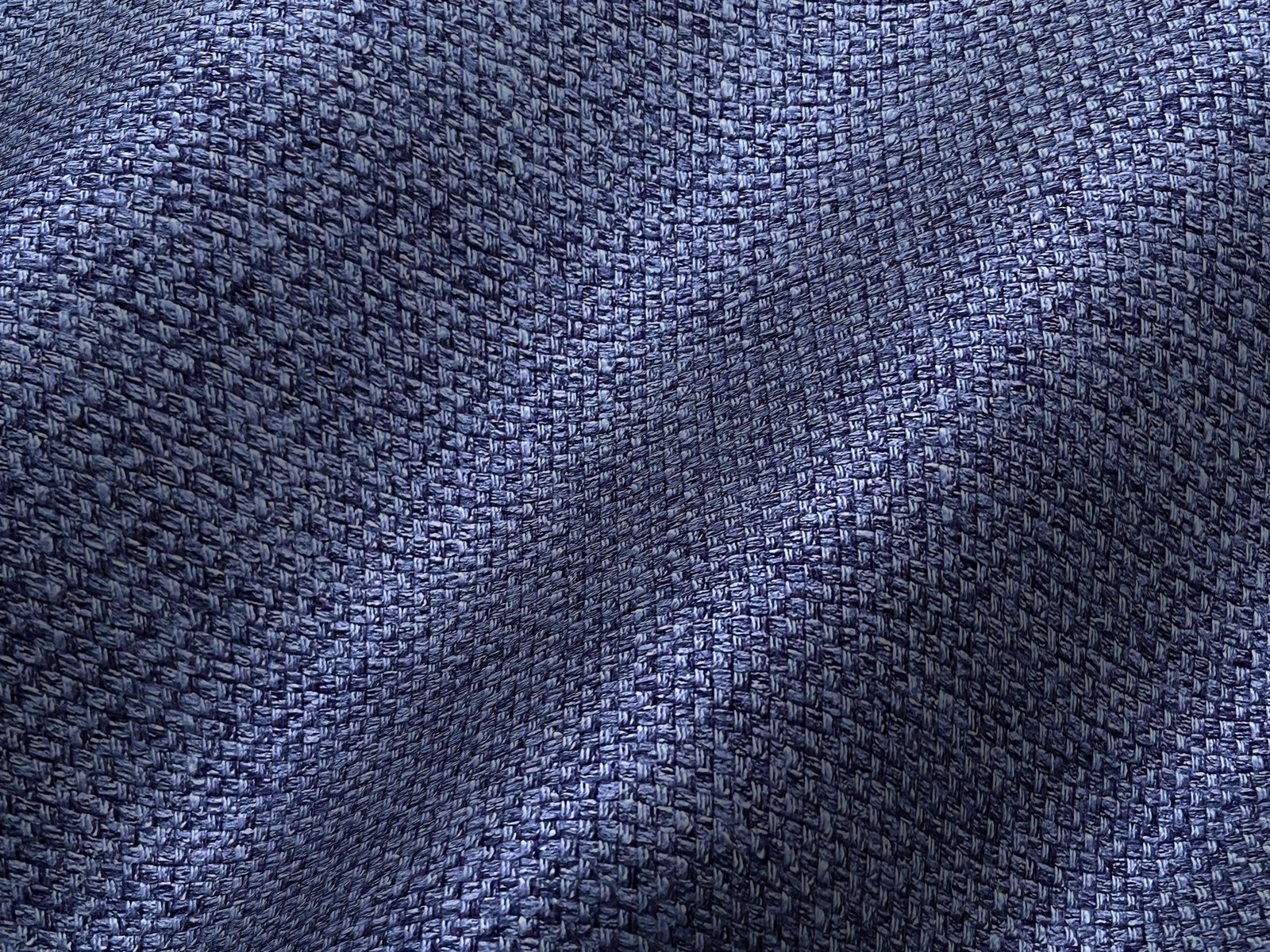
Two textiles, two constructions, two dye systems and two entirely different tolerances for water. Why the machine that restores a floor covering destroys a sofa, and how method selection is actually made.
The most expensive mistake in soft furnishing care in this country takes about four minutes to make. An operator finishes a carpet, notices the lounge suite, offers to do it while the machine is hot, changes to a smaller hand tool on the same hose at the same pressure and the same temperature, and works across a fabric nobody has identified. The customer sees a reasonable result on the day. Three days later there are brown rings on the arms, the seat cushions have gone stiff, and the piping has pulled the colour out of the panels either side of it.
That job was not a technique failure. It was a category failure. The operator treated an upholstered chair as a small piece of carpet, and the two things have almost nothing in common beyond both being textiles.
A carpet is an engineered floor system built to be walked on, soiled, and wet cleaned repeatedly across a service life measured in decades. An upholstered piece is a decorative face fabric stretched over foam, wadding and webbing on a frame, selected by an interior designer for appearance and hand, and in a great many cases never intended to be wet at all. Everything downstream of that distinction follows from it.
Two assemblies with nothing in common
Start with what is under the surface, because that is what decides how much water a textile can safely receive.
A tufted carpet is a laminated assembly. Face yarn is tufted through a primary backing, locked with a latex adhesive layer, and bonded to a secondary backing. Beneath it sits underlay and then a subfloor. When water goes into a carpet during cleaning, it passes through a dense fibre bed with a defined thickness, and a well set up extraction tool recovers most of it on the same pass. The material below is a sacrificial cushion, not a decorative element. IICRC S100, the standard for professional cleaning of textile floor coverings, describes this discipline. It does not cover upholstery, and that omission is not an oversight.
An upholstered piece is a completely different arrangement. A face fabric, often thin and often loose weave, sits over polyester wadding, over polyurethane foam, over hessian or elastic webbing, over a frame that may be hardwood, softwood or engineered board. There is no impermeable layer anywhere in that stack. Water introduced at the face does not stop at the face. It passes into the wadding and the foam, which are absorbent and enormously slower to dry than any carpet system, and it can reach the webbing and the frame.
Foam is the critical difference. A polyurethane cushion that has taken on water can hold it for days in an ordinary Perth lounge room, and the foam is enclosed by the very fabric you have to dry through. That is a warm, dark, still, wet, nutrient rich environment that does exactly what Monday’s article described. It is also the reservoir that produces wicking, where moisture migrating back to the surface during drying carries dissolved soil and colour with it, and deposits both in a ring at the fastest drying line.
Fibre content is where the risk lives
Carpet fibre in Australia is a narrow field. Nylon in its two common forms, polypropylene, polyester, wool, and blends of those. All of them are reasonably tolerant of water. Polypropylene is coloured in the melt before extrusion, which is why it resists both staining and bleaching. Nylon takes acid dye and holds it well. Wool is the sensitive one and it is well understood.
Upholstery fibre is an open field, and the operator does not get to assume. Cotton, linen, viscose, silk, wool, acrylic, polyester, polypropylene, nylon and any blend of them, plus leather and coated fabrics that are not textiles at all. The blends are where identification gets genuinely difficult, because a fabric can behave like a polyester until the moment its cotton content browns.
Viscose deserves its own paragraph, because it is the single most common cause of upholstery damage in this market and because it is everywhere. Viscose is regenerated cellulose, manufactured to look and drape like silk at a fraction of the price, and it appears in cushion covers, accent chairs, curtains and mass market lounge fabrics constantly. Its defining property is that it loses a substantial part of its strength when wet, commonly cited as a third to a half of its dry strength. Wet viscose distorts under its own weight, shrinks unevenly, develops permanent watermarks from nothing more than a clean water droplet, and browns readily. A wet cleaning method applied to viscose is not a risky choice. It is a decision to damage the piece.
Wool has a narrower chemical window than most operators respect. It is a protein fibre, stable across a pH range of roughly four point five to eight point five, and progressively damaged by alkalinity above that. High pH strips it, yellows it and weakens it. Heat, moisture and agitation together produce felting, which is not recoverable by any method. Silk is more restrictive again, and most silk upholstery should never see water.
Cotton and linen are cellulosic, which means they are subject to browning, and they are dimensionally unstable when saturated and dried unevenly.
Dye stability, and the codes nobody reads
Carpet dye systems are chosen partly for wet fastness because the manufacturer knows the product will be wet cleaned. Upholstery dye systems are chosen for colour, hand and light fastness. Wet fastness is often an afterthought, and printed fabrics in particular can release colour with very little provocation.
Most manufactured upholstery carries a cleaning code on a tag under a cushion or beneath the frame. The codes are simple and widely ignored. W means the fabric can be cleaned with water based chemistry. S means solvent only, and water will damage it. WS or SW means either is acceptable. X means neither, and the fabric may be maintained only by vacuuming and light brushing. An X coded fabric that has been wet cleaned is usually beyond recovery.
The code is a starting point rather than an answer, because it describes the face fabric and says nothing about the filling, the frame or what has previously been applied to the piece. Prior treatments matter enormously. Retail applied protectors, silicone based home products and supermarket foam cleaners all leave residues that change how the fabric responds. A fabric that has had four years of a sticky residue applied to it will resoil within weeks no matter how well it is cleaned, and the client deserves to be told that before the work rather than after.
So we test. A colourfastness check is performed on every piece, in a concealed area, using the exact chemistry and the exact method intended for the job, with a white towel blot and a dwell time. If colour transfers to the towel, the method changes. This takes three minutes and it is the difference between a professional and a gambler.
Method selection is the actual craft
There is no default method in upholstery. There is a decision made after inspection, and there are four broad options.
Dry solvent cleaning uses a volatile solvent carrier with no water. It is the correct answer for S coded fabrics, for viscose, for many silks and for pieces where dye stability is questionable. It cleans the face fabric only and does not reach the filling, which is precisely why it is safe.
Low moisture methods, including encapsulation chemistry and controlled foam application, introduce a small and measured amount of water at the surface, suspend the soil, and remove it by towelling or light extraction. Most mid range upholstery in good condition is best served this way. Dry times are short and the filling never becomes involved.
Controlled hot water extraction is appropriate for durable synthetic fabrics with confirmed dye stability, and it is done with an upholstery hand tool rather than a carpet wand. The differences are not cosmetic. Carpet extraction commonly runs at pressures in the range of three hundred to five hundred pounds per square inch, the industry standard unit, at water temperatures that may reach sixty to eighty degrees Celsius at the tool. An upholstery tool should be run at a fraction of that pressure, with reduced heat, and with far more recovery passes than wet passes. The objective on upholstery is to leave the fabric damp rather than wet, and to have recovered more moisture than was applied.
Wet cleaning wool or a cellulosic blend adds a further constraint. The chemistry must sit inside the fibre’s pH window, the temperature must come down, and a mild acid rinse is used to return the fabric to a slightly acidic state and to control browning.
Drying is a method decision in its own right, not a courtesy at the end. Air movement is applied across the piece for as long as it takes, cushions are stood on edge so both faces dry, and the piece is not returned to its position against a wall until it is genuinely dry. Most brown rings and most odour complaints trace back to a drying failure rather than a cleaning failure.
Where a piece has removable covers designed for laundering, laundering them is often the better route, and it is a different discipline again with its own standard. AS 4146, the Australian standard for laundry practice, is the reference for that work. Covers that are washed at the wrong temperature shrink, and a shrunk cover does not go back on a cushion.
The Crusader upholstery protocol
Every upholstery job runs the same sequence before any chemistry is opened.
We identify the fibre. Tag inspection first, then physical assessment, and where the tag is missing or unreliable, a burn test on a single yarn taken from a hidden seam allowance. Fibres identify themselves by how they burn and what they smell like and what residue they leave, and it costs one thread to know.
We inspect the construction. What is under the face fabric, how the piece is assembled, whether the frame is solid or engineered board, whether the cushions are removable and reversible, and whether there is any existing structural damage the client has not mentioned.
We test dye stability with the intended chemistry in a concealed area, and we test pH on the fabric to detect prior treatments and residues.
We assess soil type, because the soil decides the chemistry as much as the fibre does. Body oils on a headrest are a different problem from dry particulate soil in a seat cushion, and they are not addressed by the same preparation.
We then select the method, and we tell the client what we selected and why, including where our assessment means we will do less than they expected. Refusing to wet clean a viscose chair is a professional act, not a failure to deliver.
We clean, we dry with mechanical air movement, and we inspect the piece dry before the job is closed. A piece signed off wet has not been inspected.
The same sequence applies where a mattress is cleaned as an upholstered panel. It is a textile face over a filled construction, and it is assessed and treated as upholstery.
Eco chemistry for soft furnishings
Our upholstery bench is plant derived surfactant chemistry, readily biodegradable under OECD 301B within twenty eight days, unfragranced, with no quaternary ammonium compounds in routine work.
The reasoning is sharper on upholstery than anywhere else in our service list. Upholstery is the one surface in a home that is in sustained contact with skin. People sleep against it, sit on it for hours and press their faces into it. Anything left in the fabric is in contact with a person for a large part of their day.
Quaternary ammonium compounds are cationic. They are attracted to and bind onto anionic fibres and soils, which means they do not rinse out of a textile easily. They are persistent by design and are documented respiratory irritants for sensitive occupants. On upholstery they also carry a practical penalty, because a cationic residue left in a fabric attracts soil and the piece resoils faster than it did before it was cleaned.
Residue control is the whole point. A correctly cleaned fabric is rinsed to a neutral or slightly acidic state, dries with a soft hand, and stays clean longer because there is nothing sticky left in it. Fragrance is left out entirely, because a fabric that smells of a product is a fabric whose actual condition cannot be assessed by the person living with it.
Long lasting client tips
Six rules that will keep your furniture out of the replacement cycle.
First. Find the tag before you buy any product. It is under a cushion or beneath the frame. A W, an S, a WS or an X on that tag decides everything, and an X means vacuum only, permanently.
Second. Vacuum upholstery properly and often. Dry particulate soil is abrasive and it cuts fibre every time someone sits down. Use the brush tool, work into the crevices, and do the sides and the back, not only the seat.
Third. Blot spills immediately with a white cloth and plain water, working from the outside of the spill inward. Do not scrub. Do not apply a supermarket foam cleaner to an unknown fabric. Most permanent upholstery damage in Australian homes is caused by the first response, not the spill.
Fourth. Rotate and reverse cushions monthly. Wear is a function of one seat taking every use. Rotation trebles the life of a lounge suite and costs nothing.
Fifth. Keep upholstery out of direct sunlight where you can, and pull furniture a few centimetres off external walls. Sunlight breaks down dye and fibre, and a piece pressed against a cold external wall in winter can hold surface moisture against its own back panel.
Sixth. Tell your cleaner the truth about the history of the piece. Whether a protector was applied, whether a home product has been used on it, whether a pet has been on it. That history changes the method, and an operator working without it is working blind.
The bold position
The failure mode in this category is not ignorance. It is inventory. An operator who owns one machine will sell one method, and every fabric in Perth will be assessed as suitable for that method, because the alternative is turning down work.
That is the honest explanation for most upholstery damage in this state. Not carelessness. Not indifference. A commercial structure in which the tool was purchased before the discipline was learned, and in which the assessment is therefore performed by the equipment rather than by the operator. A truckmount does not know what viscose is.
We will say it plainly. Upholstery cleaning is a separate trade discipline from carpet cleaning, it requires separate training, separate chemistry and separate tooling, and it is routinely sold in this market as an add on performed on the way out the door. The customer has no way of knowing that the four minute decision they just approved is the highest risk moment in the job.
Cleaning Crusader identifies every fibre before it opens a bottle, tests every dye system with the chemistry we intend to use, and selects a method from four rather than defaulting to one. We will tell a client that their chair cannot be wet cleaned and offer a dry method that achieves less. We will tell them when a prior treatment means the piece will resoil quickly and that this is not something our work can undo. And we will decline to touch an X coded fabric, because a refusal costs us one invoice and a ruined chair costs the client a room.
Furniture is not a small carpet. It is the most personal textile in the building, and it deserves to be assessed by somebody who knows the difference.
Forged in Standard. Built on Excellence.
Cleaning Crusader. Built for impact. Driven by excellence. Guided by purpose.