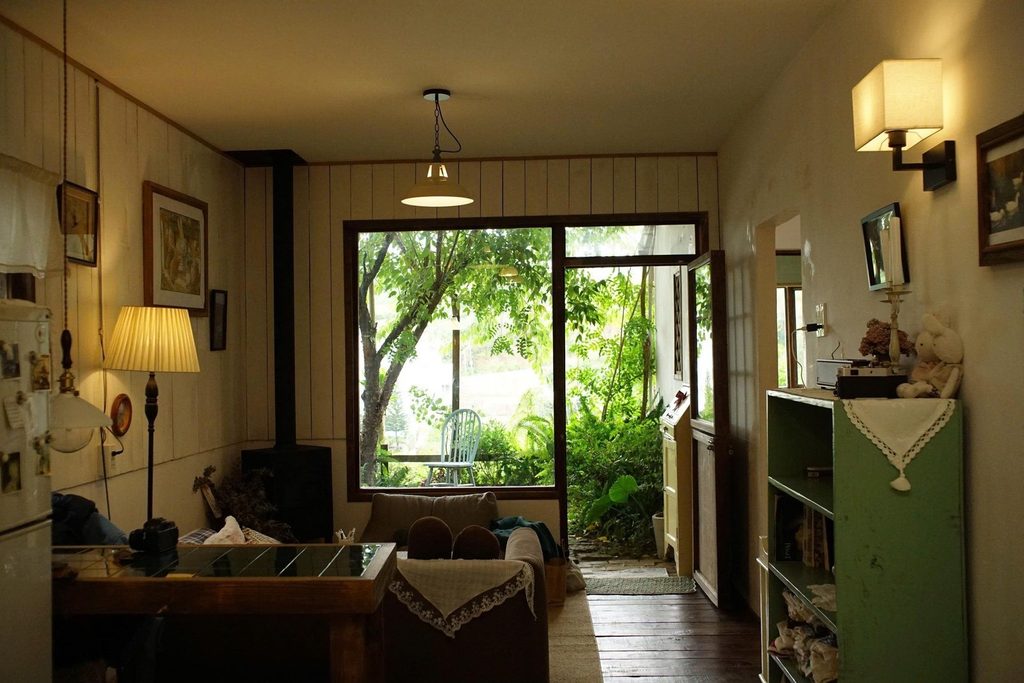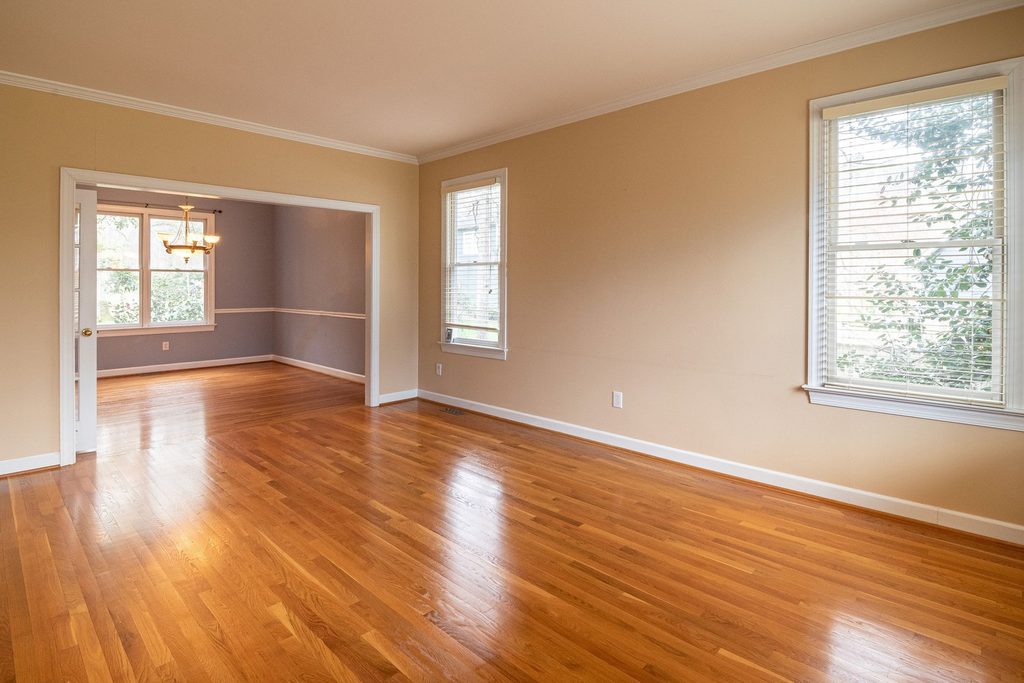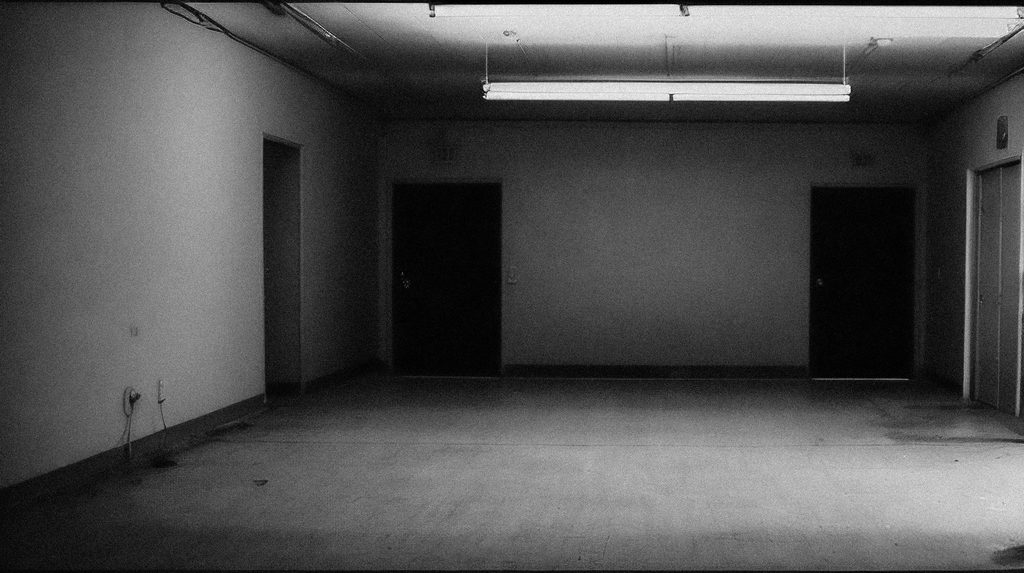
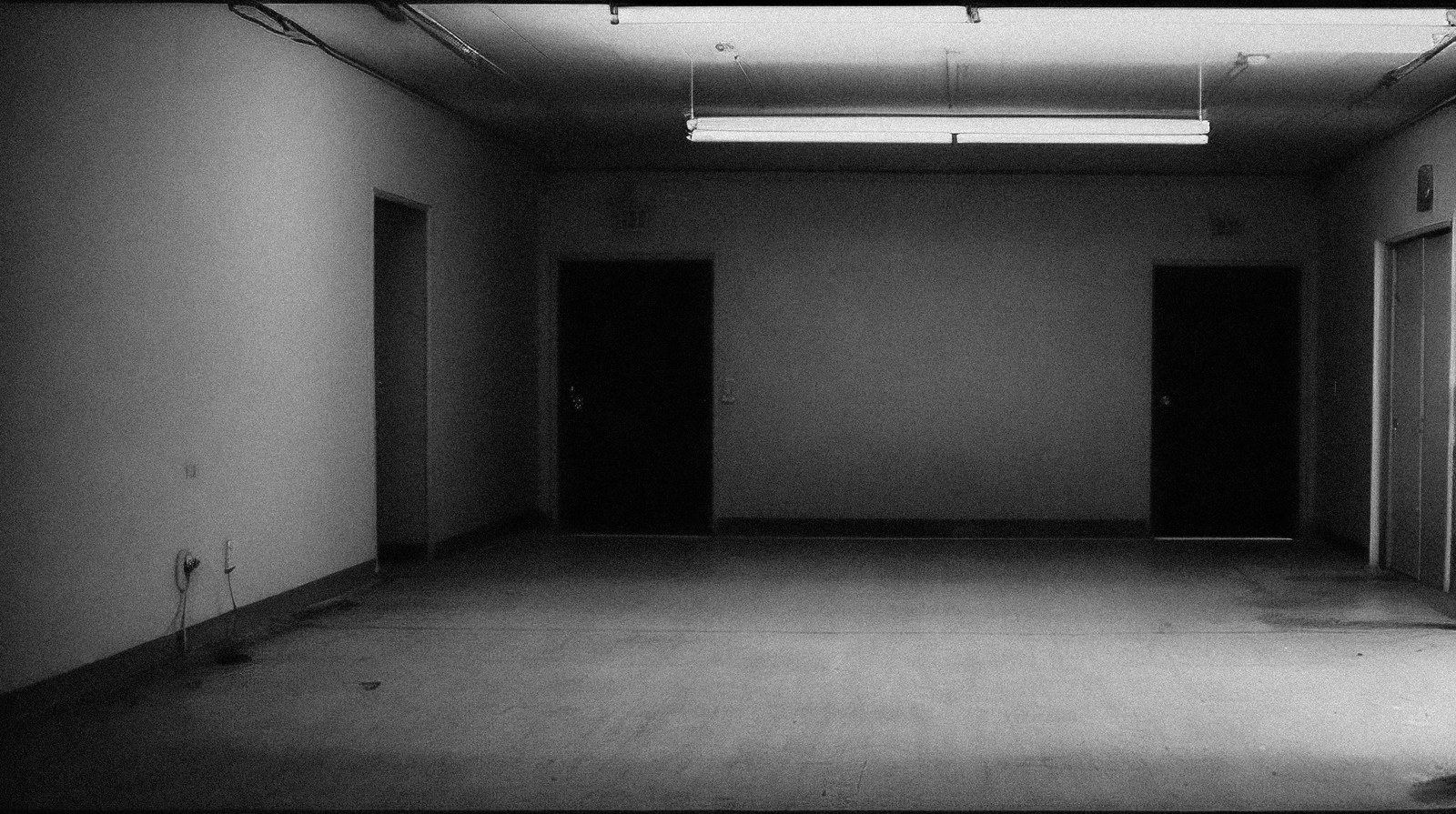
Long before a water damaged or contaminated room shows up in a valuation, it shows up in where people walk, what door stays shut, and which part of the house has quietly stopped being lived in.
Every restorer has walked into a house where one door is closed and everybody in the family knows why without anyone saying it. The room behind it had a leak two winters ago, or a burst hose, or a slow failure under a shower on the other side of the wall. The room is not condemned. It is not unsafe in any formal sense. It is simply not used any more, and the household has rearranged itself around the absence with the efficiency of water finding a lower path.
That rearrangement is the real damage, and it arrives years before the damage a valuer would record. A building surveyor inspecting that house would note staining, elevated moisture, perhaps a repair recommendation. What the surveyor cannot record is that the family of four now lives in three quarters of the house they are paying for, that the study became storage, that the guest room stopped receiving guests, and that nobody has decided any of this out loud.
This article is about the behavioural cost of a contaminated room, because it is the cost that clients feel and the cost the trade almost never talks about. We sell drying and remediation. What people actually buy is the use of their own house.
A house is a behavioural map, not a floor plan
People do not experience a home as square metres. They experience it as a set of habitual paths and default destinations. Where you put the washing down. Where you sit to read. Which room the children take their friends into. Those paths form over months and they are almost entirely unconscious.
Introduce a room that smells faintly wrong, or that feels colder than it should, or that carries a stain the family has stopped mentioning, and the paths reroute. The reroute does not require a decision. It happens the way you step around a puddle without narrating it to yourself. The door gets closed to keep the smell contained. Closing the door reduces air movement through the room, which raises the vapour load in it, which makes the conditions marginally worse. The avoidance becomes self reinforcing within a season.
By the time a household describes the room as a problem, they have usually been managing it for a year or more. When we ask when it started, the honest answer is often that they cannot remember, because there was no moment. There was a slow migration.
The nose stops telling you and the visitors do not
Olfactory adaptation is the reason this progresses invisibly. The human olfactory system is built to detect change, not to report constant conditions. Continuous exposure to an odour reduces the perceived intensity of it substantially within minutes, and living in a house with a persistent low level odour recalibrates the baseline entirely. The occupant genuinely cannot smell what a visitor detects at the front door.
This produces a specific and painful dynamic. The household believes the problem is minor because they can barely perceive it. A guest walks in, and something in their face registers before they say anything. The occupant, who has been reassuring themselves for months, now has external evidence that the situation is worse than their own senses report. Embarrassment follows. Embarrassment leads to fewer guests. Fewer guests means less external feedback, which means the drift continues unchallenged.
We meet this in the first phone call more often than anything else. The trigger for the call is almost never the stain. It is a family member visiting from interstate, or a real estate appraisal, or a new partner. Someone from outside the adapted environment said the quiet part.
The sequence of abandonment
Rooms do not get abandoned in one step. The sequence is consistent enough that we can predict a household’s stage from a few questions.
Stage one is reduced dwell time. Nobody stops using the room. They simply stop lingering in it. The door is open, the room is furnished, and the average time anyone spends in there falls.
Stage two is functional demotion. The room loses its primary purpose and acquires a lesser one. The study becomes the room where the ironing board lives. The fourth bedroom becomes the place the spare mattress leans against a wall.
Stage three is storage. Objects arrive that are not meant to leave. The room is now a container, and its contents form a physical barrier to inspecting or treating the room, which raises the cost and difficulty of ever addressing it.
Stage four is closure. The door stays shut. Air movement stops. Whatever moisture dynamic created the problem now runs unopposed in a still, unventilated space, and the soft furnishings in there become a reservoir.
The economics of stage four are worth stating plainly. Take a modest case. A room of twelve square metres in a house of one hundred and eighty is roughly seven percent of the floor area. Whatever that household pays each year in mortgage interest, rates and insurance, seven percent of it is now purchasing storage. Over the three or four years these situations typically run, the accumulated cost of the unused room routinely exceeds the cost of the investigation and remediation that would have returned it. Households do not run this arithmetic, because the cost is silent and the remediation quote is not.
What sits underneath the behaviour
There is a health dimension here and it deserves to be stated carefully, without overreach.
The World Health Organization published its guidelines for indoor air quality on dampness and mould in 2009. The conclusion relevant to a household is that occupants of damp or mouldy indoor environments carry an increased risk of respiratory symptoms, respiratory infections and exacerbation of asthma, and that the association holds with dampness and microbial growth generally rather than with any particular organism. The guidelines also concluded that no safe numerical threshold for indoor fungal concentration could be established, which is why the recommendation is to prevent and remediate dampness rather than to measure toward a permitted level.
What that means at kitchen table level is modest and important. If a room in your house is damp and something is growing in it, the recommendation is to fix the dampness and remove the growth. Not to test it, not to rank it, and not to wait for symptoms to justify acting.
We are cleaners and restorers, not clinicians, and we will not tell a household what a symptom means. What we will say is that we have lost count of the times an occupant has mentioned, offhand and after the work, that the coughing at night stopped. We record those comments and we do not build claims on them. The documented association is enough to act on, and acting on dampness has never harmed anybody.
Why the decision stalls
Understanding why households delay is most of the job, because the delay is rarely about money.
The first reason is that nobody has given them a defined problem. A stain is not a problem you can act on. It is an ambiguity. Ambiguity is the enemy of household decisions, particularly decisions requiring two people to agree.
The second reason is competing quotes that describe different jobs. One operator quotes a treatment at a low number. Another quotes an investigation, a containment and a removal at four times the number. To a homeowner without the vocabulary, these read as the same job at different prices, and the rational response to that appearance is paralysis.
The third reason is that the room has become a proxy. In many households, the untouched room has absorbed an argument about money, or about who was supposed to call someone, or about a decision made years ago. Raising the room raises the argument, so the room stays shut. This is not a technical matter and we cannot fix it, but recognising it changes how we communicate. We keep the scope factual, sequenced and free of blame, because a document that assigns no fault is easier for a household to say yes to.
The Crusader method for a room nobody uses
Our deliverable in these cases is not a cleaning. It is a decision the household can actually make, followed by a room they can actually re enter.
We begin with an investigation rather than a quote. Moisture mapping, thermal imaging, hygrometric readings and a visual assessment of the affected materials, including under and behind the furniture the household has been storing there. The output is a plain statement of what is wet, why it is wet, what is growing and where the contamination has spread.
We then write a scope that a person without trade vocabulary can read. What will be removed. What will be cleaned. What has to be repaired by another trade before we start, and which trade that is. How long the containment will be in place. What the household must do during the work, including whether the room can be occupied.
We define the finish line before we begin. The dry standard, taken from unaffected reference materials, and the verification criteria. The client knows on day one what proof they will hold at the end.
Then we do the work, and the last thing we hand over is not an invoice. It is the file. Photographs, readings, dates, the scope as delivered, and the verification result.
The reason for this shape is behavioural. A household that has been avoiding a room for two years does not simply resume using it because the work is finished. They need permission from evidence. The file is the permission.
Eco chemistry in a room people have to re enter
The chemistry decision in this work is not an environmental gesture. It is a functional requirement of the outcome.
Our bench is plant derived surfactants, readily biodegradable under OECD 301B within twenty eight days, unfragranced, with no quaternary ammonium compounds in routine work and hydrogen peroxide based chemistry where a sanitising step is genuinely indicated. In a room a family has avoided for years, the reasoning is specific.
Residual chemistry is the wrong answer in a bedroom. Quaternary ammonium compounds are cationic and persist on surfaces by design. They are documented respiratory irritants for sensitive occupants. Leaving a persistent biocide across the surfaces of a room we are asking a child to sleep in again is not a trade off we are willing to make when physical removal does the work properly.
Fragrance is the more damaging error. The single most important instrument in that house is the occupant’s own nose, and it has been unreliable for a year because of adaptation. After remediation it recalibrates, and within a few weeks it becomes an accurate early warning system again. A fragranced product overwrites that instrument at exactly the moment it is about to become useful. Worse, a masked room teaches the household that the smell is what was treated, so they attribute any return to a wearing off rather than to a recurrence.
We hand back a room that smells of nothing. Nothing is the correct result. Nothing is also the only result a household can verify for themselves.
Long lasting client tips
Six rules for anyone who has a door in their house that stays shut.
First. Open it and stand in it for five minutes each morning for a week. Adaptation happens fast but it also resets overnight. The first thirty seconds after you walk in from another part of the house is the most honest sensory reading you will get.
Second. Ask a visitor directly. Not whether the room looks alright, but whether they can smell anything, standing in the doorway, before you say what you think it is. Their answer is data you cannot generate yourself.
Third. Empty the room before you get anyone to look at it. Stored contents hide the affected materials, absorb odour and contamination themselves, and will otherwise be quoted around rather than inspected.
Fourth. Do not compare a treatment quote with an investigation quote as though they are the same job. Ask both operators one question. What is the moisture source and how did you determine it. The answers will separate them immediately.
Fifth. Keep the room ventilated while you decide. Closing the door raises the vapour load in a space that already has too much. An open door, a slightly open window on a dry day and any air movement at all slows the deterioration while you organise.
Sixth. Set a date. The most expensive part of a contaminated room is not the remediation. It is the years of the room being unavailable while the decision waits for a better moment that does not arrive.
The bold position
The restoration industry has trained itself to sell a technical service and has almost entirely failed to understand what the customer is buying. We quote square metres of carpet, litres of extraction, days of equipment. The household is buying back a room in their own home, and the fact that they are living in a fraction of the house they pay for is not a line item on any scope in this country.
The failure mode is quieter than incompetence and more common. It is the operator who arrives, quotes a treatment for the visible marking, and leaves the household exactly where they were, holding an ambiguity with a price attached. That operator has not helped anyone decide anything. Six months later the door is still shut, and the household concludes that the problem is unfixable rather than that the diagnosis was never performed.
We will say it plainly. A quote given without an investigation is not a professional opinion. It is a guess with a number on it, and in this category the guess costs the household years of their own house.
Cleaning Crusader investigates before it quotes, writes scopes in language a person can act on, tells clients when the first call belongs to a plumber or a waterproofer instead of us, and finishes with evidence rather than an invoice. Not because it is a gentler way to run a business, but because the outcome we are actually selling is a family walking into a room they had stopped walking into.
The room comes back before the valuation does. That is the part worth measuring.
Restraint matters more than noise.
Cleaning Crusader. Built for impact. Driven by excellence. Guided by purpose.