The colony was never the mark on the wall. It was the moisture behind it, the spores in the dust, and the conditions that made both inevitable. Spore ecology, the three conditions the standard actually describes, and why cleaning a surface ends an appearance rather than an organism.
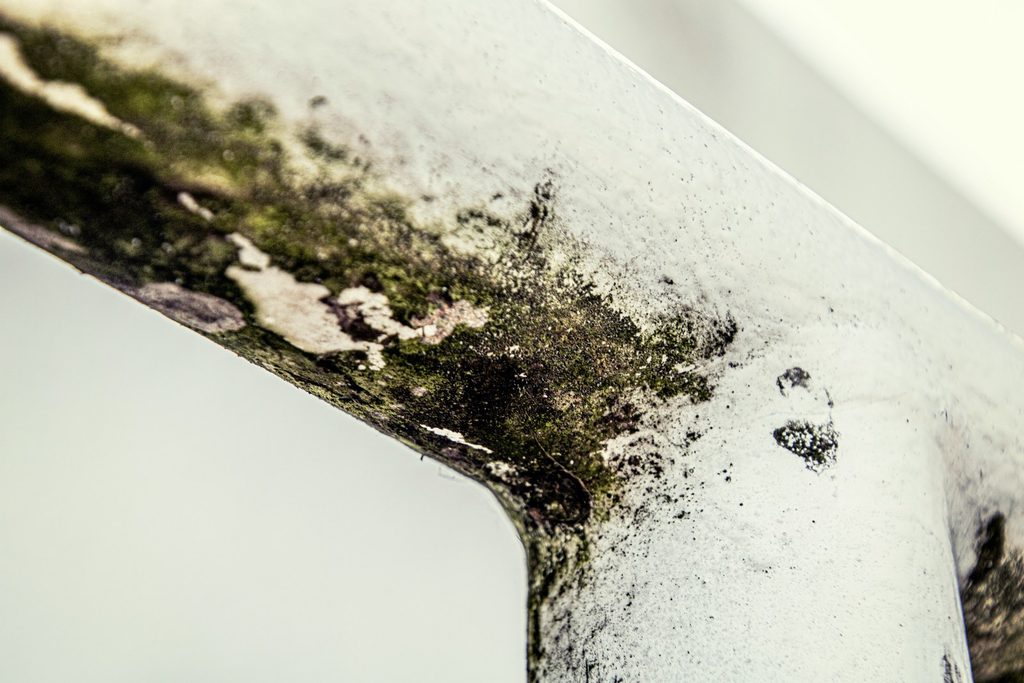
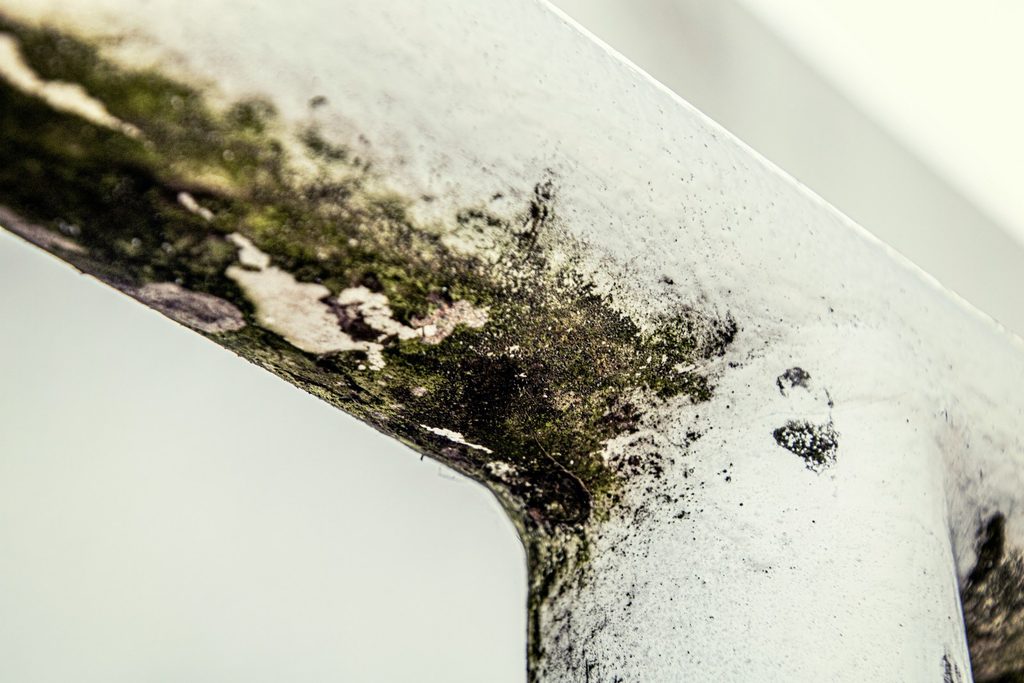
A customer rings in February. The wall was treated in November. The dark bloom along the cornice has returned in the same shape, in the same place, and slightly wider than it was. They want to know what went wrong with the treatment. In almost every case, nothing went wrong with the treatment. The treatment removed an appearance. The colony was never the appearance.
Mould does not come back. Mould continues. The distinction sounds like a technicality and it is the entire discipline. A returning stain is not a new event. It is the visible phase of a process that was never interrupted, running in a building where the conditions that started it have not changed by a single degree or a single gram of water. The recurrence is not a failure of the product. It is a correct result produced by an incorrect model of the problem.
This article is the ecology of that continuation. What a spore is, what a colony requires, and what the IICRC S520 standard for professional mould remediation means by Condition 1, Condition 2 and Condition 3.
What a spore actually is
Fungi reproduce by releasing spores. A spore is a survival package. It carries the genetic material, a small energy reserve, and a wall built to tolerate desiccation, ultraviolet exposure and long periods of nothing happening. For the genera that dominate Australian indoor air, principally Cladosporium, Penicillium, Aspergillus and Alternaria, spores run roughly two to ten micrometres across. A human hair is around seventy micrometres. Spores stay suspended in still air for hours.
They are outdoors at all times, in every season, in every suburb of Perth. They enter buildings on air currents, on clothing, on shoes, on pets. Then they settle in dust, and dust is where they wait. Household dust is a spore bank, and it is not a sign of neglect. It is the normal condition of a building on a planet with fungi on it.
This is the first correction most customers need. The objective of remediation is not sterility. A building with no fungal spores in it does not exist and could not be maintained. The objective is normal fungal ecology, meaning the indoor spore population resembles the outdoor population in kind and quantity, and nothing is growing indoors.
The three things a colony needs
A spore is inert until conditions permit germination. Three conditions have to be present together.
Moisture is the first and the only one worth arguing about. Fungi do not need liquid water. They need water activity, the availability of water in a material expressed on a scale from zero to one, where pure water is one. The xerophilic species that tolerate dry conditions will germinate on materials at a water activity around zero point seven five to zero point eight. The species requiring sustained saturation, including Stachybotrys chartarum, need water activity above roughly zero point nine and need it to persist. Translated into building terms, a wall does not have to be wet to grow mould. It has to be damp at the surface for long enough, and a cold external wall in a closed Perth house in July reaches that condition most nights without a drop of visible water.
Nutrient is the second and it is not negotiable in a building. Fungi consume cellulose and its relatives. The paper liner on plasterboard is nearly pure cellulose. Framing is cellulose. Carpet backing, dust, skin cells, cooking residue, the soil load in an unmaintained carpet, the adhesive under a sheet material, all of it is food. There is no nutrient free residential building.
Time and temperature are the third. Most indoor fungi grow across a band of roughly five to thirty five degrees Celsius, with an optimum uncomfortably close to the temperature people keep their homes at. Given sustained moisture and a nutrient surface, germination is commonly observed within twenty four to forty eight hours. That figure is why the water damage standard treats the first two days of a loss as the critical window rather than a convenience.
Only one of the three is under our control. We cannot remove spores from the air. We cannot remove cellulose from a building. We can remove water. Every legitimate mould strategy in existence reduces to that sentence.
Condition 1, Condition 2 and Condition 3
S520 gives the trade three terms that describe the state of a space. They replace an argument about severity with a description of fact.
Condition 1 is normal fungal ecology. Spore levels and types are consistent with the outdoor environment and with comparable unaffected indoor spaces. Nothing is growing. Dust is ordinary dust. Condition 1 is the goal state, and it is achievable.
Condition 2 is settled spores and fungal fragments. There is no active growth, but dust and surfaces carry material that arrived from somewhere else, usually a Condition 3 area nearby, moved by air currents, foot traffic, or the demolition of a contaminated material. Condition 2 is indirect contamination. It is invisible. It is the condition most often missed, and it is why a room that looks clean can still read as contaminated in a verification test.
Condition 3 is actual growth. Hyphae are in or on the material. There is a colony, visible or not, releasing spores into the room.
The value of this language is that it forces the operator to scope the space rather than the mark. A bathroom wall with visible growth is Condition 3 across the affected material. The rest of that bathroom, and usually the hallway beyond it, is Condition 2. A remediation that addresses only Condition 3 leaves the settled dust in place. That dust lands on the newly repaired wall, and the next time that wall runs damp overnight the seeding is already there.
Why cleaning a surface does not end a colony
A visible bloom is the reproductive layer, the part that has grown out of the substrate to release spores. The body of the organism is the mycelium, a network of hyphae, and on any porous or semi porous material the hyphae are inside the material rather than on it. On plasterboard the network is in the paper liner and often through it into the gypsum. On soft furnishings it is around and between the fibres. Wiping the surface removes the fruiting layer and leaves the organism.
Chlorine bleach deserves a specific mention because it is the default household response and because the chemistry works against the user. Household bleach is mostly water carrying a small percentage of sodium hypochlorite. Applied to a porous material the two components separate. The water carries into the substrate. The hypochlorite, an ionic oxidiser, stays largely at the surface. The result is a bleached stain, a mycelium left in place, and a material that has just been given more of the one thing the colony needed. The wall looks better for a fortnight. The organism has been watered.
The deeper point is that killing is not removing. S520 is explicit that remediation means the removal of contamination, and that dead fungal material is still contamination. Spore walls, hyphal fragments and the compounds fungi produce do not become inert because the organism is no longer viable. The material has to leave the building. An operator whose entire method is a biocide has performed the step the standard treats as optional and skipped the step it treats as mandatory. Encapsulants sit in the same category. Sealing a substrate that is still receiving moisture buries a live process behind a film, and complicates every future investigation, because the next operator now has a coating between their meter and the truth.
The moisture source is the actual client
Recurrence is a moisture story every time. Four families cover nearly all of it.
Bulk water is the obvious one. A roof penetration, a failed shower membrane, a plumbing leak in a wall cavity, a stormwater intrusion. Capillary movement through masonry and slabs is the second, carrying moisture up into wall bases and presenting as a band low on a wall, usually behind skirting, and usually seasonal.
Condensation is the third, and it produces most residential mould in Perth. Warm moist internal air meets a surface below its dew point, typically an external wall, a window reveal, the inside of a wardrobe on an outside wall, or the ceiling above a poorly ventilated shower. Water condenses out of the air onto that surface. Nothing is leaking. The house is generating the water and then providing a cold surface to deposit it on.
Residual moisture from an earlier water event is the fourth, and it is the one the trade creates for itself. A loss dried at the surface and signed off without a documented dry standard leaves elevated moisture in the cavity. Nothing appears for weeks. Then a colony emerges from behind a skirting board and everybody blames the weather.
The World Health Organization published its guidelines for indoor air quality on dampness and mould in 2009. Two findings matter here. Occupants of damp or mouldy buildings carry an increased risk of respiratory symptoms and asthma exacerbation, and the association is with dampness and microbial growth broadly rather than with any single species. And no health based numerical threshold for indoor fungal concentration could be established. Together they set the direction of the discipline. Do not chase a species. Do not chase a number. Remove the growth and control the water.
The Crusader mould protocol
Our sequence does not begin with chemistry. It begins with an investigation, and if the investigation says the answer is a plumber or a builder, that is what the client is told.
Stage one is investigation. Visual assessment, moisture mapping with pin and pinless meters, thermal imaging to identify anomalies indicating wet material or cold surfaces at risk, and hygrometric readings to establish the vapour load and the dew point in the affected rooms.
Stage two is scope. Condition 3 materials are identified and marked. The Condition 2 zone is defined, and it is always larger than the client expects. The moisture source correction is nominated.
Stage three is containment and pressure control. Sealed barriers, negative pressure inside the containment maintained by air filtration devices exhausting through high efficiency particulate filtration, and controlled entry. This is not theatre. Demolition of a contaminated material without containment converts one Condition 3 room into a Condition 2 house, and we have been called in to correct exactly that more than once.
Stage four is source removal. Contaminated porous materials that cannot be cleaned are cut out and bagged inside the containment. Semi porous and non porous materials are cleaned physically, HEPA vacuuming followed by detergent based wiping, repeated until the surface is verifiably clean rather than verifiably pale.
Stage five is the detailed clean of the Condition 2 zone. HEPA vacuuming of every horizontal and vertical surface, damp wiping, and where carpet and upholstery are involved, full restorative cleaning rather than a maintenance pass. This stage is where most jobs in the market end early.
Stage six is drying to a documented dry standard set from unaffected reference materials in the same building, with readings logged daily. Stage seven is verification, and our position is that it should not be performed by us. That argument gets its own article on Saturday.
Eco chemistry, and the air people are left with
Our bench for mould work is plant derived surfactant chemistry, readily biodegradable under OECD 301B within twenty eight days, unfragranced, with hydrogen peroxide based sanitiser used only where a sanitising step is genuinely indicated. We do not use quaternary ammonium compounds in routine work.
The reasons are specific to this discipline. Quaternary ammonium compounds are cationic, so they bind to surfaces and stay there. They are persistent by design, they are documented respiratory irritants for sensitive occupants, and in a mould context they answer a question nobody should be asking. The task is removal. A residual killing chemistry left across the surfaces of a bedroom is a compromise offered in exchange for a step that was skipped.
Fragrance is worse. The occupant’s primary field test after a remediation is their own nose, over the following weeks, in their own house. A fragranced product removes their ability to run that test. It disables the most sensitive early warning instrument in the building. We leave a remediated space smelling of nothing, because nothing is the correct result and because the client deserves to detect a recurrence early rather than through a stain.
Long lasting client tips
Six rules that decide whether mould is an event or a subscription in your home.
First. Treat every water event as a clock. The window from wetting to germination is commonly twenty four to forty eight hours. A washing machine hose that lets go on a Friday night and is mopped up on Sunday has already produced growth conditions inside the wall base. Act on the day.
Second. Find the water before you buy a product. If you cannot say where the moisture came from, nothing you apply will hold. Check the coldest external corner in the house, the wardrobe on the south wall, under the sink, and the ceiling above the shower.
Third. Do not disturb visible growth dry. Sanding it, scrubbing it dry, or pointing a fan at it aerosolises spores through the whole house and turns a contained problem into a distributed one. If it must be covered before someone attends, cover it gently and shut the door.
Fourth. Manage the vapour load through the Perth winter. Run the bathroom extraction during the shower and for twenty minutes after it. Dry laundry outside or in a well ventilated space rather than on a rack in a closed bedroom. Keep furniture a few centimetres clear of external walls so air can move across the surface. Warm surfaces do not condense.
Fifth. Never accept mould work that does not name the moisture source in writing. A quote describing only a treatment area and a price is a quote for a repaint with extra steps. The scope should identify the source, the correction, the containment, the removal and the verification.
Sixth. Keep the file. Photographs before and after, moisture readings with dates, the scope document and the verification report. If it returns, the file is the difference between a diagnosis and a guess. If you sell, the file is the difference between a disclosed and remediated event and an unexplained stain.
The bold position
The Australian residential mould market is built on a category error, and the error is profitable enough that few operators want it corrected. Mould is sold as a stain. It is quoted over the phone, priced by the square metre of visible marking, and delivered as an application. The vocabulary gives it away. Treatment. Spray. Mould wash. Antifungal coating. None of those words describe the removal of contamination or the correction of a water source, because in most cases neither is being purchased.
We will say this plainly. Most mould work performed in Australian homes does not meet the standard the IICRC has codified for the rest of the developed world, and the gap is not equipment cost. It is sequence. Investigation before quote. Containment before disturbance. Removal before any chemistry. Documented drying before closure. Verification by somebody other than the operator who did the work. Every one of those steps is available to any operator in Perth who chooses to run them.
Cleaning Crusader will not quote mould work sight unseen. We will tell a client when their problem is a shower membrane and belongs to a waterproofer, and that the cleaning component is the smallest part of their expenditure. We will scope the Condition 2 zone honestly even when it makes our number larger than the number down the road. And we will not coat a wall that is still receiving water, because the only thing that purchases is a quieter twelve months.
Mould comes back because the conditions came back. Correct the conditions and the organism has nowhere to go. That is the whole of the science, and the trade has been selling around it for thirty years.
Discipline creates freedom.
Cleaning Crusader. Built for impact. Driven by excellence. Guided by purpose.