Carpet pile rarely wears out. It lies down and learns the position. The mechanics of fibre memory, pile crush and resilience recovery, and why a vacuum maintains a carpet while only restoration recovers one.
There is a strip of carpet in most Perth homes that runs from the front door, through the living area, and into the kitchen. It sits a shade darker than the carpet either side of it. The owner calls it wear, books a clean, and is quietly disappointed when the strip comes back looking much as it looked before. The disappointment is fair. The diagnosis is wrong. In most of those homes the fibre has not worn away at all. It is full length, still anchored in the backing, still capable of standing upright. It is lying down, and it has been lying down long enough to have learned the position.
Carpet is a textile under load. Every footfall compresses the pile, bends each fibre near its base, and releases it. A healthy fibre stands back up. A tired fibre stands back up slowly. A crushed fibre does not stand back up at all until something intervenes with heat, moisture and mechanical energy. The trade uses one word, wear, for at least three separate failures, and the confusion between them is why a great deal of Australian carpet is replaced years before its structure has given out.
This article is the mechanics of that strip. What a pile actually is. Why some fibres recover and others never do. Why a traffic lane reads darker even after every gram of soil has been removed. Vacuuming is maintenance. It is the highest value thing an owner does between services, and it is not restoration. The two act on different parts of the same problem, and treating one as a substitute for the other is the most common reason a carpet reaches the skip early.
What a carpet pile actually is
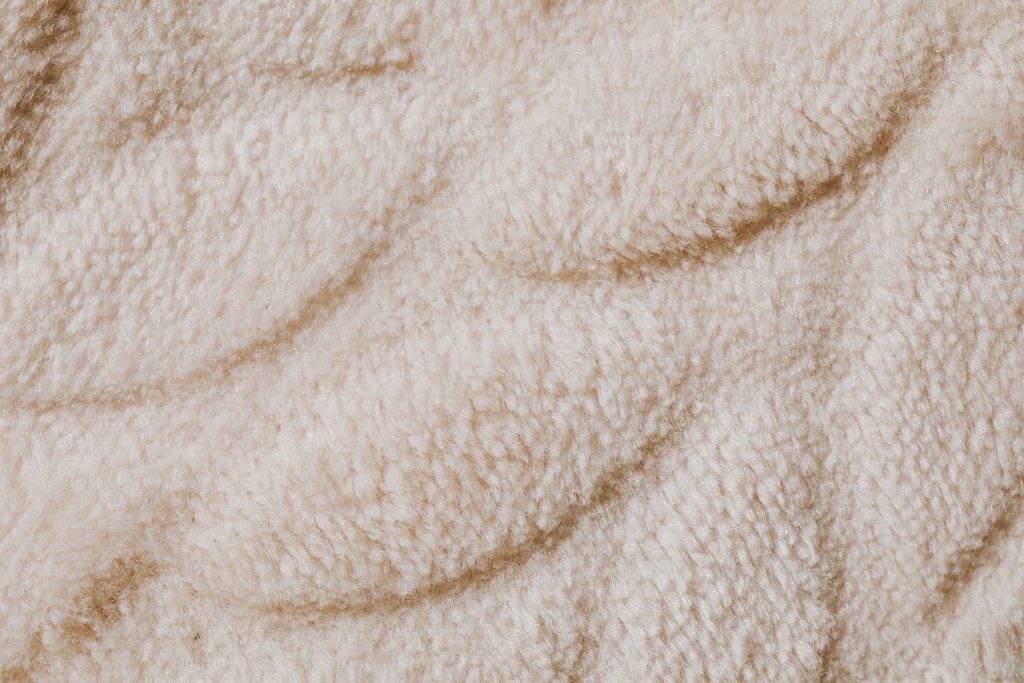
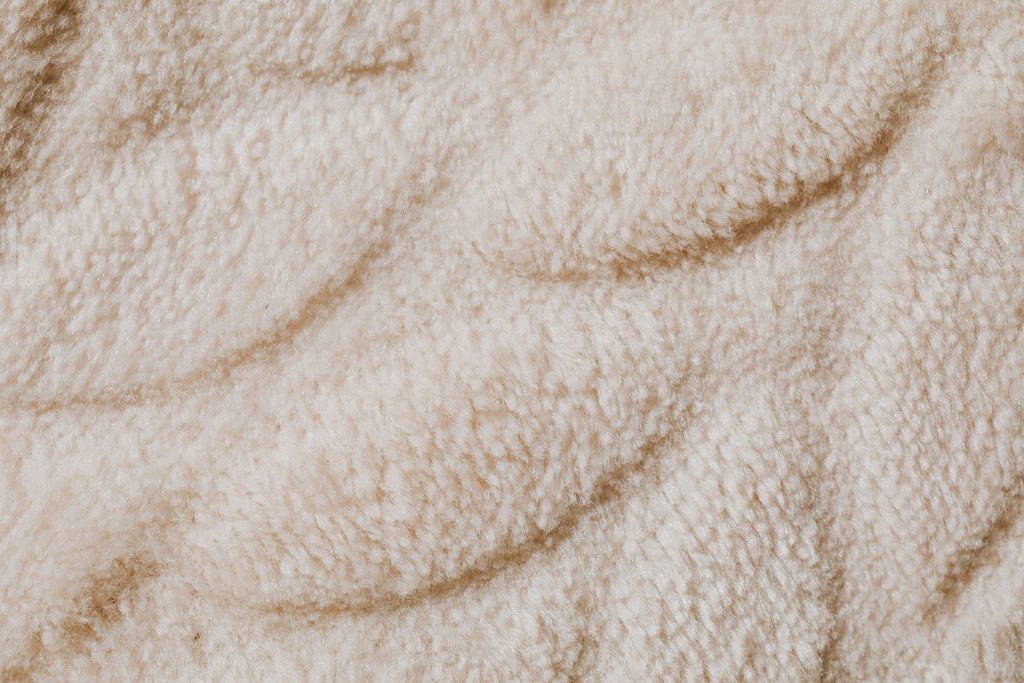
A carpet is not a surface. It is a forest with an engineered structure. Yarn is tufted through a primary backing in rows, locked with a latex adhesive, and closed with a secondary backing that gives the assembly dimensional stability. What the eye reads as a floor is several thousand individual fibre ends per square centimetre standing in a field, each free to bend.
Four variables decide how that field behaves under traffic. Pile height. Density, meaning how many tufts are packed into a given area. Face weight, meaning how much yarn sits above the backing by mass. And twist level, which in a cut pile is fixed by heat setting during manufacture so the tuft holds a defined shape.
Density and twist matter far more than the marketing does. In a dense, tightly twisted pile each fibre supports its neighbours, load is shared, and bending is limited because there is nowhere to fall. In a sparse pile with low twist each fibre stands alone and folds to the backing under load. Two carpets of identical fibre and identical price can differ by years of appearance life on density alone.
Resilience is a property of the polymer
Fibre memory is a real and physical thing. It is the ability of a polymer to return to its original geometry after deformation, and it differs enormously between the fibres used in Australian carpet.
Nylon, in both its common forms, is the most resilient synthetic carpet fibre in general use. The polymer is semi crystalline and its chains are held to one another by hydrogen bonds between amide groups along the backbone. When a fibre is bent and held bent, those bonds progressively reform in the deformed geometry. That is fibre memory in the literal sense. The same chemistry makes recovery possible. Heat and water together relax those bonds, the fibre releases the deformed geometry, and as it cools and dries the bonds reform upright. It is the reason hot water extraction performed properly on a nylon carpet produces a lift in the pile that no amount of dry vacuuming will ever produce.
Wool behaves better than most people expect. The fibre is keratin, arranged in a helical protein structure, crosslinked by disulphide bonds, with a natural crimp built in. It takes up close to a third of its own weight in moisture without feeling wet, and the crimp gives it excellent recovery from compression. Its vulnerability is chemistry rather than traffic. Wool is sensitive to alkalinity, and cleaning above roughly pH eight begins to attack the protein. It is also sensitive to chlorine and to excessive heat. Wool cleaned with the chemistry used on nylon is wool being slowly damaged.
Polypropylene, sold as olefin, punishes neglect. It carries no polar groups worth speaking of, so moisture regain is effectively zero and there are no hydrogen bonds available to reset. Colour is added to the polymer before the fibre is extruded, which is why it resists bleaching and water based staining so well. Its melting point is low enough that aggressive heat is not available as a recovery tool. And it is oleophilic, so oily soil binds readily and dry vacuuming will not lift it. Polypropylene crushes, stays crushed, and holds oil. It is a fine fibre for the right application and a poor one for a hallway.
Polyester sits between the two. Better recovery than olefin, weaker than nylon, oleophilic in the same way. Triexta, with its kinked molecular geometry, recovers well. The practical point is simple. Ask what the carpet is made of before deciding whether a tired lane can be brought back, because for one of these fibres the answer is usually yes and for another it is often no.
The three failures that get called wear
Failure one is soiling. Particulate, oil, and residue held in the pile. It is removable. It is the failure most owners assume they are looking at, and it is usually the smallest of the three contributions to how bad the lane looks.
Failure two is pile crush and loss of texture. The fibre is intact but deformed, the twist has relaxed, and the tuft no longer stands. This is partly to fully recoverable depending on the polymer, the density, and how long the deformation has been held. A lane crushed for two months responds far better than the same lane crushed for two years.
Failure three is abrasion, and it is permanent. Grit walked in from outside is angular silica, which under magnification looks less like dust and more like broken glass. Every step grinds those particles against the fibre shaft, the surface is scratched and roughened, the twist at the tuft tip unravels, and the fibre ends splay open in the condition the trade calls blooming. Once a fibre is abraded no chemistry and no machine will restore it, because material has been removed. The honest description is damage, and the honest recommendation is replacement once it becomes general.
The three compound. Abrasion roughens the fibre so it holds soil more tightly. Soil raises the abrasive load on every subsequent footfall. Crush holds both against the backing where the vacuum cannot reach. A neglected lane declines slowly at first and then quickly.
Why the lane reads darker than it is
Part of a traffic lane’s appearance is optics rather than dirt, and understanding this saves a lot of pointless argument.
An upright cut pile presents fibre ends to the eye. Light strikes the tips and returns towards the viewer, and the carpet reads as its full colour. A bent pile presents the shafts instead. Light striking a shaft scatters sideways rather than returning, so less comes back. The same fibre, the same dye, the same amount of soil, reads darker purely because it changed angle. It is the effect behind vacuum stripes on a fresh carpet, and it is what makes a crushed lane look filthy when it may be only moderately soiled.
Abrasion adds a second optical effect. A splayed, roughened fibre tip scatters light in every direction, which reads as a dull grey haze regardless of the dye colour underneath. This is the greying that owners are certain is dirt, that survives every clean, and that no operator can remove because it is not there to be removed.
So the darker lane is three things stacked. Real soil, which comes out. Changed angle, which can often be recovered. Abraded fibre, which cannot. An operator who cannot tell an owner which proportion is which before starting is guessing.
What a vacuum does and what it cannot do
The IICRC S100, the international standard for the professional cleaning of textile floor coverings, frames carpet care as a maintenance system rather than an event. Prevention at the entry. Dry soil removal. Prompt spot attention. Interim cleaning, and restorative cleaning at longer intervals. Each element does a specific job and none substitutes for another.
Dry soil removal is where the vacuum lives, and its value is enormous. The great majority of what accumulates in a carpet by weight is dry particulate, and dry particulate is the abrasive that drives failure three. Removing it before it is ground in is the most effective preservation act available to an occupant. Agitation matters more than raw suction, because a brush lifts particles out of the pile so airflow can carry them away. Slow passes matter, because a fast pass moves air over the pile rather than through it. Filtration matters, because a vacuum that captures soil and exhausts fines back into the room has only moved the problem into the air.
What a vacuum cannot do is anything involving bound soil or polymer geometry. It cannot lift oily soil, because oil is adhered rather than loose. It cannot rinse detergent residue left by a previous poor clean, and that residue is itself a soil magnet. It cannot reset a hydrogen bond, restore twist, or deliver the heat and moisture that recovery in a nylon fibre requires. A vacuum manages the load. Restoration changes the condition. No frequency of the first delivers the second.
The Crusader carpet restoration protocol
Stage one. Identify the fibre and assess the condition before anything is applied. Whether the pile is nylon, wool, polyester or polypropylene governs the chemistry, the temperature and the moisture. We assess the three failures separately and tell the owner the proportion of each, including the part we cannot fix.
Stage two. Dry soil removal, thoroughly, before any moisture. Wet cleaning over loose grit turns the pile into an abrasive slurry and grinds the damage in. This stage is not optional and it is not rushed.
Stage three. Pre spray matched to fibre and soil, applied evenly, with real dwell time. Chemistry needs contact time. The operator who sprays and immediately extracts buys none of the benefit and all of the moisture.
Stage four. Mechanical agitation. A groomer or a counter rotating brush carries the pre spray to the base of the tuft, breaks the bond between soil and fibre, and begins to lift the crushed pile. Chemistry, heat, agitation and time are the four inputs. Reduce one and the others must rise to compensate.
Stage five. Hot water extraction with controlled moisture and a rinse to neutral. Heat does the polymer work in a nylon carpet. Rinsing to neutral removes the chemistry rather than leaving it in the pile, which is what prevents rapid resoiling. Moisture is controlled rather than maximised, because the goal is a carpet that dries in hours.
Stage six. Grooming with the lay while the carpet is still damp, so the fibre sets upright as it dries rather than in whatever direction the wand left it.
Stage seven. Air movement to accelerate dry down, and a documented inspection with photographs for the file. Next year’s decision depends on this year’s baseline.
Eco chemistry for carpet fibre
Our carpet bench is built on plant derived surfactants, biodegradable within twenty eight days under OECD 301, unfragranced, with no quaternary ammonium compounds in routine cleaning and hydrogen peroxide based sanitisers reserved for the occasions that genuinely require sanitising.
The reasoning is specific to carpet. It is the largest soft surface in a home, it is in permanent contact with bare feet and with children on the floor, and anything left in the pile stays in the pile until the next service removes it. Quaternary ammonium compounds are cationic, carpet fibre and soil residues are largely anionic, so cationic chemistry deposits onto the fibre and stays there, attracting soil and sitting in contact with the occupants for months.
Fragrance is excluded on the same logic. A fragranced residue is a chemical the household breathes at floor level for weeks, and it exists to change the perception of the clean rather than the fact of it. A properly rinsed carpet has no smell, and no smell is the correct result.
The rinse is the environmental step that gets least attention and matters most. Chemistry removed from the pile has done its job and left. Chemistry that stays behind is both an indoor exposure and the cause of the accelerated resoiling that makes owners believe cleaning made things worse.
Long lasting client tips
Six rules that add years to the appearance life of any carpet in Perth.
First. Two mats at every external door, one outside and one inside. The outside mat takes the grit and the inside mat takes the fines. Soil load on the carpet beyond the entry drops by sixty to eighty percent when this is done properly, and grit is the particle that causes the one failure nobody can reverse. Most homes have one mat. They need two per door.
Second. Vacuum the traffic lanes far more often than the rest of the floor, and vacuum slowly. The lane carries most of the load while the furniture perimeter carries almost none. Several slow passes in two directions remove several times more particulate than one fast pass, because airflow needs time to travel through the pile rather than over it.
Third. Move the furniture a few centimetres twice a year, and rotate rugs. Compression held in one place for years becomes permanent. Compression that is periodically relieved recovers. This costs nothing and it is the cheapest resilience protection available.
Fourth. Blot spills within the first ninety seconds with plain water and a white cloth, and never scrub. Scrubbing untwists the tuft and abrades the fibre, converting a removable stain into permanent texture damage.
Fifth. Avoid supermarket spot removers that leave a sticky residue, and domestic shampoos that cannot be rinsed. Residue in a pile is a soil magnet, and the lane resoils faster after the treatment than before it. Plain water on a cloth is safer than the wrong product every time.
Sixth. Schedule restorative cleaning on the traffic pattern rather than the calendar, and do it before the lane looks bad. In a Perth household with children or pets that means about every twelve months, and in a low traffic home every eighteen to twenty four. Cleaning before crush sets is maintenance. Cleaning after it is damage control.
The bold position
The cleaning industry has taught Australian owners to think about carpet in terms of dirt, because dirt is easy to sell and easy to demonstrate. That framing costs owners money. It leads them to vacuum a crushed lane harder, to believe a restoration failed when the greying was abrasion, and to replace floor coverings with years of appearance life left because nobody explained the difference between soil, crush and damage.
The failure mode is not dishonesty. It is the absence of diagnosis. An operator who arrives, sprays, extracts and leaves has performed a process rather than delivered an assessment. The owner is never told which fibre they own, which of the three failures they are looking at, or what cannot be recovered at any price. Without that conversation the clean is a transaction and the carpet is on its own.
Cleaning Crusader treats carpet as a textile asset with a measurable condition and a recoverable geometry. We identify the fibre before we choose the chemistry. We separate soil from crush from abrasion and we say which is which out loud, including the part that will not come back. We use heat, moisture, agitation and dwell in the proportions the polymer requires, and we rinse to neutral. And when a carpet is genuinely finished we say so, rather than selling another clean into a floor with nothing left to give.
The fibre remembers what it has been asked to hold. The work is to give it something better to remember.
The work is the proof.
Cleaning Crusader. Built for impact. Driven by excellence. Guided by purpose.