A small patch on a shower tile is not the same problem as mould in a carpet or behind a wall. This is the honest line between a job you can safely handle yourself and a job that needs professional containment, and why the line matters more than most homeowners realise.
A patch the size of a coin, and a decision worth getting right
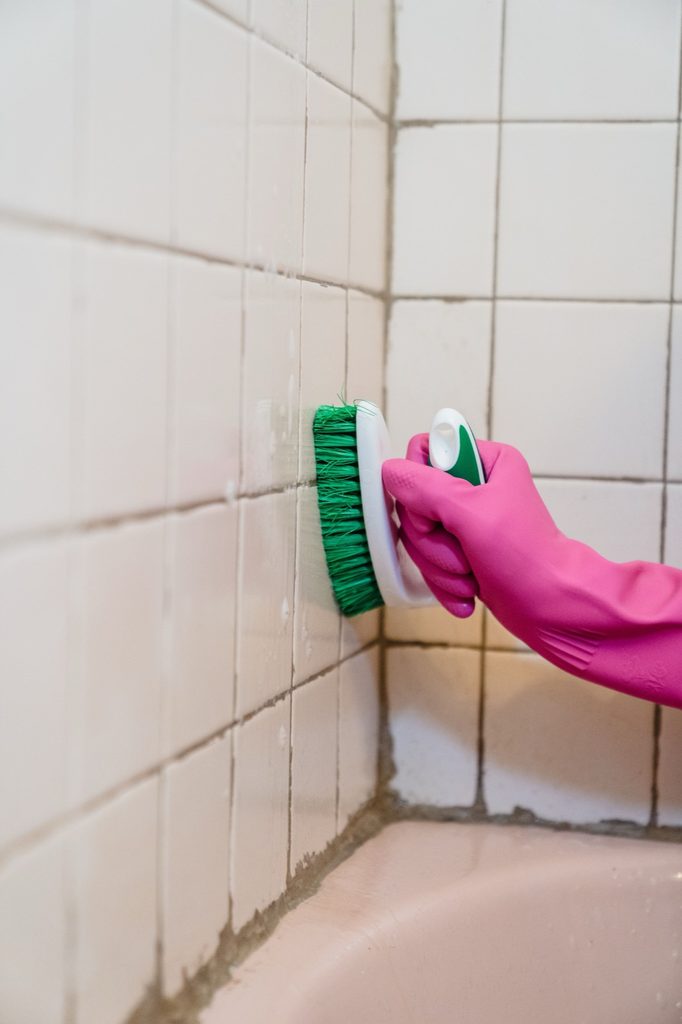
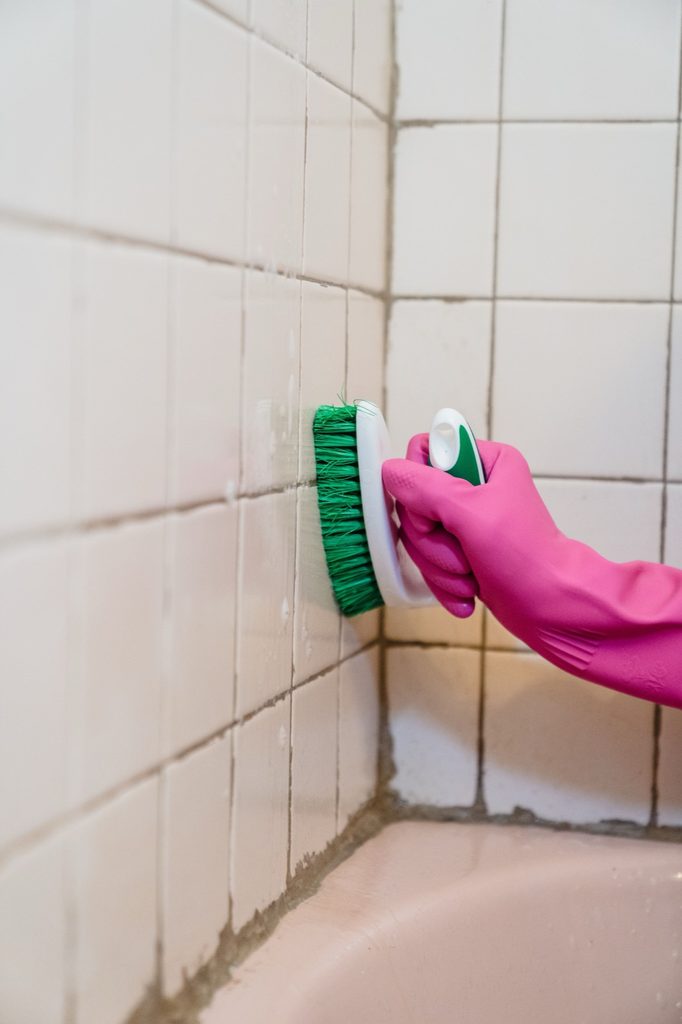
A homeowner in Victoria Park notices a small dark patch on the grout in the shower recess, roughly the size of a coin, sitting on hard glazed tile. She wants to know whether she needs to call someone or whether she can simply clean it herself on a Saturday morning. The honest answer, in this specific case, is that she can clean it herself, safely and effectively, in about ten minutes.
That same week, a different household in Bassendean finds a similar looking dark patch, but on the carpet in a spare room that has smelled musty for months, near a wall that backs onto an exterior corner of the house. The honest answer for that household is the opposite. That patch should not be scrubbed at the weekend. It should be investigated, because everything about it, the material it sits on, the duration it has likely been present, and the smell that preceded it, points toward a problem larger than what is visible.
We do not gatekeep the small jobs. Giving homeowners the knowledge to handle a genuinely small, contained patch themselves is part of how this business earns the right to be called for the jobs that actually need us. This article draws the line honestly, in both directions, between the mould you can clean yourself this weekend and the mould that needs a professional investigation and containment aligned to IICRC S520, the industry standard for mould remediation.
Why porosity decides more than size does
The single most important factor in whether a mould patch is a safe DIY job is not how big it looks. It is what it is growing on. Hard, non porous, glazed surfaces such as ceramic tile hold mould almost entirely on the surface. The mould has nowhere to penetrate into, because the glaze is essentially impermeable. Clean the surface thoroughly, dry it, and remove the moisture source, and there is very little material left behind for the mould to regrow from.
Porous and semi porous materials behave completely differently. Grout itself, unlike the tile it sits between, is porous. A standard sanded grout typically carries a meaningful void fraction through its structure, which means moisture and mould can travel into the grout rather than sitting only on its face. Carpet fibre, carpet backing, the paper facing on plasterboard, and the foam and fill inside upholstery all offer the same problem at a larger scale. Mould growing on these materials is very rarely growing only on the visible surface. Wiping the visible patch away removes what you can see and leaves the material the mould has already colonised underneath, largely intact.
This is why the same looking patch, in two different homes, calls for two entirely different responses. A dark mark on glazed tile is a surface event. A dark mark on carpet, upholstery, or a plasterboard wall is very likely a material event, and material events require an investigation of how far the colonisation has actually spread through the material, not just a wipe of what is visible on top.
Why disturbing a larger patch makes it worse
There is a genuine safety reason, not just a business reason, why an untrained scrub of an extensive mould patch is a poor decision. Mould colonies release spores continuously in small numbers under normal conditions. Mechanical disturbance, scrubbing, brushing, dry vacuuming, or even vigorous wiping without first dampening the area, physically breaks the colony apart and releases a much larger burst of spores and fungal fragments into the air than the colony was releasing before it was touched.
In a small, contained area on a non porous surface, this burst is manageable. The area is small, the material does not hold deep reservoirs of growth, and normal ventilation clears the temporary increase in airborne spore concentration quickly. In a larger area, or on a porous material where the colonisation runs deeper than the visible surface, the same disturbance releases a far larger burst, and without any containment in place, that burst moves through the rest of the home on normal air currents. This is the exact mechanism IICRC S520 containment procedures exist to prevent, isolating the work area and often running negative air pressure before any physical disturbance of an extensive colonised area begins. A homeowner without that equipment who takes a scrubbing brush to a large or porous mould problem can turn a contained issue into a whole home air quality problem within a single afternoon.
Recurrence is the signal that ends the DIY conversation
The third factor that moves a job out of DIY territory has nothing to do with size or material. It is recurrence. A patch that returns in the same location within weeks or months of being cleaned, even if it was small and non porous the first time, is telling you that the moisture source behind it was never addressed. Cleaning removed the visible growth. It did not remove the reason the growth occurred.
At this point, continuing to wipe the same spot every few months is not a maintenance routine. It is a homeowner manually treating the symptom of a moisture problem that needs an actual investigation, of the kind our mould teams run with moisture meters and, where warranted, thermal imaging, to find where the water is actually coming from. A recurring patch, however small, is a professional call, because the DIY clean has already been tried and has already shown it does not hold.
Sizing the job honestly
Industry remediation guidance, including material referenced alongside the IICRC S520 standard, generally draws a distinction between a small, isolated affected area and a more extensive one requiring engineering controls such as containment sheeting and negative air pressure. The commonly used rule of thumb treats an area smaller than roughly one square metre, on a single flat plane, as a different risk category to anything larger, though the exact figure matters less than the underlying logic behind it. A small area has a limited reservoir of growth and a limited volume of air around it for any disturbed spores to enter. A larger area has both a bigger reservoir and, often, a more complex surface geometry, corners, joints, and adjoining materials, that make it far harder for an untrained person to be confident they have actually reached every affected point.
This is also where an honest homeowner has to be honest about visibility. A patch that looks small on the surface but sits above a hidden void, behind a vanity unit, under a sill upstand, or inside a wall cavity accessed only through a small inspection point, should be treated as an area of unknown size rather than assumed to match what little of it can actually be seen. Uncertainty about true extent moves a job out of DIY territory just as reliably as a large visible area does, because the risk calculation depends on the full reservoir of growth, not only the portion currently in view.
The safe DIY protocol, done properly
For the case that genuinely qualifies, a small, isolated patch on a hard, non porous surface, with no recurrence history and no uncertainty about how far it extends, the safe approach follows a specific sequence rather than an improvised scrub.
Ventilate the area first, opening any available airflow path and running an extraction fan if the space has one. Put on disposable gloves and, for anything beyond a very small patch, a well fitted disposable mask rated for fine particulates. Dampen the affected area lightly with plain water or a mild detergent solution before touching it. This single step matters more than most guidance mentions. A damp colony releases dramatically fewer spores when disturbed than a dry one, because moisture binds the spores to the surface rather than letting them lift into the air on contact.
Wipe, rather than scrub, using a disposable cloth, working from the outer edge of the patch toward the centre so growth is not spread outward across clean tile. Dispose of the cloth in a sealed bag rather than rinsing it in the same area for reuse. Dry the surface completely afterward, since a damp surface left behind simply reintroduces the moisture the mould needs. Finally, and this is the step most DIY guidance skips, identify and correct whatever kept that specific spot damp for long enough to grow in the first place, whether that is inadequate ventilation, a leaking seal, or condensation from an unrelated appliance nearby. Cleaning the patch without correcting the moisture is cleaning a symptom.
Eco chemistry for the job you do yourself
For the DIY case described above, we recommend a plain detergent solution or a hydrogen peroxide based product at a modest household strength, rather than reaching for concentrated chlorine bleach as a first instinct. Bleach is largely cosmetic on porous substrates such as grout, since it bleaches the visible pigment of the mould without necessarily reaching material growth seated below the surface, and it offers no advantage over hydrogen peroxide on a genuinely non porous, surface level patch while introducing a stronger fume profile in a small, often poorly ventilated bathroom. Our own chemistry bench, used across every professional job, is built on plant derived surfactants biodegradable within twenty eight days under OECD 301, unfragranced, with hydrogen peroxide based sanitisers used where biological contamination genuinely calls for one. The same principle applies at home. Choose the mildest chemistry that does the job, and rely on mechanical removal and moisture correction rather than chemical strength to solve the underlying problem.
Long lasting client tips
First. Check that any patch you are considering cleaning yourself sits on a hard, non porous surface such as glazed tile, and not on grout depth, carpet, upholstery, or a painted plasterboard wall where the growth may run deeper than what you can see.
Second. Confirm the patch is genuinely small and isolated, roughly a handspan or less across, with no similar patches elsewhere nearby that might indicate a wider moisture problem you have not yet noticed.
Third. Always dampen a patch lightly before wiping it. A dry disturbance releases far more spores into the air than a damp one, regardless of how small the patch appears.
Fourth. Never dry vacuum a mould patch, on any surface. A standard vacuum cleaner exhausts fine particulate straight back into the room, and a mould patch vacuumed dry is a mould patch actively distributed through the house.
Fifth. If a patch you have cleaned returns within a few months, stop treating it yourself. Recurrence means the moisture source was never corrected, and a repeat clean without an investigation is simply delaying a problem that is getting worse underneath.
Sixth. If you are ever uncertain whether a patch qualifies as small and contained, treat the uncertainty itself as the answer. Call for an assessment rather than guessing, particularly where the patch sits near a known past leak, a bathroom exhaust, or an exterior wall corner.
The bold position
The mould remediation trade has two failure modes, and both are dishonest in their own way. One end of the industry treats every visible patch, including a coin sized mark on glazed tile, as a reason to sell a full contained remediation job at commercial rates, using fear of the word mould rather than an honest assessment of the actual risk. The other end tells every homeowner to simply wipe it away themselves regardless of size, material, or history, because a quick DIY answer keeps the call short and avoids turning away easy business later.
Neither position serves the homeowner. We will say plainly that a coin sized mark on shower tile grout does not need a contained professional remediation, and any operator who tells you otherwise is selling fear rather than assessment. We will say equally plainly that a patch on carpet, upholstery, or a wall that has recurred, or that sits near an unresolved moisture event, is not a weekend job, and any guidance telling a homeowner to simply wipe it away is ignoring the material science of where that mould actually lives.
Cleaning Crusader gives away the small job because the honesty behind the answer is the actual product. We tell a homeowner when they can handle it themselves, and we mean it. We tell a homeowner when the job has moved past what a wipe and a weekend can fix, and we mean that too. The discipline is knowing the difference and saying so, out loud, before any invoice is written.
Discipline creates freedom.
Cleaning Crusader. Built for impact. Driven by excellence. Guided by purpose.