Every upholstered piece in a home is a depreciating asset from the day it arrives. Neglect accelerates the clock. Disciplined cleaning slows it. This is the fibre and dollar case for treating upholstery maintenance as capital management, not tidying.
A three thousand dollar decision nobody makes on purpose
A family in Applecross buys a fabric sofa for a little over three thousand dollars. Two children, a dog, and five years later, the arms are grey, the seat cushions have gone flat and slightly sour, and the family is pricing a replacement. Nobody in that household ever decided to spend three thousand dollars again in five years. Nobody signed off on early replacement. The decision was made gradually, in the accumulation of soil the family never saw, and it was made silently, because upholstery does not announce its own decline the way a cracked tile or a stained carpet does.
This is the reframe worth sitting with. A sofa, an armchair, a dining chair with an upholstered seat, a mattress considered strictly as a piece of upholstered furniture, all carry a useful life that is set by the manufacturer’s materials and shortened or lengthened by what happens to the fabric and the fill in between purchase and replacement. The purchase price is the easy number. The real number is the cost per year of use, and that number is set almost entirely by maintenance, not by the price tag on the day of sale.
We treat upholstery as a depreciating capital asset because that is what it is. A carpet is the lung of a room, a grout line is load bearing infrastructure, and a sofa is a five figure decision over its lifetime once replacement cycles are counted across a household. This article sets out the fibre and foam science behind why untreated soil and staining shorten that lifetime, and makes the dollar case for scheduled professional cleaning as the cheapest asset protection available in the home.
What breaks down first, and why
Upholstery fails from the inside out more often than it fails from the outside in. The visible fabric is usually the last thing to go. What goes first is the structure underneath it, and the mechanism is mechanical before it is aesthetic.
Soil embedded in upholstery fabric is not simply dirt sitting on the surface. Household dust, skin cells, oils from skin contact, and airborne particulate work down into the weave of the fabric with every use. Once embedded, that soil behaves as an abrasive. Every time a person sits, shifts weight, or brushes against the fabric, embedded particles grind against the fibres around them under load. Textile research on fibre wear has documented this abrasive mechanism consistently across natural and synthetic upholstery fibres alike. A fabric with heavy embedded soil wears measurably faster under identical use than the same fabric kept clean, because the wear is not coming only from the person sitting on it. It is coming from the grit sitting inside the weave with them.
Staining compounds the damage in a different way. A spill that is not addressed promptly does not simply sit on the surface waiting to be noticed. Many common household stains, from food oils to beverage tannins to body oils, begin to oxidise on contact with air and light. Oxidation changes the chemical structure of the staining compound, often binding it more tightly to the fibre and making later removal harder. Left long enough, some staining also begins to break down the fibre itself at the site of contact, particularly on natural fibres such as cotton and linen blends, which are more chemically reactive to acidic and oily residues than many synthetic fibres.
The foam or fill beneath the fabric has its own failure mode, and it is largely driven by moisture and contaminant exposure rather than mechanical wear. Polyurethane foam, the most common fill in modern upholstered furniture, degrades through a process called hydrolysis, where moisture breaks down the polymer chains in the foam over time. Repeated damp exposure, whether from spills that are not fully dried, from humidity, or from body moisture absorbed during use, accelerates this breakdown. The result is foam that loses its resilience and compresses permanently rather than springing back, which is the flattened, tired seat cushion every household eventually notices and attributes to age rather than to moisture history.
The depreciation clock, put in figures
Manufacturers and the furniture trade generally describe a well made mid range upholstered sofa as having a useful life in the range of seven to fifteen years under normal residential use, with the wide range explained almost entirely by maintenance and household conditions rather than by manufacturing quality alone. A household at the low end of that range and a household at the high end can have purchased an identical model. The difference between them is what happened to the fabric and the fill in the years in between.
Consider the arithmetic plainly. A sofa purchased for three thousand dollars that reaches the end of its useful life at seven years costs the household about four hundred and twenty nine dollars per year of use. The same sofa, maintained to reach twelve years, costs the household two hundred and fifty dollars per year of use. The difference is not trivial. It is the equivalent of several professional cleaning appointments every single year, for the life of the piece, funded entirely from the saving on early replacement.
This is the case for scheduled professional cleaning that property owners rarely see stated in dollar terms. The service is not a beauty treatment for a tired looking sofa. It is the maintenance event that removes the abrasive soil load before it grinds the fibre down, addresses staining before it oxidises into the weave, and manages moisture exposure so the foam beneath is not left in a repeatedly damp state. Mattresses, considered here strictly as upholstered furniture assets rather than as bedding, follow the identical economic logic. A mattress carries embedded soil and body oil load across its own weave and foam layers in the same way a sofa does, and the same abrasive and hydrolysis mechanisms apply to its useful life as a furniture asset.
The arithmetic compounds further once a whole household is counted rather than a single piece. A typical home carries a sofa, one or two armchairs, several dining chairs with upholstered seats, and two or three mattresses, representing a combined investment that commonly runs to five figures once every upholstered piece is added together. Extending the useful life of that combined investment by even a few years, through the same maintenance discipline applied consistently across every piece, produces a household level saving considerably larger than the cost of any individual appointment. Few households ever total this figure, which is precisely why the depreciation clock is so easy to ignore piece by piece and so difficult to ignore once the whole home is counted.
The Crusader upholstery protocol
A Crusader upholstery appointment begins with fibre identification, not extraction. Natural fibres, synthetic fibres, and blended weaves respond differently to moisture, to pH, and to agitation, and treating an unknown fibre with a generic method is how upholstery gets damaged rather than cleaned. A concealed area, usually on the underside of a cushion or the rear of an arm, is used for a test application before any product touches a visible surface.
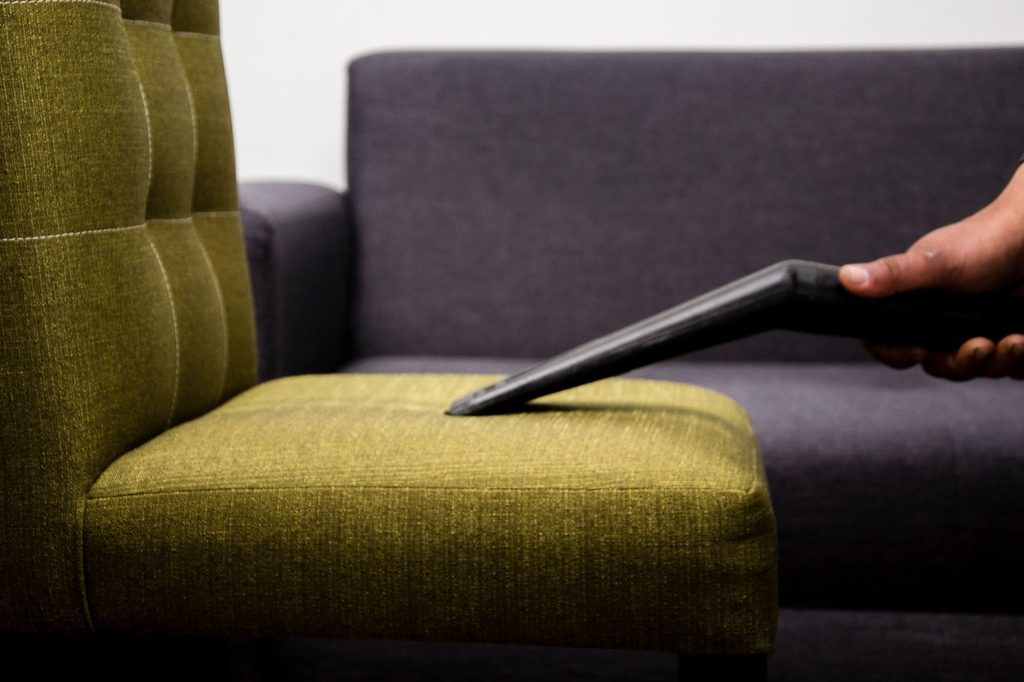
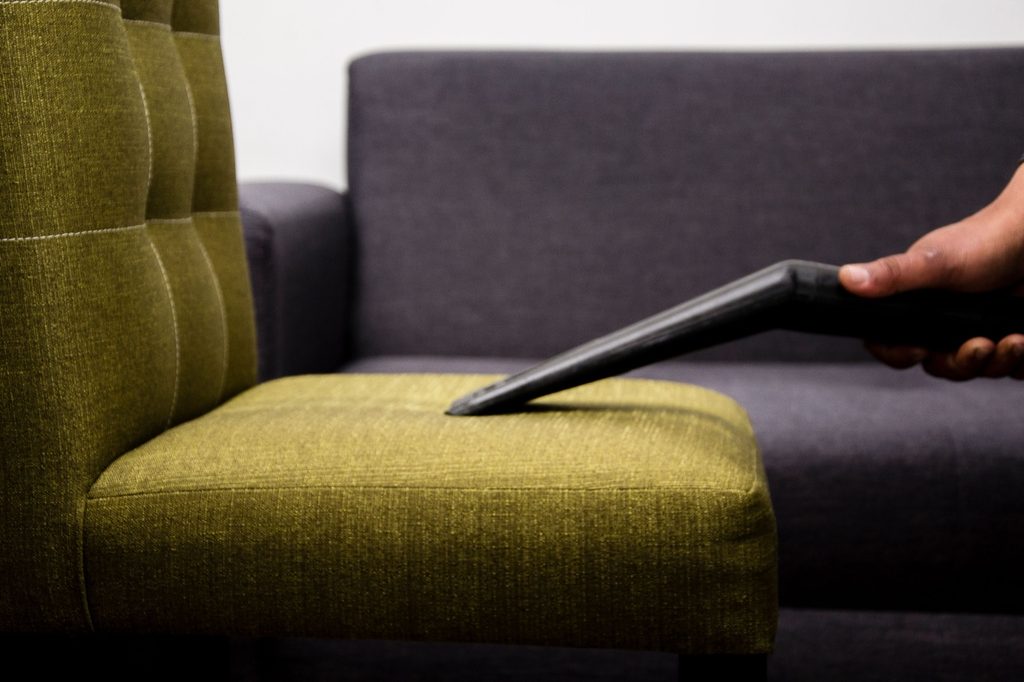
Pre inspection follows, documenting any existing staining, wear, or fading before work begins, so there is a clear record of the piece’s condition on arrival. Dry soil is then removed first, using low moisture vacuum extraction across the full surface, because wet cleaning over embedded dry soil simply drives the abrasive particles deeper into the weave rather than lifting them out.
The cleaning step itself uses a controlled moisture, low residue extraction method suited to the identified fibre, at the lowest effective moisture level. This matters directly because of the hydrolysis mechanism described earlier. A method that saturates the foam beneath the fabric trades a clean surface for accelerated foam breakdown, which is a poor trade for the household funding the service. Staining is treated with a targeted, fibre appropriate approach before the general clean, so the general pass does not simply spread a stain across a wider area of the fabric. Drying is accelerated with air movement equipment, and the piece is assessed before the appointment closes to confirm moisture levels have returned to a safe range for the fill beneath.
Fibre protection as insurance against the clock
A cleaning appointment that ends the moment the fabric is dry has protected the asset for a single cycle and left it exposed for the next one. This is why a Crusader upholstery appointment includes an optional fibre protection step once the clean is complete and the piece has been assessed as dry through to the fill. A fibre protector is a topical treatment applied evenly across the cleaned fabric, designed to sit around each individual fibre and reduce how readily soil and liquid bind to it.
The mechanism matters because it works directly against the abrasive soil mechanism described earlier. A protected fibre sheds loose soil during normal vacuuming rather than allowing it to work down into the weave over weeks of contact. A spill sits on the surface of a protected fabric for longer before it begins to penetrate, which widens the margin a household has to blot it before it becomes a set stain. Neither effect is permanent. Protection wears down under normal use and needs renewal at each professional clean, which is one reason we treat it as part of the scheduled maintenance interval rather than a separate, occasional upsell offered only once. Applied consistently, the treatment extends the interval between visible soiling and the next professional appointment, which is itself a further, quieter saving stacked on top of the interval extension described in the figures above.
Eco chemistry for fabric and fill
Our upholstery chemistry bench uses the same plant derived surfactants across the business, biodegradable within twenty eight days under OECD 301, unfragranced, and free of quaternary ammonium compounds in routine cleaning. This matters more on upholstery than on almost any other surface in the home, because upholstery sits in close, sustained contact with skin, and a fragranced or residue heavy chemistry leaves a film in the weave that the household will be sitting against every day afterward.
Low residue chemistry also directly protects the useful life calculation set out above. A cleaning product that leaves chemical residue in the fibre can attract new soil faster than a clean fibre would, effectively shortening the interval before the next professional clean is warranted. Our bench is chosen to lift soil and staining without adding a residue that works against the asset it was meant to protect.
Long lasting client tips
First. Address any spill within the first few minutes. Blot with a clean, light coloured cloth, working from the outside of the spill toward the centre. Never scrub, because scrubbing drives the spill deeper into the weave and spreads it across a wider area of fibre.
Second. Rotate and flip loose cushions regularly if the design allows it, so wear and soil load distribute evenly across the piece rather than concentrating on the one seat used most often.
Third. Vacuum upholstery weekly with a soft upholstery attachment. This single habit removes the abrasive soil load before it has the chance to work down into the weave and grind against the fibres under normal use.
Fourth. Keep upholstery out of direct, sustained sunlight where practical, or use curtains and blinds to manage the exposure. Ultraviolet exposure accelerates fibre breakdown and fading independently of soil and staining, and the two mechanisms compound each other on a piece exposed to both.
Fifth. Schedule professional cleaning on a defined interval rather than waiting for visible soiling. For a household in normal use, twelve to eighteen months is a reasonable interval for most upholstered pieces, calibrated up for households with children, pets, or high use rooms.
Sixth. Treat a mattress on the same schedule as any other upholstered asset in the home. It carries the same fibre and foam structure and the same depreciation clock, and it deserves the same maintenance discipline as a sofa or armchair.
The bold position
The furniture trade sells replacement far more actively than it sells maintenance, and the cleaning industry has largely let that framing stand. Upholstery cleaning gets marketed as a freshening service for a special occasion, a once off treatment before guests arrive, rather than as the maintenance discipline that determines whether a household replaces its furniture in seven years or in fifteen. That framing costs households real money, repeatedly, across every piece of upholstered furniture they own.
We will name the failure mode plainly. An industry that treats upholstery cleaning as optional cosmetic work has under sold its own value proposition for years. The chemistry and the mechanics are not cosmetic. Embedded soil is abrasive. Untreated staining oxidises and can degrade fibre. Damp foam hydrolyses and loses its resilience permanently. Every one of these mechanisms runs on a clock, and every one of them is slowed by scheduled, competent cleaning.
Cleaning Crusader prices and positions upholstery cleaning as what it actually is, a scheduled maintenance event that protects a specific dollar figure sitting in a household’s living room and bedrooms. We identify the fibre before we touch it. We use the lowest effective moisture to protect the fill beneath. We tell customers plainly what interval their specific household needs, rather than a generic once a year line. The sofa’s depreciation clock is real. Our job is to slow it, deliberately, on purpose, and to show the household the arithmetic behind why that matters.
From stains to shine. Fast, safe, and guaranteed.
Cleaning Crusader. Built for impact. Driven by excellence. Guided by purpose.