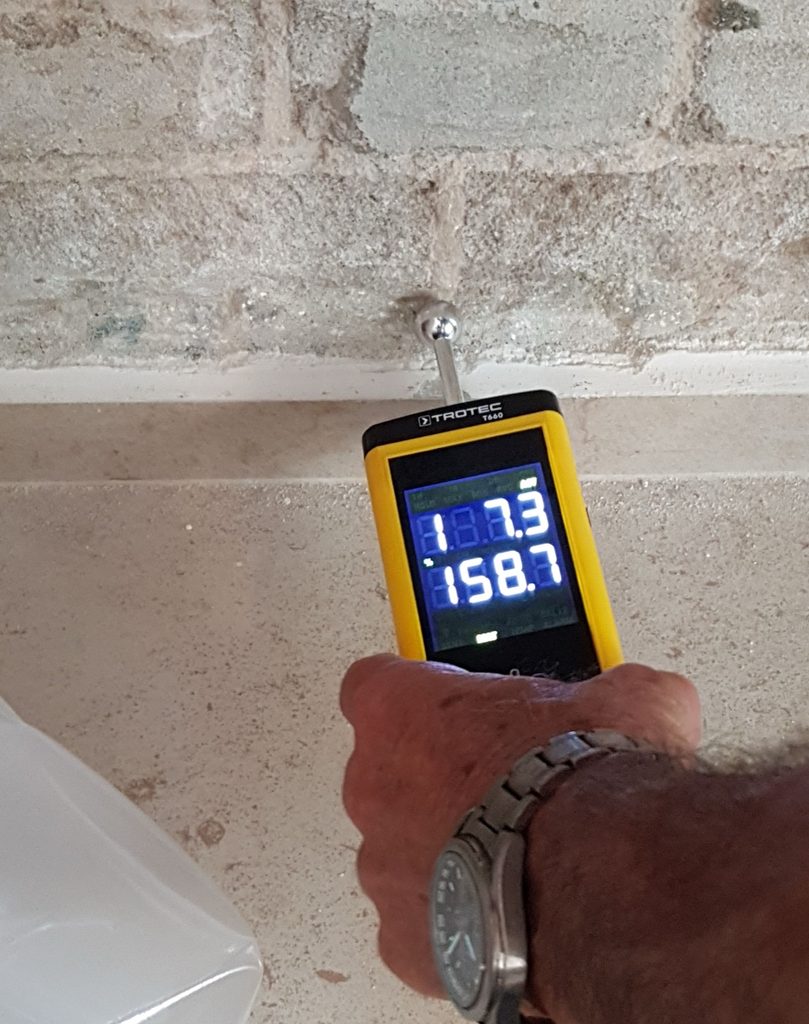
Every serious trade separates itself from a casual one at exactly the same point, the moment it chooses an instrument over an impression, and this ninth manifesto argues that measurement first is the whole of the difference between a trade and a craft.
The ninth Sunday, and the doctrine so far
This is the ninth Sunday manifesto in this series. Eight manifestos have come before it, building an operating philosophy across dimensions such as engineering, people, documentation, education, discipline, scale, and restoration over replacement, among others this series has argued for week after week. Each Sunday has added a load bearing piece to the same structure, that cleaning, properly practised, is preservation engineering rather than housekeeping, that the people who do the work are career professionals rather than interchangeable labour, that documentation is the spine that makes the work auditable, that education is the lever that builds trust before a booking is ever made, that discipline and restraint are competitive advantages rather than limitations, that scale can be achieved without diluting the standard, and that restoring an asset is very often the more serious, more skilled, and more valuable choice than replacing it.
This ninth manifesto argues the doctrine that sits underneath every one of those previous eight, whether or not it was named explicitly at the time. Every dimension this series has argued for, the engineering mindset, the trained operator, the documented job, the educated customer, the disciplined schedule, the scaled but consistent standard, the restored rather than replaced asset, depends on a single prior act. Someone has to measure the actual condition of the actual thing in front of them before any of those other virtues can be applied correctly. Engineering without measurement is guesswork wearing a hard hat. Discipline without measurement is habit mistaken for standard. This manifesto is the argument that instrumented diagnosis, not assumption, not experience alone, not a trained eye working from memory, is the foundation every other pillar in this series has been quietly standing on.
The eye is a poor instrument, and it always has been
Human perception is a remarkable tool for many purposes and a genuinely poor one for a specific, narrow class of judgement, assessing a hidden or gradual physical condition with the precision a decision actually requires. A trained technician looking at a carpet can form a reasonably accurate impression of visible soiling. That same technician, looking at the same carpet, cannot reliably tell by eye alone whether the fibre beneath the surface carries an abrasive silica load approaching the threshold of accelerated wear, or whether the rinsed fibre has returned to a neutral pH, or whether moisture beneath the pile has actually reached an acceptable level for furniture to be safely returned. These are not failures of skill. They are failures of the instrument being used, and the eye was never built to measure them.
This is true across every one of the five services this company practises, not only carpet. A technician can see visible mould growth on a wall. They cannot see, without a moisture meter and where appropriate a borescope, how far the moisture driving that growth extends behind the lining, or whether an area that looks dry has actually returned to a safe moisture range. A technician can see standing water in a flooded room. They cannot tell, without a psychrometric reading of temperature and relative humidity, how effectively a drying plan is actually working, or whether a structure that looks dry to the touch still carries moisture at a level that will support mould growth within days. A technician can feel that an upholstery fabric seems durable. They cannot know, without checking the manufacturer’s fabric code or running a concealed test, whether that fabric will tolerate the water based chemistry the visible soil seems to call for. The eye, the hand, and years of experience are genuinely valuable inputs. None of them are instruments, and the industry’s oldest and most persistent failure mode is treating them as though they were.
Instrumented diagnosis, service by service
Consider what an instrument first standard actually requires across the five services this company practises. In flood restoration, a moisture meter and psychrometric readings of temperature and relative humidity are taken before any drying decision is made, and the same instruments are used repeatedly across the drying period, not once at the start, because a drying plan that is not being measured against its own progress is a guess being run on a schedule rather than a genuine restoration aligned to the framework the IICRC S500 standard sets out. The decision to remove flooring, to introduce additional air movement, or to conclude a drying process as complete is an instrumented decision in every case, not a visual one.
In carpet and upholstery cleaning, a pH check of the rinsed fibre, taken with a simple testing strip, confirms whether the chemistry selected has actually returned the fibre to a stable, neutral range, rather than assuming a rinse pass has done its job because the fibre looks clean. Fibre identification, whether nylon, wool, or a specific upholstery fabric code, is established before any chemistry is selected at all, because the same product applied to two different fibres can produce two entirely different outcomes, one acceptable and one damaging, and no visual inspection reliably distinguishes which fibre is which before the chemistry has already been applied.
In mould remediation, visual and surface sampling defines the actual scope of a job before containment and remediation begin, rather than a visual estimate of extent driving a scope that later proves to have been wrong in either direction, too small and requiring a return visit, or too large and costing the client for work that was never required. Instrumented moisture mapping, described elsewhere in this series, is the same discipline applied spatially rather than only at a single point.
Tile and grout work is no different. A technician assessing whether a grout line requires deep extraction or a lighter clean is, properly, assessing a porosity and contamination condition that sits below the visible surface, and while grout does not carry the same instrument set as moisture or pH testing in every case, the underlying discipline is identical, treat the visible surface as an indicator of a condition to be assessed, not as the condition itself.
Why the industry defaults to the eye anyway
If instrumented diagnosis produces more reliable, more defensible, and ultimately more cost effective outcomes, the reasonable question is why so much of the cleaning and restoration trade continues to operate on visual assessment and habit instead. The answer is structural, not a matter of individual competence, and it deserves to be named plainly rather than glossed over.
Instruments cost money, take training to use correctly, and take time on every job, three factors that work directly against an industry that has spent decades competing primarily on price and speed. A technician who takes a moisture reading, waits for a psychrometric measurement to stabilise, and checks a rinsed fibre’s pH before declaring a job complete is a technician who takes longer to finish and who requires equipment a lower cost competitor has not purchased. In a market where the customer frequently cannot tell the difference between an instrumented job and a visually assessed one until a problem resurfaces weeks or months later, the commercial incentive rewards the faster, cheaper, uninstrumented approach, at least until the resurfacing problem becomes the customer’s problem rather than the operator’s.
This is the industry’s dominant failure mode, named without venom because naming it with venom would misdescribe a structural problem as an individual moral failing. Most operators diagnosing by eye and habit are not being lazy or dishonest. They are responding rationally to a market that has never demanded the instrument, never priced for the instrument, and rarely notices its absence until a mould problem returns, a flood dries unevenly and grows mould behind a wall six weeks later, or a carpet wears out years ahead of its rated life. The absence of demand for measurement is what has allowed its absence in delivery to persist, uncorrected, for decades.
Measurement as the line between a trade and a craft
This is the doctrinal centre of this manifesto. A trade is a set of manual skills applied by hand, taught by observation, and assessed by the operator’s own impression of the result. A craft is the same manual skill, disciplined by an external, checkable standard that does not depend on any single operator’s impression to confirm whether the work has actually met it. The instrument is what makes that external standard possible. Without a moisture meter, there is no way to check a technician’s claim that a structure is dry other than to trust the technician. Without a pH strip, there is no way to check a claim that a fibre has been properly rinsed other than to trust the operator’s judgement on the day. Trust in an individual’s judgement is a reasonable starting position. It is not a standard, because it cannot be audited, cannot be compared across jobs or operators, and cannot be improved systematically over time the way a documented, measured result can.
This is why the earlier manifestos in this series depend on this one, whether they said so explicitly or not. The documentation manifesto argued that the photograph and the record are what make work auditable. A photograph of a visual impression is still just a recorded impression. A photograph of a moisture meter reading, a pH strip result, or a moisture map is a recorded measurement, and it is the measurement, not the photograph itself, that gives the record its actual evidentiary weight. The systems and industrialised craft this series has described elsewhere depend on scoring finished work against defined criteria, and a defined criterion that cannot be measured is not a criterion. It is an aspiration. Measurement is what turns every other doctrine in this series from an aspiration into an operating standard.
Eco chemistry as an instrumented decision
The chemistry bench this company uses across all five services, plant derived surfactants biodegradable within twenty eight days under OECD 301 testing, unfragranced, free of quaternary ammonium compounds in routine use, with hydrogen peroxide based treatments reserved for confirmed biological contamination, is itself an argument for measurement rather than habit. Selecting a hydrogen peroxide based sanitiser over a broader spectrum chemical is a decision that should follow from a confirmed finding of biological contamination, established through surface sampling or a clear visual and moisture based assessment, rather than being applied by default to every job regardless of what is actually present. Applying a stronger chemistry than a job requires is not caution. It is another form of diagnosing by habit rather than by measurement, substituting a heavier product for the harder work of establishing what is actually needed. The eco chemistry bench works because it is matched to a measured condition on every job, not because it is a single formula applied uniformly regardless of what the instruments actually found.
Long lasting client tips
First. Ask what will be measured before a job begins, not only what will be cleaned. A technician who can name the specific instrument they intend to use, a moisture meter, a pH strip, a fabric code check, is working from a system rather than an impression.
Second. Ask to see the reading, not just be told the result. A moisture reading, a pH result, or a moisture map is a specific number or image, and a technician confident in their finding will show it to you without hesitation.
Third. Be wary of a quote or a scope of work that was set before any instrument was used. A scope based purely on a visual walk through is a preliminary estimate at best, and a properly instrumented assessment can and sometimes should revise it once the actual condition is measured.
Fourth. Keep any instrumented readings or reports you receive as part of your own property record. A moisture map from a flood job or a fibre assessment from an upholstery job becomes more valuable over time as a comparison point for any future assessment of the same asset.
Fifth. Ask what happens if a measurement contradicts the initial visual impression. A trustworthy operator will explain that the instrument’s finding takes precedence, and will adjust the plan accordingly rather than proceeding with an assumption the instrument has already corrected.
Sixth. Treat the absence of any measurement, on a job type where measurement is genuinely available and appropriate, as a meaningful signal about the standard you are being offered, not as an unavoidable feature of the trade.
The bold position
The cleaning and restoration industry’s dominant failure mode is not incompetence and it is not dishonesty. It is the persistence of visual assessment and habit in a category of work where instrumented measurement has been available, documented, and standardised for years, and where the market has simply never demanded it consistently enough to make its absence commercially costly to the operators who skip it. This is a structural failure, and naming it plainly is not an attack on any individual technician doing their best with the tools and the training they were given. It is an argument for changing what the market expects.
We will say this directly, as this series has said similar things directly across eight previous Sundays. A technician who dries a flooded room by feel, who cleans a carpet without checking the rinsed fibre’s pH, who treats a suspected mould condition without mapping its actual extent, is not delivering a lesser version of the same service an instrumented technician delivers. They are delivering a fundamentally different, unverifiable kind of work, one that depends entirely on trust in an individual’s impression rather than on a checkable standard. Both may look identical to the customer standing in the room on the day. Only one of them can be audited, defended, and improved.
Cleaning Crusader measures first because measurement is the actual foundation every other claim this company makes depends on. The engineering mindset means nothing without a measured baseline to engineer against. The trained operator’s skill means less without an instrument to confirm their judgement was correct. The documented job is only as strong as what was actually measured and recorded within it. Restoring an asset rather than replacing it is only the right call once an instrument, not an impression, has confirmed that restoration will actually hold. Innovation in this trade has never been about a flashier tool. It has been, every time, about the discipline to measure before we act, rather than after the customer discovers the assumption was wrong. That discipline is the legacy this company intends to leave behind it.
Innovation creates legacy.
Cleaning Crusader. Built for impact. Driven by excellence. Guided by purpose.