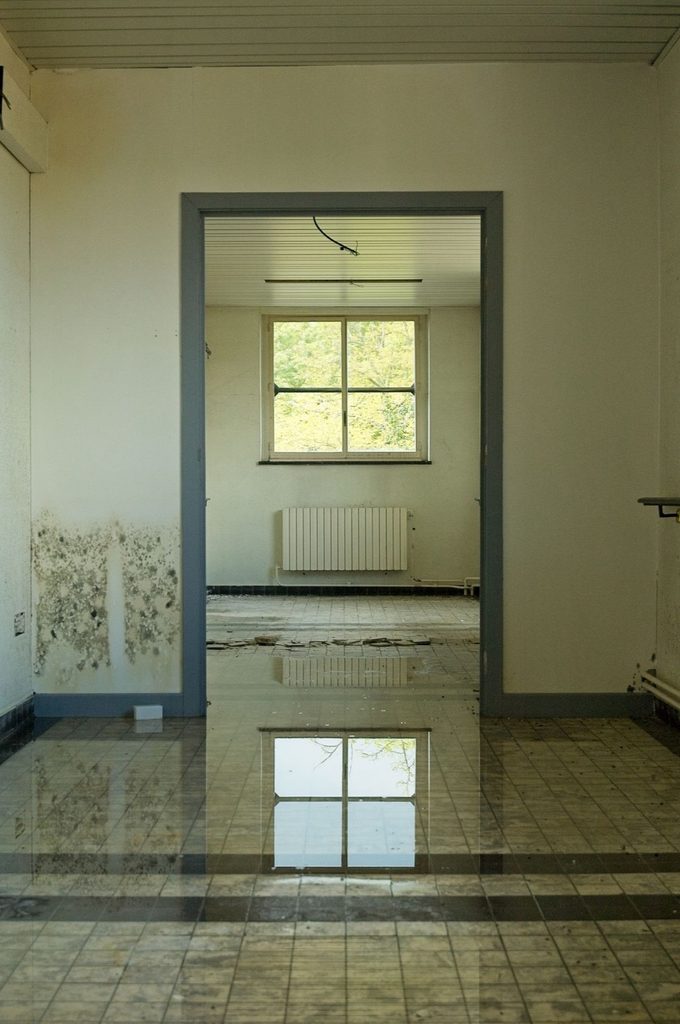
The first hour after a flood determines how much of the damage is recoverable, and most of what actually helps costs nothing and requires no equipment beyond common sense applied calmly.
The hour that decides the outcome
Water damage does not wait for a crew to arrive. From the moment a pipe bursts, storm water forces its way inside, or an appliance overflows, moisture begins moving into materials that were never designed to hold it, timber substrates begin absorbing, gypsum board begins wicking, and any biological contamination present in the water begins to spread across every surface the water touches. A Crusader crew responding to a Perth flood call typically arrives within hours, not days, but those hours matter enormously, and what a homeowner does or does not do during that stretch of time has a measurable effect on the final scope and cost of the restoration.
This article exists because that stretch of time is usually spent in a state of mild panic, and panic produces exactly the wrong instincts. The instinct to grab every towel in the house and start mopping. The instinct to point every fan in the home at the wet area. The instinct to move furniture without thinking about what is underneath it. Some of these instincts help. Some of them actively make the job harder and the outcome worse. We would rather a Perth household knew the difference before the water arrives than learn it from us afterward.
What follows is the specific, safe, and genuinely useful set of actions to take in the first hour, and the specific set of actions to avoid, regardless of how helpful they might seem in the moment.
Electrical safety comes before anything else
Before any other action, establish whether water has reached, or is likely to reach, any electrical outlet, powerboard, appliance, or light fitting at floor level. Water and electricity sharing the same space is the single most dangerous element of any flood scenario, more dangerous than any structural or contamination concern, and it is addressed first because every other recommendation in this article assumes the electrical risk has already been managed.
If it is safe to do so without stepping into standing water, switch off power at the switchboard to any circuit affecting the affected area, or to the whole property if there is any doubt about which circuit is involved. If reaching the switchboard requires walking through standing water to get there, do not attempt it. Leave the property, or move to a dry area of it, and contact your electricity provider or an electrician rather than crossing water that may be energised. This is the one instruction in this article where the safe answer is always to do less rather than more if there is any uncertainty at all.
Assess the water category before touching it
Not all flood water carries the same risk, and the category of water present should determine how directly a homeowner engages with it before a crew arrives. Water damage restoration standards recognise three broad categories. Clean water, from a source such as a supply line or an appliance fill valve, that carries minimal contamination at the point of release. Grey water, which carries a measurable level of contamination, commonly from a washing machine, dishwasher, or shower overflow. Black water, which is grossly contaminated, typically from sewage backflow or floodwater that has been in contact with the ground outside the home.
Clean water in its first hours can generally be blotted and managed directly by a homeowner using towels and, where available, a wet dry vacuum rated for liquid pickup. Grey water and black water are a different matter entirely. Direct contact should be minimised, gloves should be worn if any contact is unavoidable, and a household wet dry vacuum not rated and sealed for contaminated water should not be used to pick up either category, because doing so aerosolises contaminated water droplets into the air the household is breathing and can damage the vacuum’s motor in a way that further disperses that aerosol through its exhaust. If there is any doubt about which category applies, treat the water as grey water at minimum and avoid direct contact until a Crusader technician has assessed it on arrival.
Removing standing water without spreading contamination
For clean water only, and only where it is safe and the volume is manageable, blotting with towels or using a shop vacuum rated for wet pickup can reduce the volume sitting on flooring and reduce how far it migrates before a crew arrives. Work from the edges of the affected area inward, rather than pushing water outward toward unaffected rooms, since water pushed ahead of a mop or towel simply relocates the problem to a larger area rather than resolving it.
Do not attempt to remove standing grey or black water yourself. Beyond the aerosol risk already described, walking repeatedly through contaminated water and then through unaffected parts of the home tracks contamination on footwear into areas that would otherwise have remained unaffected, which measurably expands the eventual scope of remediation required. If contaminated water must be crossed to reach safety or to shut off a water source, remove and appropriately dispose of or thoroughly clean footwear immediately afterward, before walking further into the home.
Protecting furniture and contents
Where it is safe and physically manageable, lift or move furniture legs onto small blocks, foil squares, or plastic caps to break direct contact between the wet floor and the furniture leg. Wood and composite furniture legs left standing in even shallow water for several hours can wick moisture upward into the frame, causing swelling and finish damage that is separate from and additional to the flooring damage already occurring. This single action, taking a few minutes, can preserve furniture that would otherwise require its own remediation or replacement.
Where safe, remove rugs, cushions, and loose upholstered items from standing water and move them to a dry area of the property, without wringing or attempting to clean them yourself, since inappropriate handling before a proper fabric assessment can set a stain or spread contamination onto previously unaffected fabric. Leave heavier furniture in place rather than attempting to move it alone, both for personal safety and because moving a heavily soaked piece can drop contaminated water across a wider area of flooring than leaving it in place until a crew arrives with the correct equipment.
The documentation that protects your claim
Before any cleanup begins, and certainly before a crew arrives and begins remediation, take photographs and where practical a short video of the affected area exactly as you found it. Insurance assessment of a water damage claim relies heavily on documentation of the initial extent, the source if identifiable, and any visible damage to flooring, walls, and contents. Photograph the water source itself if it is visible and safe to photograph, the depth of standing water using a visible reference such as a tape measure or a familiar object, and any items that have already begun to show damage such as swelling skirting boards or discoloured plasterboard.
Keep any damaged items rather than discarding them before an assessor has had the opportunity to review them, unless they present a genuine health or safety risk. Retain receipts for any emergency measures taken, such as a plumber called to stop an active leak, since these costs are frequently recoverable as part of a properly documented claim. This documentation step costs a few minutes and meaningfully strengthens the position a homeowner is in when a claim is lodged.
What not to do before we arrive
Do not run standard household fans or air conditioning directed at a grey water or black water affected area. An ordinary household fan is designed to move air, not to filter it, and pointing one at a contaminated wet area disperses fine contaminated aerosol across the room and into adjoining spaces well beyond the original wet footprint, expanding the area that eventually requires remediation. Airflow management on a contaminated water job is a deliberate, controlled process using equipment designed for the purpose, not an open household fan aimed at the nearest wet patch.
Do not use a household vacuum, wet or dry, rated only for ordinary household use, on grey or black water. As already described, this aerosolises contamination and risks damaging equipment that was never designed for the load. Do not attempt to lift wet carpet yourself to inspect underneath it, since wet carpet is heavy, can conceal slip hazards, and improper lifting can tear the backing in a way that complicates the drying and restoration process later. Do not apply bleach or any household disinfectant directly to affected carpet, upholstery, or flooring in an attempt to pre treat suspected contamination before a crew arrives, since an unassessed chemical application can interfere with the moisture mapping and material assessment a technician needs to perform accurately on arrival, and can itself damage a fibre or finish that a correctly matched chemistry would not have affected.
Eco chemistry for flood response
Once our crew arrives, our flood restoration chemistry bench uses plant derived surfactants, biodegradable within twenty eight days under OECD 301 testing, unfragranced, so that no additional chemical load is introduced into a home already dealing with a contamination event. We do not use quaternary ammonium compounds in routine flood cleanup. Where the water category confirms biological contamination, our chemistry bench moves to a hydrogen peroxide based sanitiser appropriate to the surface and material involved, aligned to the practices described under IICRC S500, which breaks down organic contamination effectively and decomposes to water and oxygen rather than leaving a residue that could affect a household member during the extended drying period that follows.
Long lasting client tips
First. Know where your switchboard is and how to isolate a circuit before you ever need to in an emergency. A calm, confident action taken in the first minutes of a flood event is only possible if you already know where to find the switch.
Second. Keep a simple flood kit, a torch, a pair of rubber gloves, and a few plastic furniture blocks, somewhere easily accessible rather than in a hard to reach storage area, so that the first useful actions are not delayed by searching for basic equipment.
Third. Photograph any active leak or water source the moment you notice it, before you do anything else, since the earliest photograph is often the most valuable one for an insurance assessor establishing the original extent of the event.
Fourth. Call for professional assessment promptly rather than waiting to see whether the water dries on its own. Moisture trapped beneath flooring or inside a wall cavity continues causing damage long after the visible surface appears dry, and early intervention consistently produces a smaller and less costly scope of work.
Fifth. Resist the urge to fully dry or air the area yourself with extra fans and increased airflow before a technician has taken moisture readings. What looks dry to the eye and what is actually dry to a moisture meter are frequently two different things, and premature surface drying can mask a problem that resurfaces as mould weeks later.
Sixth. Keep pets and children away from any area affected by grey or black water until it has been assessed and treated, since the contamination risk to a young child or a pet exploring the area at floor level is meaningfully higher than the risk to an adult standing above it.
The bold position
Most guidance available to Australian homeowners after a flood event is either generic, telling people to simply call a professional without explaining what to do in the hours before one arrives, or dangerously overconfident, encouraging homeowners to treat contaminated water with the same casual approach they would use on a spilled drink. Neither serves the household well in the moment that actually matters.
We will say this plainly. The instinct to grab every fan in the house and point it at the wet patch feels productive and is, on grey or black water, one of the more damaging things a homeowner can do in the first hour, because it turns a contained wet area into a dispersed aerosol problem across the home. The industry rarely corrects this instinct because correcting it requires the kind of specific, unglamorous guidance this article has just given, rather than a generic instruction to call for help.
Cleaning Crusader would rather a Perth household knew exactly what to do, and exactly what not to do, in the hour before we arrive, because that hour genuinely determines part of the outcome. We arrive fast. We arrive with the moisture mapping equipment, the psychrometric readings, and the category appropriate chemistry the job actually requires. What a household does correctly before we get there is not a formality. It is the first stage of the restoration, and it belongs to the homeowner, not to us.
From stains to shine. Fast, safe, and guaranteed.
Cleaning Crusader. Built for impact. Driven by excellence. Guided by purpose.