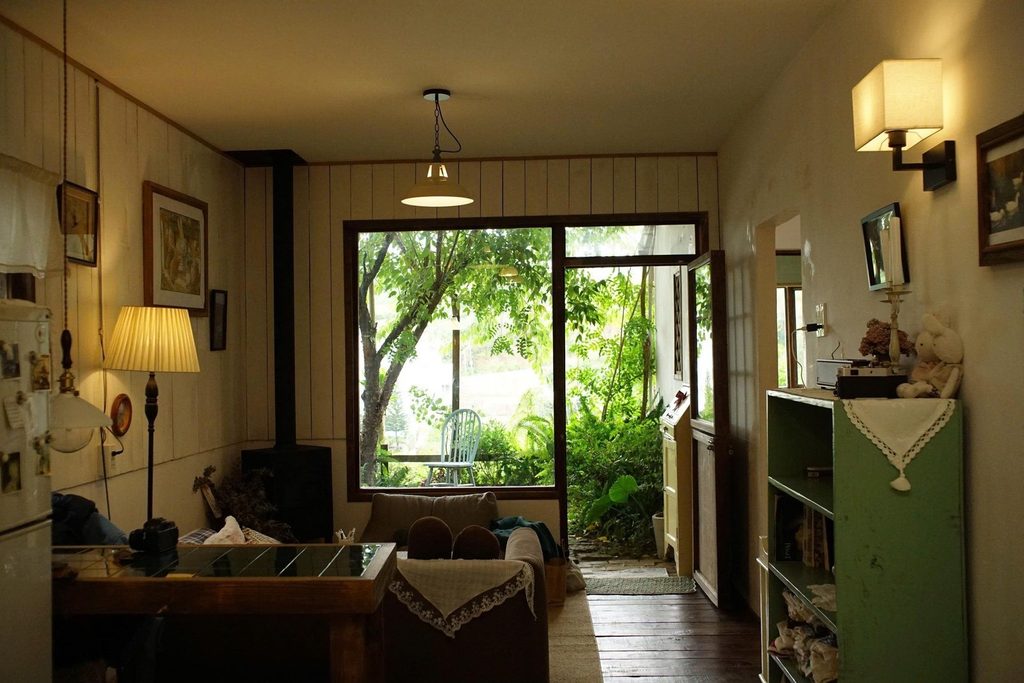
A sofa is a fabric asset, not a piece of furniture that happens to be soft. What happens to it between professional cleans decides whether it lasts five years or fifteen, and almost nobody is ever taught the handful of habits that make the difference.
The asset nobody was taught to maintain
Most Perth homeowners know roughly how to look after a car. Rotate the tyres. Change the oil. Do not park it under a tree dropping sap for a decade. Almost none of them have ever been taught the equivalent handful of habits for the upholstered furniture sitting in their living room, which is, in fabric terms, a genuine textile asset absorbing daily contact, oil, sunlight, and particulate for years between the professional cleans that reset it.
This is the reframe worth sitting with. Upholstery fabric, whether on a sofa, an armchair, or the ticking fabric covering a mattress, is a fibre asset in exactly the way a wool or synthetic carpet is a fibre asset, and it is subject to the same underlying chemistry and physics of soil transfer, oil absorption, and sun exposure. The difference is that a carpet gets walked on and a homeowner intuitively understands wear. Upholstery gets sat on, leaned against, and slept against, and the wear is quieter, less visible day to day, and almost never explained to the person who owns it.
This article is the DIY Vault entry for upholstery, meaning the practical, specific, actionable habits a homeowner can apply between professional cleans to genuinely extend the working life of the fabric. It is not a substitute for a professional clean on a proper schedule. It is the maintenance a car owner does between services, and it makes as much difference to the outcome.
What upholstery fabric actually is
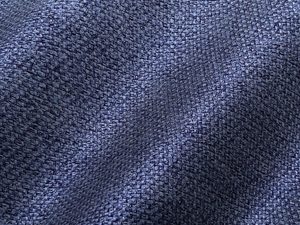
Upholstery fabric on Australian furniture and mattress ticking falls broadly into natural fibre blends, cotton, linen, and wool content woven or knitted into a furnishing textile, and synthetic fabrics built from polyester, nylon, or olefin fibres, frequently as a fine denier microfibre weave chosen for its resistance to staining and its lower price point. Each family behaves differently under soil and moisture exposure for the same underlying reasons carpet fibre does. Natural fibre content is more absorbent and takes up oil and moisture into the fibre structure itself. Synthetic fibre is largely non absorbent, and soil sits on the fibre surface and within the weave rather than inside the fibre.
The weave and pile structure of the fabric matters as much as the fibre chemistry. A tight, flat weave sheds surface soil relatively easily with regular vacuuming. A looser, textured, or looped weave, common in many decorative upholstery fabrics, traps particulate more readily within the structure of the weave itself, meaning the same amount of vacuuming lifts proportionally less soil from a textured fabric than from a flat one. Mattress ticking fabric is typically a tighter, more tightly woven cotton or polyester blend precisely because it needs to resist the transfer of body oil and moisture into the layers beneath it, but it is still a textile fabric subject to the same soiling mechanisms as any other upholstery surface, and it benefits from the same maintenance logic applied to the fabric itself.
How soil actually gets into the fabric
Body oil transfer is the largest single contributor to upholstery soiling, concentrated at points of repeated contact, armrests, headrests, the seat cushion edge, and across the full surface of mattress ticking. Skin naturally produces sebum, a lipid rich oil, at a continuous low rate, and every point of contact between skin and fabric transfers a small amount of that oil into the weave. Over months, this builds a cumulative oil film that is invisible day to day and only becomes visible once it has darkened the fabric at these contact points, by which time a significant amount has already worked into the fibre structure by the same capillary action described in our carpet fibre coverage.
Ultraviolet exposure compounds the problem in a Perth home with any north or west facing glazing. UV radiation drives a photo oxidation reaction in dye molecules and in the cellulosic content of natural fibres, breaking down chemical bonds within the fibre and the colourant over time. This produces both visible fading and a genuine, measurable weakening of the fibre itself, which is why a sun exposed section of an upholstered chair frequently wears through before a shaded section of the same fabric, even though both have received identical physical use.
The biological dimension deserves an honest mention because it explains why regular vacuuming matters more than most homeowners assume. Upholstery fabric, like carpet, provides a habitat for microscopic organisms that feed on the organic material embedded in the weave, chiefly shed skin cell fragments. A higher embedded organic load supports a larger population of these organisms within the fabric structure. Reducing that organic load through regular vacuuming is the single most effective way a homeowner can influence this population without any chemical intervention at all, and it is a genuine indoor environmental health consideration as much as a fabric care one.
The mattress is upholstery, not bedding
Mattress ticking deserves its own mention in this article, and it deserves to be discussed strictly as an upholstery fabric, because that is precisely what it is. The ticking is a woven textile surface, engineered and cared for using the same fibre principles as a sofa or an armchair, not a bedding item and not part of a sleep hygiene routine. Treating it as upholstery, rather than folding it into a broader conversation about sheets, pillows, and sleep, keeps the maintenance focus where it actually belongs, on the fabric asset itself and what protects it.
The ticking fabric on a mattress carries a larger area of sustained, repeated contact than almost any other upholstered surface in a home, and it experiences a genuinely higher moisture exposure over time from ordinary environmental humidity and the general air exchange of a bedroom, in addition to the same body oil transfer mechanism described earlier in this article. A protective, breathable fabric cover fitted over the ticking is the single most effective way to reduce the soil and oil load that ever reaches the mattress fabric itself, in exactly the same way a removable, washable cover on a favourite armchair protects the upholstery fabric underneath it. The cover is replaced or laundered on its own schedule, while the mattress ticking beneath it is protected from the bulk of the contact load and lasts considerably longer between professional cleans as a result.
Vacuuming the mattress ticking on the same schedule as other upholstery in the home, using the upholstery attachment across the full surface including the seams and piping where particulate concentrates, is the other simple habit that meaningfully extends the interval between professional cleans. This is fabric maintenance, applied to a specific piece of upholstered furniture that happens to be a mattress, and the rules are the same rules this article has already set out for any other upholstered surface in the house.
The Crusader upholstery cleaning method
A professional upholstery clean begins with fibre identification and a colourfastness test on a hidden section of the fabric, because the wrong moisture level or chemistry on the wrong fibre can cause colour bleed, shrinkage, or watermarking that no amount of correction afterward can fully reverse. Natural fibre blends and looser weaves generally tolerate a controlled hot water extraction approach, similar in principle to carpet cleaning but at a lower pressure and a shorter dwell time appropriate to a lighter, more decorative textile. Tighter synthetic weaves and fabrics with limited water tolerance, including many mattress ticking constructions, are cleaned using a low moisture approach, where chemistry does the majority of the soil lifting work and only minimal moisture is introduced to the surface.
Drying technique is where upholstery cleaning differs most from carpet cleaning, and where an untrained approach causes the most damage. A sofa cushion or a mattress is not a flat surface over a subfloor. It is fabric wrapped around foam or fill, and moisture that penetrates beyond the surface fabric into that fill has nowhere efficient to evaporate to and can sit for days, creating the exact damp, organic rich conditions that support mould and mildew growth inside a cushion where nobody can see it happening. Every Crusader upholstery job uses controlled, minimal moisture and active air movement across the treated surface for the duration of the visit, and we do not consider a job complete until the surface has returned to an appropriate dry reading, not simply until it looks dry to the eye.
Eco chemistry for upholstery
Upholstery fabric sits in close, sustained contact with skin, in a way carpet generally does not, and our chemistry bench reflects that. The base is the same plant derived surfactant system used across our other services, biodegradable within twenty eight days under OECD 301 testing, and left deliberately unfragranced, because a fragrance chemical applied to a surface someone will lean their face or arm against for years is an unnecessary and avoidable exposure. We do not use quaternary ammonium compounds in routine upholstery cleaning. Hydrogen peroxide based treatment is reserved for confirmed biological staining, such as a genuine organic contamination mark, rather than deployed as a general brightener across fabric that does not need it.
Long lasting client tips
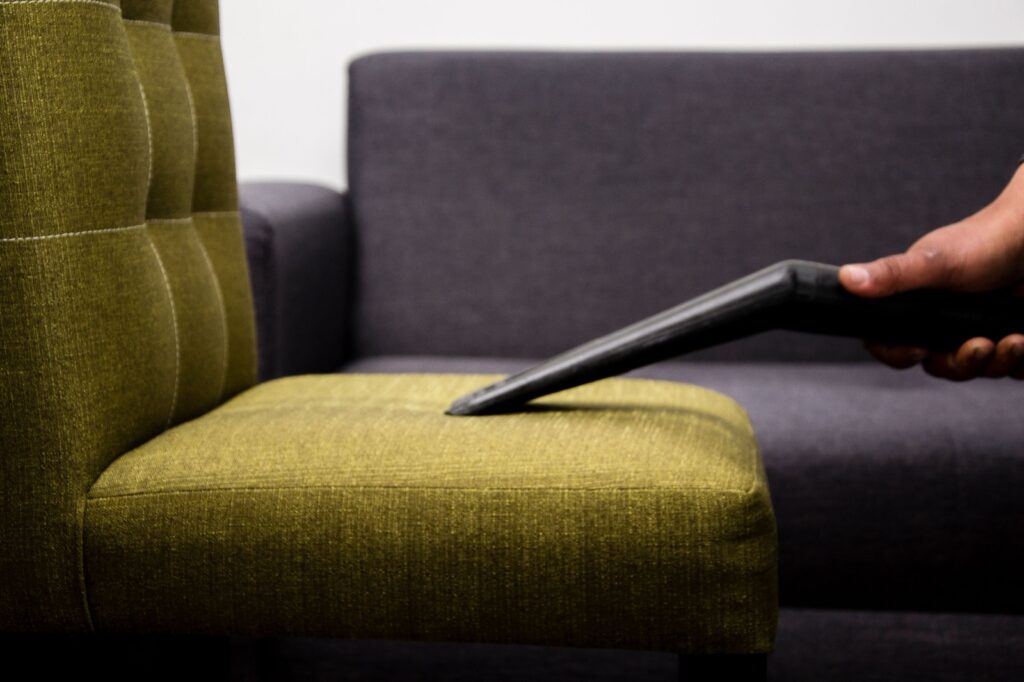
First. Vacuum upholstery weekly using the upholstery attachment on your vacuum, working into seams and crevices where particulate settles and where a flat surface attachment cannot reach. This single habit does more to slow soil accumulation than any spray or fabric treatment available to a homeowner.
Second. Blot spills immediately with a clean, light coloured cloth, working from the outside of the spill inward, and never rub. Rubbing drives the contaminant deeper into the weave and can spread it across a wider area than the original spill covered.
Third. Rotate reversible cushions regularly, generally every one to two weeks, to even out wear and sun exposure across all usable faces of each cushion. Where a mattress construction allows rotation, the same principle protects the ticking fabric from developing an uneven wear pattern concentrated in one zone.
Fourth. Keep upholstered furniture out of direct, sustained sunlight where practical, using curtains, blinds, or simple repositioning. Reducing UV exposure is the cheapest and most effective way to slow the fading and fibre weakening described earlier in this article, and it costs nothing beyond a moment’s thought about furniture placement.
Fifth. Never use a carpet shampoo product, a steam mop, or a general purpose steam cleaner on upholstery. These tools and chemistries are formulated for a flat, ventilated floor surface, not for fabric wrapped around foam, and the excess moisture they introduce is the single most common cause of hidden mildew developing inside a cushion.
Sixth. Book a professional clean on a schedule appropriate to the household, generally every twelve to eighteen months for upholstery in regular use, sooner for households with pets, young children, or heavy daily use. Waiting until soiling is visible means the fabric has already absorbed a meaningful oil and particulate load that a later clean will need more intervention to properly lift.
The bold position
A great deal of upholstery damage in Perth homes is self inflicted, not through neglect but through good intentions applied with the wrong tool. A homeowner who runs a hired carpet extraction machine or a household steam cleaner over a sofa because it seemed like the sensible thing to do has, in a meaningful share of cases, introduced more moisture into the cushion fill than the fabric or foam can safely evaporate, and the mildew that develops weeks later is blamed on the furniture rather than on the method.
We will say this plainly. The upholstery cleaning category has never been taught to the public the way carpet cleaning has, and the gap has been filled by generic advice borrowed from flooring, which does not transfer safely to fabric wrapped foam. Cleaning Crusader treats upholstery as its own fibre discipline, with its own fabric identification step, its own moisture discipline, and its own drying standard, because a sofa that has been cared for correctly between professional visits, and cleaned correctly during them, is a piece of furniture that lasts fifteen years rather than five. The rules are not complicated. They have simply never been handed to the person who owns the furniture, until now.
The same case applies to every upholstered surface in a home, including the mattress ticking most households never think to include in this conversation at all. A homeowner who understands their sofa fabric and their mattress fabric as the same category of fibre asset, subject to the same soil mechanisms and the same care rules, is a homeowner who protects both correctly rather than neglecting one because it was never framed as something worth maintaining in the first place.
The work is the proof.
Cleaning Crusader. Built for impact. Driven by excellence. Guided by purpose.