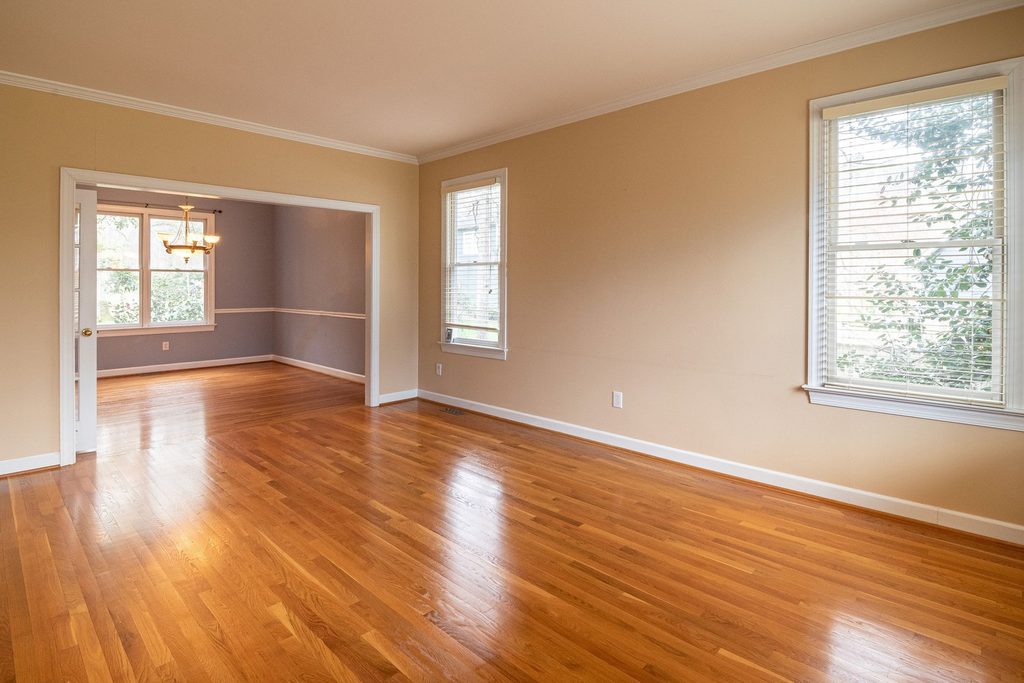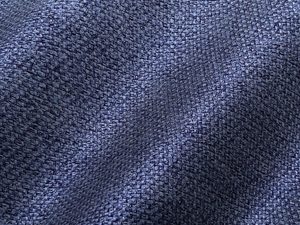
Two carpets, two chemistries. Wool holds moisture inside its own molecular structure. Nylon and polyester do not. Run one protocol across both and one fibre survives while the other quietly fails.
Two carpets, one afternoon, two different materials
A Crusader crew attends two jobs on the same day. The morning job is a wool broadloom in a character home in Mount Lawley, decades old, high pile, the kind of carpet a family has protected since it was laid. The afternoon job is a nylon carpet in a newer build further south, chosen for its price and its durability against kids’ backpacks and dog claws. Same truck. Same crew. Same van full of equipment. If that crew ran identical chemistry, identical dwell time, and identical drying targets across both jobs, one of those two carpets would come out of the day damaged and the other would come out of the day still dirty.
That is the reframe this article exists to deliver. The cleaning trade talks about carpet cleaning as though carpet were one material wearing different colours. It is not. Wool and the synthetic family of nylon and polyester are, at a molecular level, close to opposite materials, and the two dominant fibre types under Perth floors behave in genuinely different ways the instant water and chemistry are introduced. A cleaner who cannot tell wool from nylon by sight, by feel, or by a thirty second test is working blind, and working blind on a wool carpet is how a family loses an asset that cannot be replaced for the price it was bought at.
This article sets out the fibre science underneath the service. What wool actually is at a molecular level, and why it holds moisture the way almost nothing else underfoot in a house does. What nylon and polyester actually are, and why they do the opposite. Why dwell time, chemistry pH, and drying targets have to be selected per fibre rather than per job. And why the habit of running a single protocol across every carpet in Perth is quietly responsible for a great deal of the wool damage that property managers and insurers see every year, sitting alongside synthetic carpets that never get properly clean in the first place.
What wool actually holds
Wool is a protein fibre. Keratin, the same structural protein that makes up hair and horn, arranged as a helical protein chain with internal cross links and an outer layer of overlapping scales called the cuticle. This structure is genuinely hygroscopic. Water molecules bond to polar sites within the amorphous regions of the protein chain itself, not merely to gaps between fibres. The moisture is absorbed into the material, not deposited on top of it.
Under normal room conditions, wool holds a moisture regain of roughly thirteen to eighteen percent of its own dry weight without feeling wet to the touch, already taken up into the fibre’s internal structure. Under the saturation load introduced during a hot water extraction clean, wool fibre can take up moisture equivalent to roughly thirty percent of its own dry weight before the pile registers as damp to a hand pressed against it. That capacity is not a feature the cleaning trade invented. It is the same property that made wool clothing useful in wet climates for centuries without ever feeling soaked through, and it has a direct and unavoidable consequence for how a wool carpet must be cleaned.
The moisture a technician introduces during extraction does not sit on top of a wool fibre waiting patiently to be recovered by the wand. A meaningful share of it is absorbed into the fibre’s internal chemistry within moments of contact, and no extraction equipment, however strong the vacuum lift, can pull moisture back out of a fibre once it has bonded at the molecular level. The remainder of that moisture has to leave the carpet by evaporation, on wool’s own timeline, governed by the fibre’s chemistry rather than by the machine.
What nylon and polyester forget
Nylon and polyester are synthetic polymers, extruded rather than grown, with a molecular structure that is close to fully crystalline and carries very little of the amorphous, water accepting region that makes wool hygroscopic. Nylon holds a moisture regain of only around four percent under standard conditions. Polyester sits under one percent. Functionally, both fibres are close to waterproof at the molecular level. Water and soil reaching a synthetic carpet do not enter the fibre. They sit on its outer surface and in the interstitial space between filaments, held there by surface tension and, in nylon’s case, by a mild natural affinity for oily soil that the polymer surface carries.
This is why a synthetic carpet gets dirty in a different way to wool, and why it needs a different chemistry to come clean. Much of the household soil load in a Perth home, cooking oil aerosol, skin sebum, vehicle residue tracked in from a garage, is hydrophobic and will not lift with water alone. A synthetic carpet needs a surfactant system capable of breaking that oil’s surface tension, plus enough mechanical agitation and dwell time to disturb soil that is bonded to the fibre surface rather than absorbed into it. A dwell time and chemistry calibrated for wool, gentle, brief, low agitation, will under clean a synthetic carpet every single time, leaving an oil based residue behind that reappears as rapid re soiling within weeks of the clean.
Why the mismatch damages one fibre and starves the other
Run a synthetic tolerant protocol on wool and the damage shows up in three specific, well documented ways. First, fibre swelling. Wool swells when it absorbs moisture, and repeated high moisture cleaning without adequate recovery and drying produces a permanent lifting of the scale structure on the fibre surface, giving a rougher hand feel and a duller light reflection that reads to the customer as premature ageing. Second, browning. Wool browning is a recognised phenomenon in the carpet trade, produced when residual alkalinity from an incorrectly high pH chemistry combines with slow drying and the natural tannins present in wool’s protein structure, producing a yellow to brown discolouration that is frequently permanent once it has fully developed. Third, extended drying carrying a genuine biological risk. Because wool holds so much of its moisture internally, a wool carpet cleaned with excess water and inadequate air movement can remain damp well beyond the roughly twenty four hour window that industry drying standards identify as the point past which mould and bacterial growth risk rises meaningfully, particularly where an underlay or timber subfloor beneath is also holding moisture.
Run the opposite mismatch, wool era caution applied to a synthetic carpet, and the failure mode is under cleaning rather than damage. Insufficient dwell time and gentle agitation leave oil based soil largely undisturbed. The carpet looks acceptable directly after the visit, because surface moisture and visible grime have lifted, but the embedded oil film remains and acts as a magnet for airborne and tracked in particulate. The customer has paid for a full clean and received, in chemistry terms, closer to a rinse.
The pH dimension explains why a single all purpose chemistry can never serve both fibre families properly. Wool’s keratin structure is stable across a narrow band, broadly pH five to eight, and begins to hydrolyse, meaning the peptide bonds within the protein chain begin to break down, once conditions run more alkaline than that for any sustained period, particularly in the presence of heat. Nylon and polyester tolerate a considerably wider pH range, into the low tens, without equivalent structural risk, which is exactly why most mainstream carpet cleaning chemistry sold into the trade is formulated at a pH a synthetic fibre shrugs off and a wool fibre does not.
The Crusader fibre matched method
Every Crusader carpet job begins with fibre identification, before any chemistry is selected, not after. Where fibre type is not already recorded in the customer file, our technicians confirm it visually and by feel. Wool carries a distinct lustre, crimp, and warmth to the touch that synthetic fibre does not replicate. Where genuine ambiguity remains, a small fibre sample from an inconspicuous area settles the question within a minute using a simple burn test. Wool self extinguishes and carries the smell of burning hair. Nylon and polyester melt and bead.
Chemistry follows fibre, not the job type or the clock. Wool carpets are cleaned with chemistry held at pH eight or below, formulated specifically to avoid the alkaline hydrolysis risk described above, with dwell time held short, generally under ten minutes, because wool’s absorbency means the chemistry begins working quickly and the surrounding moisture load needs to be minimised from the outset. Synthetic carpets tolerate a broader pH range and generally need a longer dwell time, in the order of ten to fifteen minutes, paired with stronger mechanical agitation, because the soil sits on the fibre surface and needs active disruption rather than absorption based lift.
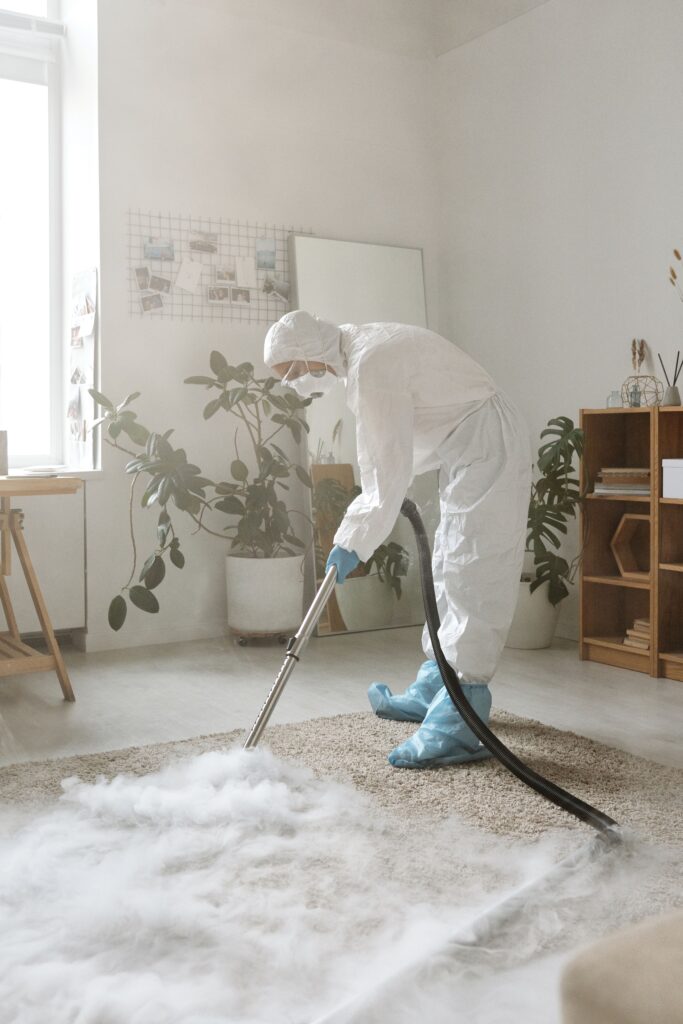
Extraction technique differs as well. Wool passes are slower and more numerous, focused on maximising water recovery per pass, because every part of the water not recovered by the wand is water that must leave by evaporation on wool’s slower timeline. Drying targets are measured rather than assumed. A wool carpet is not considered complete until moisture readings across the pile confirm the carpet will reach dry standard within the target drying window, supported by air movers and, where humidity runs high, dehumidification. Synthetic carpet dries faster by nature and tolerates a more standard extraction pass, but still receives the same moisture verification before the job is signed off.
Eco chemistry across two fibre families
Our chemistry bench does not change from fibre to fibre. Its application does. The base is a plant derived surfactant system, biodegradable within twenty eight days under OECD 301 testing, unfragranced, and free of quaternary ammonium compounds in routine carpet work. For wool, we hold the working dilution and pH toward the lower, protein safe end of that bench’s range. For synthetic fibre, the same bench is used at a stronger dilution and a higher pH within the range the chemistry supports, because the fibre can tolerate it and the soil load demands it.
Hydrogen peroxide based treatment is reserved in our protocol for confirmed biological contamination, such as pet staining or mould affected underlay, and is not deployed as a routine brightener on either fibre. A strong oxidiser used indiscriminately on wool protein carries its own bleaching and fibre weakening risk that a plant derived surfactant system, correctly matched to the fibre, does not.
Long lasting client tips
First. Know what is under your feet before you book a clean. If you do not know whether your carpet is wool or synthetic, check the paperwork from the original installation or ask your cleaner to confirm before any chemistry touches the fibre. This single fact changes the entire protocol that follows.
Second. Vacuum wool carpet at least twice a week using a suction only or low beater bar setting. Wool’s scale structure is more easily abraded by an aggressive rotating brush than synthetic fibre is, and a gentler setting protects the fibre surface between professional cleans.
Third. Blot spills on wool immediately and avoid rubbing. Because wool absorbs so readily, a spill that is rubbed rather than blotted is driven deeper into the fibre’s internal structure within seconds, well before any professional clean can intervene.
Fourth. Avoid high pH household products on wool carpet entirely, including most supermarket carpet shampoos and spot removers, which are typically formulated for synthetic fibre tolerance rather than wool’s narrower safe range. When in doubt, plain water and a white cloth is safer than an unknown product.
Fifth. Improve air movement in rooms with wool carpet, particularly through Perth’s cooler, more humid winter months. A ceiling fan or an open window for a few hours after any wet cleaning event, professional or accidental, meaningfully shortens the drying window and reduces the risk of browning or odour developing.
Sixth. Book a professional clean on a schedule matched to the fibre and the household, generally every six to twelve months for wool underfoot in an active family home, rather than waiting for visible soiling to prompt the call. Wool holds soil and oil internally long before the surface shows it, and by the time staining is visible, the fibre has often already absorbed contamination that a later clean will struggle to fully reverse.
The bold position
The plain fact the industry does not like to say out loud is that most carpet cleaning delivered in Perth is a single, undifferentiated service, one chemistry, one dwell time, one drying approach, applied regardless of what fibre is actually on the floor. This is not a matter of opinion. It is a matter of chemistry, and chemistry does not negotiate with a schedule. A protocol built around synthetic tolerance and applied to wool will, over repeated cleans, swell the fibre, brown the pile, and shorten the carpet’s working life by years. A protocol built around wool’s caution and applied to synthetic carpet will leave oil based soil behind and hand the customer a floor that looks clean and re soils within weeks.
Both outcomes are avoidable, and neither requires exotic equipment. What they require is a cleaner willing to identify the fibre before choosing the chemistry, and to hold the discipline of matching dwell time, pH, and drying target to what is actually underfoot rather than to whatever is fastest to run through the truck that day. Cleaning Crusader identifies fibre type on every carpet job as a standing rule, not an optional step, because a wool carpet and a synthetic carpet are, chemically, close to different materials wearing the same name. We treat them as the different materials they are, because the fibre does not forget what was done to it, even when the invoice says the job is finished.
Discipline creates freedom.
Cleaning Crusader. Built for impact. Driven by excellence. Guided by purpose.