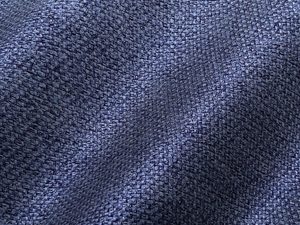
A fabric protector is not a marketing add on decided at the till. It is a chemistry choice about what molecule sits on every fibre of a sofa for years, and the shift away from older fluorocarbon formulations changes both how the protection actually works and what it leaves behind in a home long after the technician has left.
The upsell that is actually a chemistry decision
Fabric protection gets offered at the end of an upholstery clean the way an extended warranty gets offered at the end of an electronics purchase, as a line item that feels optional and slightly transactional. That framing does the topic a disservice, because a fabric protector is not a coating layered over the cleaning work the way a warranty sits over a purchase. It is a molecular treatment applied directly to every fibre in the upholstery, and which molecule gets applied determines how the fabric behaves against spills for years afterward, what it costs to reapply, and what residue remains in the home in the meantime.
Two broad families of fabric protector chemistry exist in the trade today, and they are not interchangeable variations on the same idea. Fluorocarbon based protectors, the older and still widely available category, work through a genuinely different mechanism to the non fluorinated alternatives that have taken growing market share over the past decade. Understanding the difference is the actual basis for recommending one over the other, not brand loyalty or habit.
Surface energy. The property that decides whether a liquid beads or spreads
Every fabric protector, regardless of chemistry, works on the same underlying physical principle. A liquid dropped onto a surface either beads up, spreads into a puddle, or wicks into the fibre depending on the surface energy of that fibre relative to the surface tension of the liquid. Untreated cotton or a natural fibre blend has a relatively high surface energy, which means water and, worse, oil based liquids wet the fibre readily and begin wicking into the weave within seconds. A fabric protector’s job is to lower the surface energy of the fibre below the surface tension of the liquids it is meant to repel, so that instead of wetting the fibre, the liquid beads on top of it long enough to be blotted away before it penetrates.
The two chemistries differ in how far they can push that surface energy down, and that difference has real consequences for what kinds of spills the treated fabric will actually resist.
Fluorocarbon chemistry. The strongest performer and the reason it fell out of favour
Fluorocarbon based protectors, built around fluorinated carbon chains, achieve the lowest surface energy of any fabric treatment chemistry available. Fluorine is the most electronegative element on the periodic table, and a carbon chain fully substituted with fluorine atoms creates a surface that essentially nothing wants to wet, including oils and greases that defeat most other repellent chemistry outright. This is why fluorocarbon treated fabric has historically been the benchmark for both water and oil repellency, and why it remained the trade standard for decades in upholstery, carpet and outdoor fabric protection alike.
The molecule responsible for that performance is also the reason the category has been moving away from its original long chain formulations. Long chain fluorocarbon compounds, generally built on eight carbon chains and commonly grouped under the broader per and polyfluoroalkyl substances category, are exceptionally persistent once released into the environment, breaking down over timescales far longer than most industrial chemicals and accumulating in soil, water and biological tissue rather than degrading. Regulatory bodies internationally moved against the longest chain variants through the 2010s, including a voluntary phase out coordinated with the United States Environmental Protection Agency and formal listing of some long chain compounds under international chemical conventions. Australia’s own PFAS National Environmental Management Plan, coordinated across state and federal environment agencies, reflects the same shift, addressing legacy contamination and guiding a move toward shorter chain and non fluorinated alternatives across multiple industries, upholstery and textile treatment among them.
The trade response has been a shift to shorter chain fluorocarbon chemistry, typically six carbon chains rather than eight, which retains much of the oil and water repellency performance while reducing, though not eliminating, the persistence concern associated with the longer chain compounds. Shorter chain fluorocarbon protectors remain in legitimate use today and still outperform non fluorinated alternatives against oil based staining specifically. They are not banned or unsafe for professional use. They are, however, a different molecule with a different persistence profile to the classic long chain formulations many households associate with their upholstery protection from a decade or more ago, and a household that has not had its furniture retreated since an earlier era is very likely carrying an older chemistry than what is applied today.
Non fluorinated alternatives. What changes at the fibre level
Non fluorinated fabric protectors, generally built on silicone based or hydrocarbon based chemistry, work through the same surface energy principle but cannot push the surface energy of the treated fibre nearly as low as a fluorocarbon can, because neither silicone nor hydrocarbon chemistry has fluorine’s extreme electronegativity available to it. Silicone based protectors achieve genuinely strong water repellency, often close to fluorocarbon performance for water alone, because silicone’s own chemistry is already fairly hydrophobic before any treatment is applied. Their weakness sits specifically with oil based staining, where a silicone treated fibre offers meaningfully less resistance than a fluorocarbon treated one, and an oil or grease based spill can begin wicking into a silicone protected fabric considerably sooner than into a fluorocarbon protected equivalent.
What this means in practice is that a household choosing a non fluorinated protector is making a genuine trade. They are accepting materially weaker protection against oil based staining, the category of stain that includes cooking oil, body oil along armrests and headrests, and many cosmetic products, in exchange for a chemistry with a substantially shorter environmental persistence and a lower long term accumulation profile in the home and in wastewater once the fabric is eventually cleaned, replaced or disposed of. Neither chemistry is simply better in every respect. They solve different problems and leave behind different residues, and a household’s priorities, not a technician’s default habit, should decide which one goes onto a specific piece of furniture.
What actually gets left behind
The phrase left behind matters more than most households realise. A fabric protector is not a surface film that sits passively on top of the fibre and eventually wears off cleanly. It is a chemical treatment bonded, to varying degrees depending on the formulation, to the fibre surface itself, and it sheds in small quantities over the life of the fabric through normal wear, vacuuming and cleaning. Fluorocarbon chemistry, precisely because of the persistence that made it effective for years without reapplication, sheds slowly and in a form that does not break down quickly once released into household dust or wastewater. Non fluorinated chemistry sheds at a broadly similar rate in terms of volume but breaks down considerably faster once it leaves the fabric, which is the core environmental argument in its favour.
A household with young children or pets who spend extended time in close contact with upholstery, mouths and hands on cushions and armrests, has a legitimate reason to weigh this distinction more heavily than a household using a formal sitting room a handful of times a year. This is not a claim that any currently registered fabric protector poses an acute health risk in ordinary use. It is a statement that the two chemistries have different long term environmental and accumulation profiles, and a household is entitled to know which one is being applied to their furniture and to choose accordingly.
The Crusader protection conversation
Every upholstery job that includes a protection treatment starts with a short conversation about which chemistry the household actually wants, rather than a default application of whichever product happens to be in the van that day. Where a piece sees genuine daily use with food, drink and skin contact, oil resistance matters more, and we explain honestly that a fluorocarbon based treatment, generally the shorter chain modern formulation, will outperform a non fluorinated alternative against that specific risk. Where a household has a stated preference to avoid fluorocarbon chemistry entirely, for a nursery chair, a piece used heavily by small children, or simply as a household values position, we apply a silicone or hydrocarbon based alternative and are equally honest that water resistance will remain strong while oil resistance will be comparatively weaker, and that spills of any kind still need to be blotted promptly regardless of which protector is applied.
We do not describe either chemistry as risk free marketing language, and we do not present protection as a guarantee against staining. A protector buys time between a spill occurring and it setting permanently into the fibre. It does not make a fabric stain proof, and treating it as such leads households to leave spills unattended far longer than the treatment can actually cover.
Eco chemistry and the protection layer
Our cleaning bench, plant derived surfactants biodegradable within twenty eight days under OECD 301, unfragranced, free of quaternary ammonium compounds in routine work, is entirely separate from the protection chemistry discussed above, and the two should not be confused. A gentle, environmentally considered cleaning process does not by itself make the subsequent protection treatment gentle, because the protector is a different chemical category solving a different problem. Where a household wants both the cleaning and the protection step to sit on the more environmentally conservative end of the spectrum, we recommend pairing our standard eco chemistry clean with a non fluorinated protector, and we say so plainly rather than letting the household assume our general chemistry philosophy automatically extends to every product used on the job.
Long lasting client tips
First. Ask which chemistry family your protector belongs to before it is applied, fluorocarbon or non fluorinated, and ask the technician to explain why that one suits your household rather than accepting a default.
Second. If oil based staining is your main daily risk, cooking splashes, hand cream, body oil on a favourite reading chair, know that non fluorinated protectors offer meaningfully less resistance to that category than fluorocarbon chemistry does, and choose accordingly.
Third. Treat any protector as a delay, not a guarantee. Blot spills within the first minute regardless of what treatment is on the fabric, because every protector chemistry eventually allows penetration if a spill is left long enough.
Fourth. Reapply protection roughly every twelve to twenty four months on high use pieces, since normal wear, vacuuming and periodic cleaning gradually reduce any protector’s surface coverage over time.
Fifth. If your furniture was last protected many years ago, assume it was treated with an older, longer chain fluorocarbon formulation and ask your technician what the current product on offer actually is before treating it again.
Sixth. For nurseries, children’s rooms, or any piece where you specifically want to minimise fluorocarbon chemistry in the home, say so directly. A competent technician can offer a non fluorinated alternative and should explain its different performance honestly rather than silently substituting it.
The bold position
We will say this plainly. Most upholstery protection is sold as an undifferentiated add on, one product, one price, one pitch, with no explanation of which chemistry family is actually being applied or what that choice means for either performance or what is left in the home over years of normal use. Households are left assuming all fabric protectors are functionally the same, when the fluorocarbon and non fluorinated categories differ meaningfully in both their oil resistance and their environmental persistence.
That silence is a disservice, not a convenience. A household with small children who would have chosen a non fluorinated treatment given the choice is instead treated with whatever the technician defaults to. A household relying on strong oil resistance for a heavily used dining chair is instead sold a weaker treatment because it happened to be the greener option marketed that week, without anyone explaining the actual trade being made.
Cleaning Crusader treats fabric protection as a chemistry decision made in conversation with the household, not a line item added at the end of an invoice. We explain what fluorocarbon and non fluorinated protectors each do at the fibre level, what each leaves behind over years of normal use, and which one actually suits the piece of furniture and the household in front of us. The coat you cannot see is still a real chemical choice. We would rather our customers make it with their eyes open.
Innovation creates legacy.
Cleaning Crusader. Built for impact. Driven by excellence. Guided by purpose.