Stand two dehumidifiers side by side on a flood job and they look like the same machine doing the same job. They are not. One pulls moisture out of the air by chilling it below its dew point. The other pulls moisture out by chemically binding it to a desiccant material. Choose the wrong one for the temperature and the load in front of you, and a drying plan can fail quietly, for weeks, before anyone notices.
The machine that is quietly not working
A flooded home in the middle of a structural drying job has two large dehumidifiers running in the affected rooms, both humming steadily, both drawing power, both apparently doing their job. A moisture meter check at the halfway mark of the expected drying period, though, tells a different story in one of the rooms. The air feels dry. The machine sounds like it is working hard. The wall framing and the subfloor in that particular room are barely drier than they were on day one, while the identical machine in the room next door has the readings tracking exactly where the drying plan expected them to be.
The difference is not that one machine is faulty. It is that the room with the disappointing readings is a cooler space, a garage adjoining the living area, sitting several degrees below the temperature of the main living zone, and the machine placed in it is a refrigerant dehumidifier, a type that becomes markedly less effective as ambient temperature drops. The machine is running exactly as designed. It has simply been asked to do a job in conditions where its particular physical mechanism does not work well, and nobody on site matched the equipment to the room before switching it on.
This is one of the quieter and more common ways a flood restoration drying plan fails. Not because the technicians were careless, and not because the equipment was broken, but because two categories of dehumidifier that look almost interchangeable from the outside pull moisture out of the air by two genuinely different physical processes, and each one has conditions where it excels and conditions where it barely functions at all.
How a refrigerant dehumidifier actually works
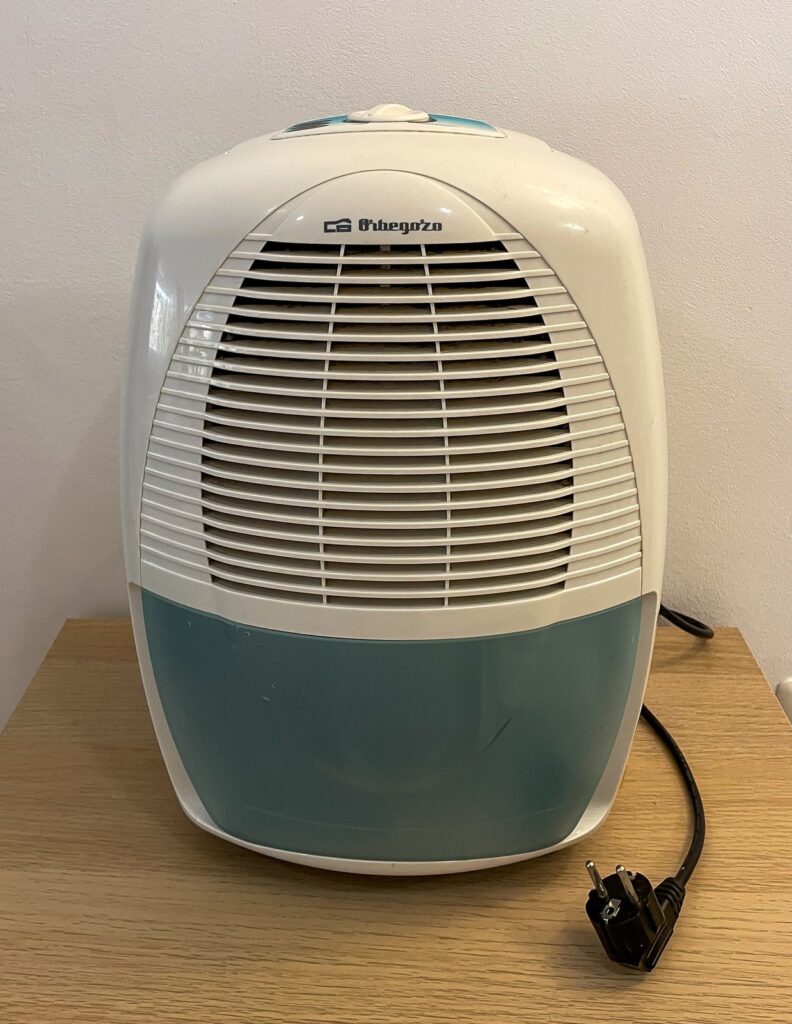
A refrigerant dehumidifier, sometimes called a compressor dehumidifier, works on the same basic physical principle as an air conditioner. A fan draws room air across a refrigerant coil that has been chilled well below the air’s dew point, the temperature at which the moisture the air is carrying condenses out as liquid water. As the air passes across that cold coil, water vapour condenses onto its surface, drips into a collection reservoir or is pumped away, and the now drier air is passed across a second, warmer coil before being returned to the room, which is why refrigerant units also produce a small amount of warmth as a by product of the process.
This mechanism is efficient, relatively low in energy use for the amount of moisture removed, and it works extremely well in the conditions restoration jobs most often present, a warm, humid interior space in a temperature range roughly from the high teens up through the typical range of an occupied Australian home. It becomes progressively less effective as the surrounding air temperature falls, for a straightforward physical reason. Colder air simply holds less moisture to begin with, so there is less available to condense out per pass, and as the coil temperature approaches or drops below zero degrees Celsius, ice can begin forming on the coil itself, which reduces airflow across it and further degrades performance. Below roughly the mid teens in ambient temperature, a standard refrigerant unit’s drying capacity drops away meaningfully, and in genuinely cold conditions it may do very little useful work at all, however hard it appears to be running.
How a desiccant dehumidifier works instead
A desiccant dehumidifier solves the same problem through an entirely different physical mechanism, one that does not depend on chilling anything below a dew point at all. At its core is a rotor impregnated with a hygroscopic desiccant material, commonly a silica gel formulation or a lithium chloride based compound, both of which have a strong natural affinity for water molecules and will draw moisture out of passing air directly onto their surface through adsorption, a chemical and physical attraction between the desiccant material and the water vapour rather than a temperature driven condensation process.
Room air is drawn through one segment of the slowly rotating desiccant wheel, where it gives up its moisture to the material, and the now dry air is returned to the space. A separate, smaller stream of air is heated and passed through a different segment of the same rotating wheel, driving the absorbed moisture back out of the desiccant material as vapour, which is then either exhausted outside the building or channelled to a drain as condensate once it cools. This regeneration cycle is what allows the desiccant material to keep working continuously rather than becoming saturated and useless after a short period.
Because this process depends on a chemical affinity for water rather than on chilling air below a dew point, a desiccant dehumidifier’s performance is largely independent of ambient temperature, and it will continue to pull moisture out of cold air, even air well below the temperature range where a refrigerant unit starts to struggle. This makes it the correct tool in precisely the conditions where a refrigerant unit fails, an unheated garage or a cool store through a Perth winter, a cold subfloor void, or any drying job where the ambient temperature cannot be reliably kept warm throughout the job. The trade off is that desiccant units typically draw more energy to run the heated regeneration cycle, and they are the heavier, noisier machine of the two categories, which is part of why they are not simply used everywhere as a default.
The industry standard behind the choice
The IICRC S500 water damage restoration standard, the primary reference document the trade uses to plan and document a structural drying job, sets out the discipline of psychrometry, the science of measuring and managing temperature, relative humidity, and the moisture content of the air, as the basis for planning any drying job rather than leaving equipment selection to habit or to whatever happens to be sitting in the van. A drying plan built to that standard calculates the class and category of the water loss, maps the moisture content of the affected materials, and calculates the grain depression required, the reduction needed in the amount of moisture the air is actually carrying, to draw water out of the wet materials at an acceptable rate. Equipment is then selected to deliver that grain depression under the actual temperature and humidity conditions present in that specific space, not a general assumption about what a dehumidifier does.
This is the discipline that turns dehumidifier selection from a guess into a calculation. A warm, humid living area with a straightforward Class 1 or Class 2 water loss, under the S500’s categorisation of how much water and how many materials are affected, is very often served well and efficiently by a refrigerant unit. A cold garage, an unheated void, or a job running through a genuine Perth cold snap needs a desiccant unit, or in some cases both types working together, a desiccant handling the difficult cold zone while refrigerant units continue to serve the warmer areas of the same job efficiently. Getting this wrong does not produce an obvious, dramatic failure on day one. It produces a slow, quiet underperformance that only shows up when someone actually checks the moisture readings against the drying curve the plan expected, which is exactly what happened in the garage in this article’s opening scene.
The Crusader equipment selection protocol
Stage one. Psychrometric mapping before equipment selection. Temperature and relative humidity are measured in every affected zone of a loss, not just at a single point, because a single property can easily contain zones with meaningfully different ambient conditions, a heated living area, an unheated garage, an enclosed subfloor void, each of which may need a different equipment response.
Stage two. Calculate the required grain depression for each zone based on the moisture content readings taken from the affected materials, following the S500 framework, rather than simply deploying whatever number of dehumidifiers the job’s square footage would typically suggest.
Stage three. Match equipment type to the actual temperature of each zone, not the temperature of the property as a whole. Refrigerant units are placed where ambient conditions sit within their effective operating range. Desiccant units are placed in cold zones, unheated spaces, or subfloor voids where a refrigerant unit’s performance would be compromised.
Stage four. Monitor daily and adjust as conditions change. A cold snap partway through a job, a change in the building’s heating, or a zone drying faster or slower than the plan predicted can all justify reassigning or adding equipment mid job, and a static equipment plan set on day one and never revisited is a common, avoidable point of drift from the intended drying curve.
Stage five. Document every reading against the plan. Daily psychrometric readings, moisture content of affected materials, and equipment placement are all recorded, so that a drying job’s progress is demonstrable evidence rather than a technician’s general impression that things seem to be going fine.
Eco chemistry and efficiency in the drying plan
A drying job is largely a physics exercise rather than a chemistry one, and matching equipment correctly to conditions is itself an environmental discipline, because a refrigerant unit running uselessly in a cold zone it cannot dry effectively is energy spent for very little genuine result, while the correctly matched equipment achieves the same drying outcome for meaningfully less power draw over the life of the job. Where chemistry does enter a flood job, most often a light antimicrobial treatment applied as a precaution against incipient mould in a structure that has been wet for any length of time, the same plant derived, unfragranced bench used across the rest of the Cleaning Crusader service line applies here too, chosen at the mildest effective strength for the specific risk present rather than as a blanket heavy treatment applied out of habit. Getting the physics of the dry right, and using the lightest effective chemistry alongside it, are both part of the same discipline of not doing more than the job actually requires.
Long lasting client tips
First. Do not judge whether a drying job is working by how a room feels or by how loud or busy the equipment sounds. A machine can run continuously and still be poorly matched to the conditions in that specific space, and only an actual moisture meter reading tells the true story.
Second. Ask whether your drying plan includes readings taken separately for each distinct zone of the property, particularly any unheated or enclosed space such as a garage or a subfloor void, rather than a single reading applied to the whole job.
Third. If part of a flood affected property is meaningfully colder than the rest, ask specifically what equipment has been placed there and why, because that is exactly the zone most likely to need a desiccant unit rather than the refrigerant type more commonly seen in warmer living areas.
Fourth. Do not close doors or seal off rooms from the drying equipment without checking with the technician first. A drying plan is often built around a specific, deliberate airflow pattern between rooms, and isolating a space changes the conditions the equipment is working within.
Fifth. Trust the documented moisture meter readings over how dry a surface looks or feels to the touch. Timber framing and plaster can look and feel dry on the surface while still holding meaningfully elevated moisture deeper inside, which is precisely why the readings, not appearance, decide when a job is genuinely finished.
Sixth. If a drying job is taking noticeably longer in one part of the property than another, ask whether the equipment there has been reassessed, rather than assuming more time on the same setup will eventually solve it. Sometimes the answer is patience. Sometimes the answer is the wrong machine for that particular room.
The bold position
We will say this plainly. A drying plan does not fail with a bang. It fails quietly, with a machine running steadily in a room where its physical mechanism was never going to work well, while every visible sign suggests the job is proceeding exactly as planned. An operator who grabs whichever dehumidifier happens to be free on the truck, without checking the temperature of the space it is going into, can run a job for weeks that looks entirely normal and finishes with framing and subfloor still carrying moisture the readings would have shown from day one.
The failure mode this trade will not name often enough is equipment selection by habit rather than by psychrometry. Two machines that look alike, cost similarly to hire, and both make the room feel drier in the short term are not interchangeable once the ambient temperature drops, and a drying job planned around a general assumption rather than an actual reading in every zone is a drying job that can quietly leave moisture behind in exactly the space nobody checked closely enough.
Cleaning Crusader treats equipment selection as a calculation, not a habit. Every zone of a loss is measured on its own terms, refrigerant and desiccant equipment is matched to the actual temperature and load each space presents, and every reading is documented against the plan so the job’s progress is evidence rather than impression. The two machines look similar because they are solving the same problem. They are not the same machine, and a drying plan that treats them as though they were is a drying plan that has already started to fail before anyone has noticed.
We engineer the benchmark. We do not follow.
Cleaning Crusader. Built for impact. Driven by excellence. Guided by purpose.