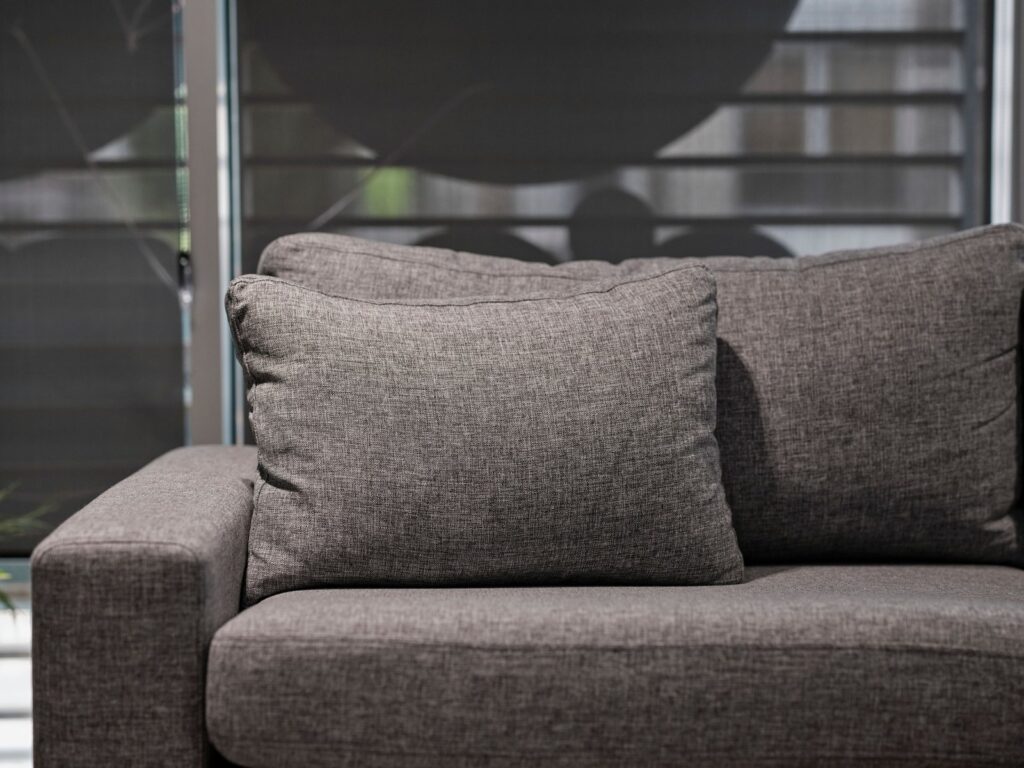
Clean the fabric on a smoke affected sofa and the smell often comes back within days, not because the cleaning failed on the surface, but because the surface was never where the smell actually lived. The odour sits centimetres deep, absorbed into the open cell foam the fabric is stretched over, and that is a different job to a spray and a wipe.
The couch that keeps smelling like the last owner
A family buys a secondhand sofa in good structural condition, has the fabric professionally cleaned as a precaution, and moves it into the lounge feeling entirely satisfied with the result. Within a week or two, particularly on a warm afternoon or after the heater has been running, a faint but unmistakable smell starts drifting off the cushions. Smoke, in most of these stories. Sometimes an old pet. The cleaning clearly worked, because the sofa looked and smelled fine immediately afterward, and yet here it is again, as though the treatment simply wore off.
The treatment did not wear off. It was never capable of reaching the actual source in the first place, and this is one of the more genuinely useful things a homeowner can understand about upholstery, because it changes what is worth attempting yourself and what is worth calling a professional in for. A piece of upholstered furniture is not a single material. It is a fabric skin, chosen for appearance and feel, stretched over a foam core, chosen for comfort and support, and those two layers behave completely differently when something odorous gets into them. Cleaning the fabric addresses the skin. The smell, more often than most people realise, is sitting in the foam underneath it, and no amount of surface work reaches something that was never on the surface to begin with.
What is actually inside a cushion
Most upholstered seating and back cushions built in the last several decades use a polyurethane foam core, a lightweight, resilient material manufactured with an open cell structure. Open cell means the individual bubbles formed during the foam’s manufacture are interconnected rather than sealed off from each other, which is precisely what gives the foam its springy, breathable feel under a person sitting on it. Air moves freely through that connected cell structure, and so, critically, does anything else small enough to travel with the air.
This open, interconnected structure gives the foam an enormous internal surface area relative to its size, vastly larger than the flat fabric surface stretched over the top of it. That internal surface area is the whole reason the smell problem is so persistent, because it behaves, in a rough physical sense, the same way an activated carbon filter behaves, an enormous hidden surface capable of adsorbing far more material than a simple flat surface of the same overall size ever could. The difference is that a carbon filter is designed to trap and hold contaminants deliberately and permanently. A sofa cushion is doing the same physical job entirely by accident, and it is not designed to release what it has absorbed, which is exactly the problem a homeowner runs into.
How the smell actually gets in there
Smoke, whether from tobacco or from a fireplace nearby, carries its odour largely in a mix of volatile and semi volatile organic compounds, small molecules light enough to travel through the air and settle onto and into surrounding materials. Pet odour, particularly from urine, carries ammonia and a range of sulphur containing compounds along with organic residue from skin oils and dander. Body oils, the ordinary sebum every person’s skin produces continuously, are absorbed into fabric and cushioning simply through years of regular contact and use, and they carry their own faint but persistent odour profile as they slowly oxidise over time.
None of these are large or heavy particles that simply sit on top of a fabric weave the way visible dirt does. They are small enough, and in several cases they exist partly as a gas or vapour, to migrate straight through the open weave of most upholstery fabric and into the connected air pockets of the foam beneath it. Once inside that open cell structure, the odorous compounds have an enormous internal surface to adsorb onto, distributed through the entire depth of the cushion rather than concentrated at the surface where a cleaning solution can reach it. A cushion that has spent years in a smoking household, or years under a pet that has had an accident on it more than once, is not lightly scented on the outside. It has become saturated, cell by cell, through its actual physical depth.
Why surface cleaning cannot solve a depth problem
Standard upholstery cleaning is built to address the fabric itself and the soil sitting on and just within its fibres, working with moisture, a cleaning solution, and extraction to lift what is on that outer layer. This genuinely resolves surface staining, ordinary soil buildup, and light surface odour extremely well, and for the great majority of upholstery jobs it is exactly the right and sufficient tool.
It cannot meaningfully reach odour that has already migrated centimetres deep into the foam core, for two compounding reasons. First, a cleaning solution applied to the fabric surface simply does not penetrate that far into the foam during a normal cleaning process, and deliberately over wetting a cushion to try to force moisture that deep is a genuine hazard rather than a solution, because a foam core soaked through is extremely difficult to dry fully, and foam that stays damp inside becomes an entirely new and worse problem, a mould risk sitting invisibly inside the cushion the homeowner cannot see or check. Second, even where some moisture does reach a shallow layer of the foam, ordinary cleaning solution is formulated to lift soil from a fabric surface, not to break the specific chemical bonds holding smoke tar, ammonia compounds, or oxidised skin oils onto the internal structure of a polymer foam.
This is why a fresh clean can look and even smell fine immediately, and why the smell often returns within days, particularly on a warm day or once the heater comes on. Warmth increases the rate at which the compounds trapped deep in the foam release back out through the open cell structure and back through the fabric, a process closely related to thermal desorption, the same reason a warm car interior smells more strongly of stale odours than a cold one. The surface was genuinely clean. The reservoir underneath it was untouched, and it simply continued doing what it had been doing the entire time, releasing a little of what it holds whenever conditions make that easier.
What genuinely helps, and what is honestly a job for a professional
This is where the DIY Vault pillar matters, because there is real, useful ground a household can cover themselves before deciding whether professional intervention is needed, and being honest about where that ground ends is part of the value, not a reason to withhold it.
For light, recent odour that has not had years to saturate the foam, airing the piece thoroughly, cushions removed and stood in direct sunlight and fresh air for as long as practical, does genuinely help, because sunlight and airflow accelerate the natural breakdown and release of some surface level odour compounds. A light, dry application of bicarbonate of soda across the fabric surface, left for several hours and then thoroughly vacuumed off, can absorb some genuinely surface level odour, though it does nothing whatsoever for anything already established in the foam beneath. Keeping the piece well ventilated generally, rather than reaching for a fragranced spray, prevents the situation from being masked rather than resolved, because a perfumed odour eliminator layered over a foam that is still actively releasing its own compounds produces two smells competing with each other rather than one problem solved.
Where the odour is old, strong, and clearly tied to years of smoking, a significant pet accident, or a long history of heavy use, the honest position is that this has become a professional assessment, not a spray, and sometimes not even a professional clean. A foam core that has been saturated for years by tobacco tar or by repeated pet urine contamination can, in genuinely severe cases, be more sensibly and more honestly addressed by replacing the foam insert itself than by repeated attempts at odour treatment that can improve but may never fully eliminate a deeply established reservoir. This is not the answer that maximises a cleaning invoice, and it is said anyway, because a client who is told the truth about a foam that will never fully clear is better served than one sold a third and fourth treatment on a problem that professional cleaning alone cannot finish.
Eco chemistry for odour, not perfume
The Cleaning Crusader bench treats odour as a chemistry problem to be resolved rather than a smell to be covered, and that shapes which products are actually used. Enzymatic and plant derived treatments are used where organic odour sources such as pet contamination are present, working to break down the specific organic compounds involved rather than simply overlaying a fragrance on top of them. Where a genuine sanitising step is warranted, a hydrogen peroxide based product is used at an appropriate strength, chosen because it addresses microbial and organic odour sources directly and breaks down into water and oxygen rather than leaving a chemical residue behind in a foam core a family will keep sitting on for years. Nothing on the bench is fragranced, deliberately, because a masking scent applied to a problem that has not actually been resolved is exactly the kind of theatre this trade should be arguing against, not participating in.
Long lasting client tips
First. Act on any spill, whether liquid, food oil, or a pet accident, as quickly as possible, blotting rather than rubbing, before it has the chance to soak through the fabric and begin absorbing into the foam beneath it.
Second. Air cushions and upholstered pieces periodically, removing loose cushions and allowing genuine airflow and, where practical, direct sunlight across both the fabric and the underside, which most households never think to expose at all.
Third. Avoid heavily fragranced upholstery sprays as a first response to any odour. They frequently mask a problem rather than solving it, and a mixed smell of stale odour and synthetic fragrance is often less pleasant, and harder to diagnose later, than the original smell on its own.
Fourth. Never attempt to flood or heavily saturate a cushion yourself in an effort to force a cleaning product deeper into the foam. This risks trapping moisture inside a foam core that cannot dry properly, creating a mould risk that is a considerably worse outcome than the odour you were trying to remove.
Fifth. Recognise the difference between a light, recent odour and a deep, established one before deciding how to respond. A smell that has clearly built over years in a smoking or heavily used household is very unlikely to resolve with a surface treatment, however good, and is worth an honest professional assessment before spending repeatedly on partial fixes.
Sixth. Ask directly whether a persistent, established odour problem might genuinely be better solved by replacing the foam insert rather than continuing to treat it. A professional willing to raise that option themselves, rather than only ever selling another treatment, is one worth trusting with the rest of the assessment.
The bold position
We will say this plainly. A great deal of upholstery odour work sold across this trade treats a depth problem as though it were a surface one, because a spray and a wipe is a faster, cheaper looking service to sell than an honest conversation about foam saturation, and because most customers assume, reasonably enough, that a couch is one material rather than two behaving very differently.
The failure mode worth naming is deodorising theatre dressed up as odour removal. A fragranced treatment applied to a cushion whose foam core is genuinely saturated with years of smoke or pet contamination will smell better for a period measured in days, and then the smell will return exactly as it was, because nothing about the actual reservoir was addressed, only its surface impression for a short while. Selling that result repeatedly, without ever naming what is actually happening inside the cushion, is the quiet, ongoing failure of a large part of this category of work.
Cleaning Crusader treats persistent upholstery odour as the depth problem it usually is. We use enzymatic and plant derived chemistry aimed at the organic source rather than a fragrance aimed at the nose, we are honest about what surface cleaning can and cannot reach inside an open cell foam core, and where the saturation is genuinely old and severe, we say plainly when foam replacement, not another treatment, is the answer that will actually work. The smell was never on the fabric. Telling a customer that, and acting on it honestly, is worth more than another can of scented spray ever will be.
Authenticity is the ultimate competitive advantage.
Cleaning Crusader. Built for impact. Driven by excellence. Guided by purpose.