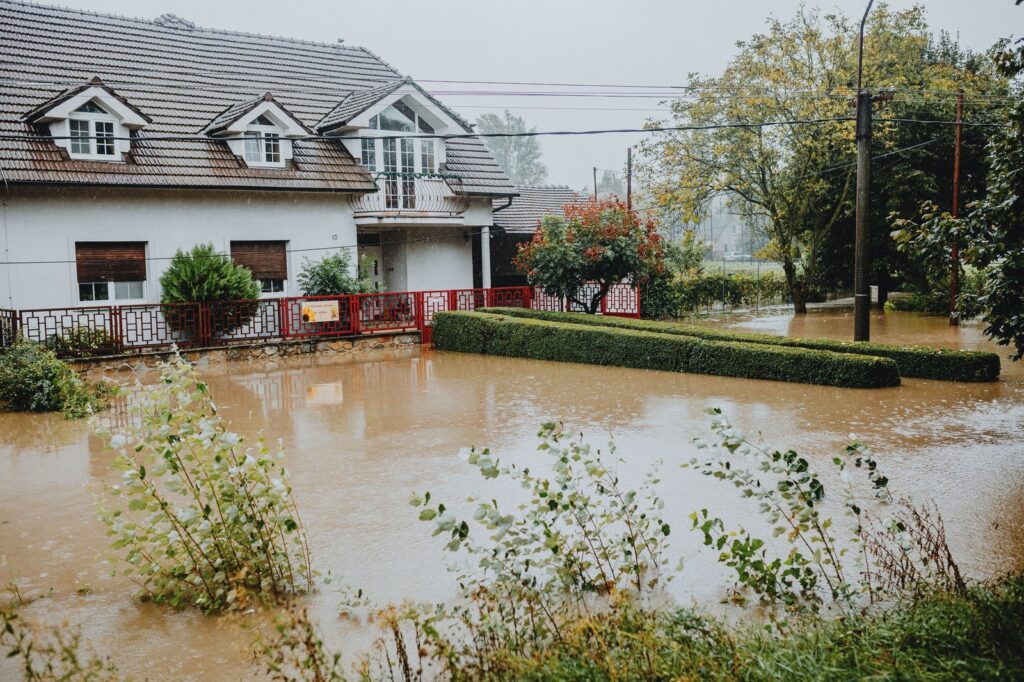
A sewage backflow into a family home is not a bigger version of a burst pipe. It is a biological hazard from the moment it touches the floor, and residential jobs of this kind are routinely run in this country without a containment corridor or correctly graded protective equipment, not because the operator does not know better, but because nothing in Australia requires them to.
The call that sounds routine and is not
A sewer line backs up through a floor drain into a laundry. A pump station fails during heavy rain and stormwater rises through a subfloor. A toilet overflows from beyond the trap during a blockage. To the family standing in the doorway, each of these looks like a water problem, distressing but familiar in shape, the same category of emergency as a burst hot water pipe or an overflowing bath. To anyone trained in water damage restoration, these are not the same category of event at all. They are a different class of water entirely, one that carries an active biological hazard from the first minute it touches a surface, and treating it with the urgency and equipment appropriate to a clean water leak is where a large share of the risk in this trade actually sits.
This article is about that gap, between what a Category 3 water event looks like to the family experiencing it and what it actually is, and why the industry response to it in Australian homes is inconsistent in a way that would not be tolerated in most other hazardous work.
What Category 3 water actually is
The IICRC S500 water damage restoration standard, the reference document the international restoration trade works from, defines water intrusion in three categories based on the level of contamination present, not on how the water looks or where it came from. Category 1 is water from a clean source, a supply line failure or a clean appliance leak, posing minimal health risk at the point of loss. Category 2, sometimes called grey water, carries a significant degree of contamination and the potential to cause illness if consumed or if it contacts broken skin, typically water from a washing machine, dishwasher, or a toilet bowl containing only urine. Category 3, universally called black water in the trade, is grossly contaminated water containing pathogenic and potentially toxigenic agents, capable of causing severe illness or death if contact or ingestion occurs.
Category 3 water has specific, well understood sources. Sewage backflow, particularly anything originating from beyond the toilet trap. Rising floodwater from rivers, storm surge, or ground level flooding that has travelled across soil, roadways, or agricultural land before entering a building. Groundwater intrusion carrying soil contamination into a subfloor or basement space. Any of these sources is classified Category 3 at first contact, not after some period of neglect. This is the detail most easily lost on a family experiencing the event, and it is the detail that should govern the very first decision an operator makes on arrival.
Why this water is hazardous from the first minute
Category 1 water is not permanently clean. Left standing, absorbed into porous building materials, and exposed to ambient temperature for an extended period, clean water begins to support microbial growth and can degrade toward Category 2 or even Category 3 conditions within a matter of one to three days, depending on temperature and the materials it has contacted. This time dependent degradation is a core concept in the S500 standard and is precisely why rapid response to any water loss matters.
Category 3 water carries none of that grace period. It is contaminated at the source, before it ever reaches the building, and the hazard is present in the very first litre that crosses the floor. Sewage carries a dense and varied population of bacteria, viruses, and parasitic organisms, some capable of causing serious gastrointestinal illness, skin infection, or more severe disease through contact with broken skin, mucous membranes, or accidental ingestion. Floodwater that has crossed open ground carries a similarly unpredictable microbial load, along with whatever chemical contamination the ground itself has accumulated, agricultural runoff, fuel residue, or industrial contaminants depending on the catchment the water travelled through. None of this requires time to develop. It is present at contact.
This distinction, immediate hazard versus hazard that develops over time, is the single most important technical fact in this entire category of work, and it is the fact that should determine, before a single piece of equipment is unloaded from the van, what level of containment and protection the job requires.
The health risk in practical terms
The exposure routes that matter in a Category 3 event are contact with broken or compromised skin, contact with the eyes, nose, or mouth, and inhalation of aerosolised droplets generated by extraction equipment, foot traffic through standing contamination, or air movers placed without regard to where the contaminated water actually reached. Gastrointestinal illness following accidental ingestion, dermatological infection following skin contact, and respiratory or mucous membrane irritation following aerosol exposure are all documented outcomes of inadequately protected sewage and floodwater exposure in the occupational health literature. None of these outcomes require unusual bad luck. They follow directly and predictably from insufficient protective equipment and insufficient control over where the contamination is allowed to spread during the job.
This is why the restoration trade internationally treats a Category 3 job as a controlled biological hazard response rather than as a larger water extraction job. The equipment used to dry a clean water leak, air movers, dehumidifiers, extraction wands, is the same equipment used on a Category 3 job. What differs, or should differ, is everything around that equipment. How the contaminated zone is separated from the rest of the building. What the technician wears while working inside it. How materials are handled once they are known to have been in contact with the contamination. None of this is optional refinement. It is the difference between containing a biological hazard and spreading it through the rest of the house on the soles of a technician’s boots.
Why nothing requires otherwise
Here is the uncomfortable structural fact underneath this entire topic. In many other hazardous residential trades, asbestos removal being the clearest example, there is a specific, enforced regulatory framework governing containment, protective equipment, and disposal that operators cannot legally ignore. Water damage restoration in Australian residential settings carries no equivalent statutory requirement specific to the trade. The IICRC S500 standard exists, is internationally recognised, and is the reference document serious operators certify against and work to. It is, however, a voluntary industry standard, not a legislated requirement enforced by an external regulator for residential work. An operator can turn up to a Category 3 sewage job wearing the same gloves and mask they would wear on a Category 1 tap leak, skip any containment between the affected room and the rest of the house, and face no external penalty for doing so, because nothing in the regulatory framework for residential water damage response in this country compels a higher standard.
This is not a story about bad actors deliberately cutting corners for profit, although price pressure plays a role. It is a story about a category of hazardous work that relies entirely on the operator’s own training and discipline to be treated with the seriousness it requires, because the alternative, external enforcement, does not exist at the residential scale in the way it does for other hazardous trades. The customer standing in the doorway has no way to know the difference between an operator working to the S500 standard and an operator who has never heard of it. Both arrive in a van. Both look like professionals. Only one of them is actually managing the biological hazard correctly.
The Crusader Category 3 protocol
Every Cleaning Crusader response to a suspected or confirmed Category 3 event begins with categorisation before equipment selection. The source is identified, the water is classified against the S500 criteria, and the job plan changes immediately if the classification is Category 3 rather than Category 1 or 2.
A physical containment corridor is established between the affected zone and the rest of the building before extraction begins, using barrier sheeting and controlled access points, so that contaminated material, equipment, and foot traffic cannot carry the hazard into unaffected rooms. Where the extent of contamination or the building layout warrants it, negative air pressure is established within the containment zone, drawing air out through filtered exhaust rather than allowing it to migrate into the rest of the home.
Personal protective equipment is graded to the category, not to habit. This means fluid resistant coveralls rather than street clothes, nitrile or equivalent chemical resistant gloves rather than light duty gloves, eye or face protection appropriate to splash risk, and respiratory protection suited to the aerosol risk generated by extraction and demolition activity within the contaminated zone. Equipment and materials that have contacted Category 3 water are handled as contaminated from that point forward, cleaned and disinfected before leaving the containment zone or disposed of where porous materials cannot be safely restored.
Porous materials that have absorbed Category 3 water, carpet underlay, plasterboard, and similar materials in direct or prolonged contact, are generally not restorable and are removed and disposed of as contaminated waste rather than dried and returned to service, in line with the S500 standard’s guidance on this category of loss. Once the source contamination is removed, the affected structure is cleaned, disinfected, and dried under controlled conditions before the containment corridor is broken down and the space is returned to the family.
Eco chemistry within a biological hazard response
The Cleaning Crusader chemistry bench for our standard restoration work is built on plant derived surfactants, biodegradable within twenty eight days under OECD 301, unfragranced, with no quaternary ammonium compounds. A Category 3 response is the one context in this trade where that standard bench is not sufficient on its own, because the job requires genuine disinfection of a biologically contaminated structure, not simply the removal of household soil. Where disinfection is required at this level, we use a hydrogen peroxide based sanitiser appropriate to the surface and the contamination present, chosen because it breaks down into water and oxygen rather than leaving a persistent chemical residue in a home that a family will re occupy. The plant derived standard chemistry returns to use for the post disinfection clean, once the biological hazard itself has been addressed by chemistry matched to that specific task.
Long lasting client tips
First. Treat any water that has contacted a sewer line, a toilet beyond the trap, or ground level floodwater as contaminated from the first moment, regardless of how it looks. Do not allow children or pets into the affected area, and avoid walking through it in bare feet or normal footwear that will then carry contamination elsewhere in the home.
Second. Do not attempt to extract or dry a Category 3 event yourself with a household wet vacuum or fans borrowed from around the house. Doing so risks aerosolising contaminated water into the surrounding air and spreading contamination on the equipment itself into rooms that were never affected.
Third. Ask any restoration operator responding to a sewage or floodwater event directly whether they are classifying the water under IICRC S500 and what containment and protective equipment they are using as a result. A properly trained operator will answer this question specifically and without hesitation.
Fourth. Expect porous materials in direct contact with Category 3 water to be removed rather than dried and reused. An operator who proposes to simply dry contaminated carpet underlay or plasterboard back into service is not following the accepted restoration standard for this category of loss.
Fifth. Keep affected areas closed off from the rest of the home, using a closed door or a temporary barrier, until a professional assessment has confirmed the extent of the contamination and a containment plan is in place.
Sixth. Understand that the cost difference between a Category 3 response done to standard and a basic water extraction service reflects a genuinely different scope of work, not overcharging. Containment, correctly graded protective equipment, and appropriate disposal of contaminated materials all carry a real cost that a routine water job does not.
The bold position
We will say this plainly. Category 3 water damage restoration in Australian homes is carried out, with troubling regularity, without the containment or protective equipment the hazard actually warrants, and the reason is structural rather than individual. Nothing in the regulatory environment for residential restoration work compels an operator to treat a sewage backflow with the seriousness the biological science demands. The discipline exists only where the operator has chosen to adopt it, through training and certification against the IICRC S500 standard, in the complete absence of an external body requiring them to.
This leaves the customer entirely reliant on the good faith and competence of whoever answers the phone first, in a category of hazard where the consequences of getting it wrong are not cosmetic. A family re occupying a room too soon, or a technician tracking contaminated material through a hallway because no containment corridor was ever established, are not hypothetical risks. They are the predictable outcome of an industry gap that a serious operator has to close through their own standard, because the regulation will not close it for them.
Cleaning Crusader treats every Category 3 job as a biological hazard response from the first assessment, with containment, correctly graded protective equipment, and disposal protocols matched to the S500 standard, whether or not the law requires it of us. The water most operators avoid treating properly is exactly the water where the discipline matters most.
Discipline creates freedom.
Cleaning Crusader. Built for impact. Driven by excellence. Guided by purpose.