Wiping mould off a wall and painting over it does not remove the mould. It hides the diagnosis and leaves the building wet. Real remediation is a codified discipline, and most Australian residential work does not meet it.
The black stain that came back
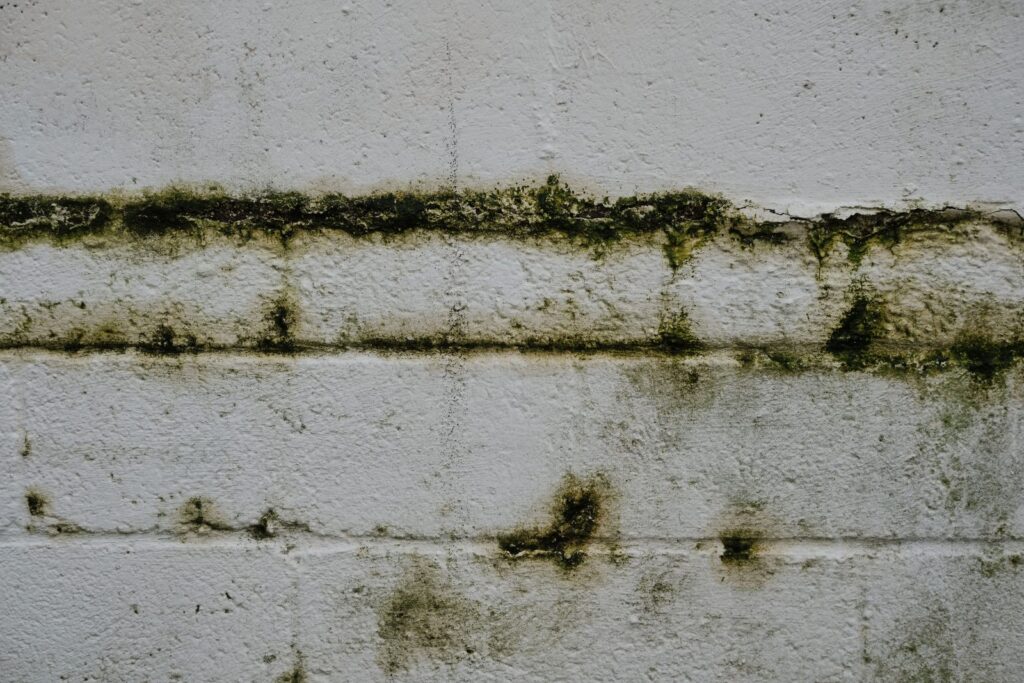
A dark stain spreads in the corner of a bedroom ceiling, or up the wall behind a wardrobe, or around the frame of a window that sweats in winter. The owner wipes it with diluted bleach, watches the black fade to nothing, feels the small satisfaction of a problem solved, and a few weeks or months later it is back in the same place. So they wipe it again. Eventually they paint over it, sometimes with a paint that promises to stop mould, and for a while the wall looks clean. Then the stain bleeds back through the paint, and the owner concludes that this is just a house that gets mould.
It is not. What that owner has been doing is treating the symptom while leaving the cause untouched, and the cause is moisture. Mould on a wall is not a stain to be cleaned off. It is a biological growth telling you the building is wet somewhere it should be dry. Wiping the visible growth and painting over it removes the appearance and leaves the moisture, the spores in the materials, and often the growth inside the wall cavity where the cloth never reached. The stain comes back because the conditions that grew it never changed.
This piece is mould remediation done properly. The standard the trade is supposed to work to, the IICRC S520. The health context, anchored in the World Health Organization’s 2009 guidance on dampness and mould. What containment is and why it is the difference between remediation and contamination spreading. And the plain truth that most residential mould work in this country does not meet the standard that the rest of the developed world has codified. The frame is building diagnosis, because that is what mould actually is.
What mould actually is, and why bleach is theatre
Mould is a fungus. It grows from microscopic spores that are present in every indoor and outdoor environment at all times and that cannot be eliminated from the air. Spores are not the problem. The problem is the conditions that let spores stop floating and start growing, which are moisture, a temperature in the ordinary range of a building, and a food source. In a building the food source is everywhere, because mould feeds on cellulose, and cellulose is the main ingredient of plasterboard paper, timber, dust, and many finishes. Give a spore sustained moisture against one of those materials and it germinates, sends out filaments called hyphae, grows into the material, and produces more spores. The visible black or green patch is the mature, sporulating surface of a colony that has already grown into the substrate beneath it.
This is why bleach on a porous surface is theatre. Diluted household bleach is mostly water, and when you wipe it onto a porous material it does two things. The chlorine bleaches the pigment in the visible growth, which makes the stain disappear and creates the illusion of a kill. And the water content soaks into the material, which feeds the very colony you are trying to destroy. The hyphae growing inside the plasterboard or timber are untouched by a surface wipe, because the active part of the colony is below the surface where the cloth cannot reach. The colour goes. The colony stays, now slightly better watered, and regrows. The bleaching of the stain is mistaken for removal. It is the opposite. It is camouflage applied to a living thing.
Paint over the top compounds the error. A coat of paint, even one marketed as mould resistant, is a surface treatment over a substrate that is still wet and still colonised. The growth continues underneath, the spores and the staining compounds bleed back through the film, and the moisture that caused the whole thing is still arriving. The owner has now spent money to hide a diagnosis. The mould you painted over is still there, still growing, and still releasing into the air of the room, now behind a film that makes it easier to ignore.
Why mould is a health matter, not a cosmetic one
The reason mould must be removed rather than hidden is that it is a documented health hazard, and the evidence base for this is not marginal. The World Health Organization published its WHO Guidelines for Indoor Air Quality: Dampness and Mould in 2009, a consensus review of the international evidence, and its central finding is clear. Occupants of damp or mouldy buildings are at increased risk of respiratory symptoms, respiratory infections, and the exacerbation of asthma. The guidance states that there is sufficient evidence to recommend the prevention and remediation of dampness and mould as a public health measure.
The mechanisms are several. Mould produces spores and fragments that become airborne and are inhaled. Many people are sensitised to mould allergens, and for them exposure provokes the allergic and asthmatic response. Some moulds produce the volatile compounds responsible for the characteristic musty smell, and that smell is itself a signal of active microbial activity. The conclusion matters more than the detail. A mouldy building is associated with worse respiratory health for the people in it, and the response endorsed by the international evidence is to find and fix the dampness and remove the mould, not to mask it.
This reframes the whole problem. Mould is not a cosmetic blemish that ruins the look of a wall. It is an indoor air quality and health issue that happens to be visible, and the visible patch is a fraction of the concern, because the spores and fragments and volatiles are in the air whether or not the patch looks bad. It is a building telling you it is wet and a colony telling you it is alive, and both messages are about health, not appearance.
The standard the trade is supposed to work to
Mould remediation, like water damage restoration, is a codified discipline. The reference standard is the IICRC S520, the Standard for Professional Mold Remediation, the document the developed world’s remediation trade works to. It defines the principles of proper remediation, and those principles are very different from wiping a wall.
The first principle is that you must correct the moisture source. Remediation that removes the mould without fixing the water that caused it is guaranteed to fail, because the conditions that grew the mould are still present. Finding the moisture, the roof leak, the plumbing leak, the rising damp, the condensation from poor ventilation, the unaddressed water event, is the first and non negotiable step. No moisture fix, no remediation, only a delay.
The second principle is that contaminated materials must be removed or properly cleaned, and which one depends on the material. Porous materials that have been colonised, plasterboard, insulation, carpet, often cannot be fully cleaned because the growth has penetrated them, and they must be removed and disposed of. Non porous and semi porous materials can often be cleaned. The judgement of what to save and what to remove is part of the discipline, and the default of wiping everything and removing nothing is not remediation.
The third principle, and the one most absent from residential work, is containment. Remediation disturbs mould, and disturbing mould releases spores. Without containment, removing mould in one room distributes spores throughout the building, which can leave the rest of the house more contaminated than before the work began. Proper remediation isolates the work area, controls the air so that spores are captured rather than dispersed, and protects the rest of the building and the people doing the work. The standard also calls for verification that the remediation has succeeded, rather than declaring success because the wall now looks clean.
What containment is and why it matters
Containment is the single concept that most clearly separates real remediation from the wipe and paint approach. It is the part the cheap job omits entirely and the part that protects the rest of the building.
When mould is disturbed, by scrubbing it, by cutting out colonised plasterboard, by removing a mouldy carpet, it releases a burst of spores and fragments into the air. In an uncontained room those spores travel on the air currents of the building, settle in other rooms, and seed new growth wherever they land on a damp surface. This is why a home can be worse off after a careless mould clean than before it. The growth that was confined to one corner has been aerosolised through the whole house. The person who scrubbed the bathroom mould and then found it in the bedroom did not have bad luck. They distributed it themselves.
Containment prevents this. A proper remediation seals the work area off from the rest of the building, manages the air pressure so that air, and the spores in it, is drawn into HEPA filtration and captured rather than escaping, and removes the disturbed material under control at every step. The people doing the work are protected with appropriate equipment, because they are the ones in the cloud. After removal, the area is cleaned and the air is cleared before containment comes down. The whole point is that the contamination is removed from the building rather than redistributed within it.
This is also why mould remediation is not a do it yourself job once it is past a small surface area. A small patch of surface mould on a non porous surface, caught early, with the moisture source already fixed, can reasonably be cleaned by a homeowner. But significant growth, growth into porous materials, growth in a wall cavity, or growth in a building with vulnerable occupants, is a containment job that needs the discipline and equipment to isolate, capture, and verify. The absence of containment is the absence of remediation. Everything else is just spreading the problem around with good intentions.
The Crusader mould remediation protocol
A Crusader mould remediation is run to the S520, as building diagnosis and contamination control, not as a wall wipe. It runs the same staged sequence.
Stage one. Find the moisture. We investigate the source of the dampness with moisture meters and thermal imaging, because remediation without correcting the moisture is a guaranteed return. The leak, the rising damp, the condensation, the unaddressed water event, has to be identified and corrected, in coordination with the right trades where structural repair is needed. This is first because nothing else holds without it.
Stage two. Assess the extent. We determine the full extent of the growth, including what has penetrated porous materials and what is inside cavities, so the scope reflects the real contamination rather than only the visible patch, which is the surface of the problem and not its boundary.
Stage three. Containment. We isolate the work area and control the air so that the disturbance of removal captures spores rather than spreading them through the building. This protects the rest of the home and the people in it. The containment is set before any growth is disturbed, because the moment of disturbance is the moment of risk.
Stage four. Removal and cleaning. We remove the colonised porous materials that cannot be saved and properly clean the salvageable surfaces, working within the containment, with HEPA filtration capturing the airborne load throughout. What can be cleaned is cleaned. What cannot is removed and disposed of.
Stage five. Clearance and verification. We clean and clear the air in the work area and verify that the remediation has achieved its aim before taking containment down. The job is finished when the contamination is gone and verified, not when the stain has disappeared.
Stage six. Prevention. We address the conditions that allowed the growth, the ventilation, the moisture management, so the building does not simply grow it again. Remediation that does not change the conditions is only ever temporary.
Eco chemistry for mould
Mould remediation is mostly physical, the removal of colonised material and the control of moisture and air, but where chemistry is used to clean salvageable surfaces, our bench is built for the indoor air the occupants will breathe afterward. Plant derived surfactants, biodegradable within twenty eight days under OECD 301, fragrance free, with no quaternary ammonium compounds in routine cleaning, and hydrogen peroxide based treatments where appropriate on cleanable surfaces.
The important honesty here is that no spray, eco or otherwise, is a substitute for removing colonised material and fixing the moisture. The products sold as mould killers that promise to solve the problem in a bottle suffer the same flaw as bleach. They may treat the surface, but they do not address the growth that has penetrated a porous material or the moisture feeding it. Our chemistry supports a proper remediation. It does not replace one, and we will not sell a spray as if it could.
What our chemistry does offer is a way to clean and treat the salvageable, non porous surfaces without loading the building with a persistent chemical residue or a heavy fragrance, in a building whose occupants are already dealing with the respiratory load of the mould itself. A hydrogen peroxide based treatment does its work and breaks down to water and oxygen. We do not fog a remediated building with fragrance to make it smell clean, because it should smell of nothing, and a musty smell that persists after the work is a sign the work was not finished.
Long lasting client tips
Six rules for dealing with mould in a way that actually removes it rather than hiding it.
First. Treat every patch of mould as a moisture message, and find the water. The mould is the symptom. The leak, the rising damp, the condensation, or the unaddressed water event is the cause. Removing mould without fixing the moisture guarantees it returns, every time.
Second. Do not wipe porous surfaces with bleach and call it solved. Bleach removes the colour and adds water to the material, which feeds the colony growing below the surface. The stain disappearing is not the mould dying. It is the mould being camouflaged.
Third. Do not paint over mould, even with a mould resistant paint. Paint is a surface film over a substrate that is still wet and still colonised. The growth continues underneath and bleeds back through, and you have spent money to hide a diagnosis rather than treat it.
Fourth. Manage condensation and ventilation, because in many Perth homes the moisture source is not a leak but poor ventilation and condensation in winter. Ventilate wet areas, address window condensation, and keep humidity down, because dry surfaces do not grow mould regardless of how many spores land on them.
Fifth. Treat significant mould, growth into materials, growth in cavities, or any mould in a home with someone who has asthma or a respiratory condition, as a containment job for a professional, not a weekend wipe. Disturbing mould without containment spreads it through the house and can leave you worse off than before.
Sixth. If a remediated area still smells musty, the job is not finished. The musty smell is the smell of active microbial activity. A properly remediated building, with the moisture fixed and the growth removed, smells of nothing. Trust the smell over the look.
The bold position
We will say this plainly. Most mould work performed in Australian residential buildings does not meet the standard the IICRC has codified for the rest of the developed world. The default response in this country is to wipe the visible growth with bleach, paint over what remains, and leave both the moisture and the colony in place. That is not remediation. It is camouflage, and it fails the building, because the growth returns, and it fails the occupants, because the spores and the health risk were never removed, only hidden behind a fresh coat of paint. The failure mode is an entire culture that treats a building diagnosis as a decorating problem.
The alternative is the codified discipline. Find and fix the moisture first, because nothing holds without it. Assess the true extent rather than the visible patch. Contain the work so that disturbing the mould captures the spores rather than spreading them through the house. Remove what is colonised, properly clean what can be saved, verify the result, and change the conditions so the building does not simply grow it again. This is more demanding and less convenient than a wipe and a coat of paint, which is exactly why the cheap end of the trade does not do it.
Cleaning Crusader runs mould remediation to the S520, as building diagnosis and contamination control. We will find the water before we touch the mould, because the water is the actual problem. We will contain the work to protect the rest of your home. And we will tell you honestly when a patch is small enough to clean and when it is a containment job that a bottle of spray will only make worse. The mould you painted over was never gone. It was hidden, and it was still in your air. We do not hide it. We remove it, and we remove the reason it grew.
Forged in Standard. Built on Excellence.
Cleaning Crusader. Built for impact. Driven by excellence. Guided by purpose.