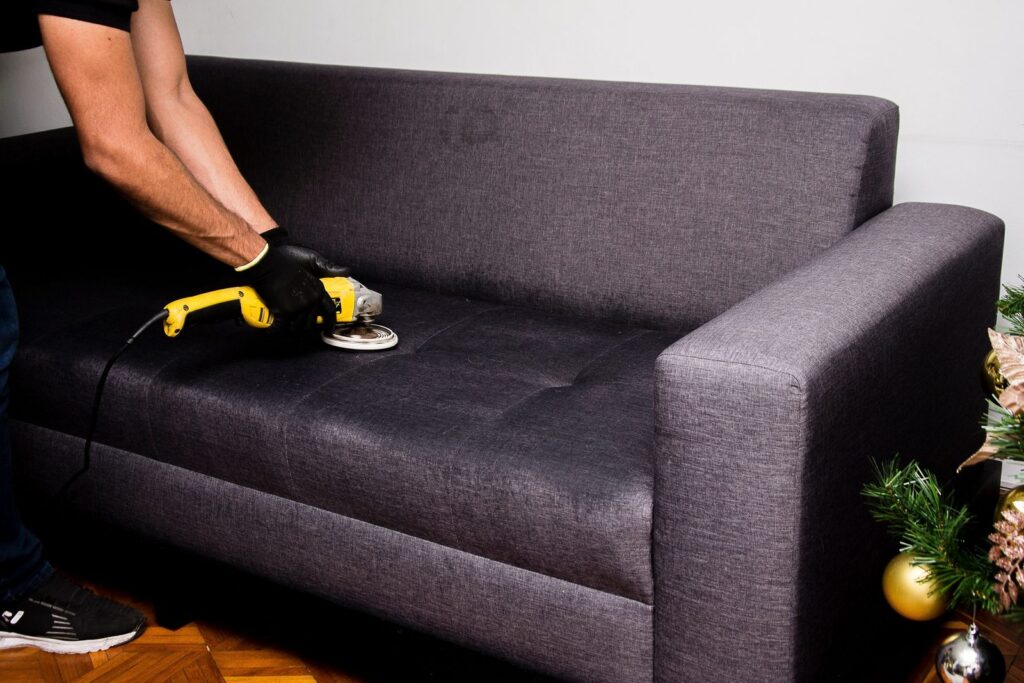
Your sofa breathes every time you sit on it, and most of what it holds it gives back to the room. Upholstery is not soft furnishing. It is an unmanaged filter that nobody changes.
The most used surface in the house
Think about the surface in your home that absorbs the most human contact across a week. It is not the floor. It is not the bench. It is the couch. The lounge takes the body for several hours every evening, holds it, releases it, and waits for the next sitting. Every one of those cycles moves air through the fabric and the foam, and almost nobody treats the couch as a thing that needs maintaining.
We arrive at homes every week where the carpet has been cleaned twice a year and the sofa has never been cleaned at all. The owner is surprised when the extraction water comes back the colour of weak tea. They should not be. A sofa is a reservoir. It collects what the room sheds and what the body deposits, and because it is upholstered rather than hard, it holds the load deep instead of on the surface where a wipe would reach it.
This piece is the fabric fibre science of upholstery, told the way we would explain it standing in your living room. What a couch actually holds. Why the cleaning code on the label decides everything. The difference between hot water extraction and dry solvent. And why the most used surface in your home deserves to be treated as the air filter it quietly is.
What a couch actually holds
An upholstered lounge is a layered system. A face fabric you see and touch, a backing beneath it, and a cushion core, usually polyurethane foam, sometimes feather or a polyester fibre fill. Each layer holds a different kind of soil, and the soil migrates between layers every time the cushion is compressed and released. Four things load it.
The body is the first. A person sheds skin cells continuously, on the order of hundreds of millions per day, and a meaningful share settles into whatever they are sitting on. The body also transfers sebum, the natural skin oil, at every point of contact. This is why the arms and the headrest of a pale sofa darken first. That darkening is not dirt walked in from outside. It is body oil oxidising on the fibre, and once it oxidises it bonds, which is why a late clean lifts less than an early one.
The room is the second. House dust is not lint. It is a composite of skin flakes, textile fibres, soil tracked from outside, pollen, cooking residue, and the faecal pellets and fragments of dust mites. Every time someone sits down, the cushion exhales a small cloud of this into the breathing zone, and every time they stand up it draws a fresh charge of room air back in through the fabric. The couch is doing the work of a filter that nobody chose and nobody ever changes.
Moisture and what lives in it is the third. Upholstery absorbs humidity from the air and perspiration from the body. The dust mite, the small arachnid documented across the allergy and respiratory literature as a primary indoor allergen, does not drink. It takes its water from humidity and feeds on shed skin, so a warm, humid, skin rich, rarely disturbed cushion is close to ideal habitat. In a Perth home the coastal humidity through the warmer months keeps soft furnishings damp enough to sustain a population a drier inland climate would suppress.
The volatile load is the fourth. Fabrics, foams, and the residues of consumer cleaning sprays release volatile organic compounds, the family of carbon based gases the World Health Organization addresses in its indoor air quality guidance. A new sofa off gasses from its foam and its flame retardant treatment for months. An old sofa sprayed with supermarket fabric refreshers holds a reservoir of fragrance chemistry and surfactant residue that it releases slowly into the room. The smell people read as clean is often just a heavier load of volatiles masking the original one.
Why fibre type decides the method
You cannot clean what you have not identified, and upholstery fibre falls into two families that behave in opposite ways when they meet water. The cleaner who treats them the same is the cleaner who shrinks one and browns the other.
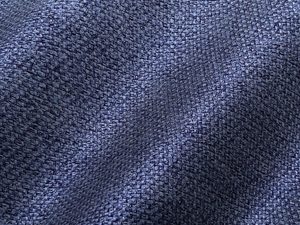
Natural fibres are cotton, linen, wool, silk, and viscose. They are absorbent and hygroscopic, taking up water readily and holding it. Cotton and linen can shrink and develop water marks where a wet edge dries unevenly. Wool is more forgiving and naturally soil resistant because of its scaled structure, but sensitive to high pH and to heat, both of which damage and can felt it. Silk and viscose are the most fragile and will mark, shrink, and lose strength if over wetted. Natural fibre upholstery also carries the risk of cellulosic browning, where natural sugars and tannins wick to the surface during slow drying and leave a yellow brown stain that has nothing to do with the original soil.
Synthetic fibres are polyester, nylon, polypropylene, acrylic, and the microfibres woven from very fine polyester filaments. They are far less absorbent, dry faster, resist shrinking, and tolerate a wider range of chemistry, which is why most modern lounges are made from them. The catch is that synthetics hold oily soil more stubbornly than water based soil, because oil has an affinity for the plastic surface of the fibre. A polyester sofa rarely shrinks, but the body oil on its arms needs a genuine surfactant and dwell time, not a quick wipe, to release.
Then there is the construction underneath. The foam core and any glue lines do not like being saturated. Over wetting drives water into the foam, which dries slowly from the inside out, and slow drying inside a sealed cushion is exactly the condition that grows mould and a sour smell. The fibre tells you what chemistry is safe. The construction tells you how much water is safe. Both questions have to be answered before a single drop goes on.
The cleaning code that decides everything
Almost every piece of manufactured upholstery carries a cleaning code, a single letter set by the manufacturer that states what the fabric can tolerate. The codes are W, S, WS, and X. Most owners have never looked for the tag, and most general cleaners do not check it. Reading it correctly is the difference between a restored sofa and a ruined one, and it is the first thing a Crusader technician does on arrival.
Code W means water based methods are safe, a water borne detergent and, where the construction allows, hot water extraction. Most polyester and synthetic blends are W, the most forgiving code and the one that responds best to a deep wet clean. Code S means solvent only. The fabric will water mark, shrink, or brown if cleaned with water and must be cleaned with a dry solvent instead. Many natural fibres, delicate weaves, and some viscose blends carry it. Putting a hot water extraction wand on an S coded sofa is one of the most common and most expensive mistakes in this trade, because the damage is often permanent.
Code WS means either water based or solvent methods are tolerated, which lets the technician match the method to the soil. Oily soil leans solvent. General soil leans water. Code X means neither. An X coded fabric can only be vacuumed and lightly brushed, and any liquid cleaning will damage it. When we see an X code we tell the owner the truth, which is that there is no wet recovery path and that protection and gentle maintenance are the whole programme.
The code is not a suggestion. It is the manufacturer telling you the chemistry the fabric was engineered to survive. A cleaner who ignores it is gambling with an asset that often cost several thousand dollars, and the customer is the one who carries the loss.
Hot water extraction against dry solvent
Two methods do the deep work, and the code and the construction decide which is allowed. They are not interchangeable, and the skill is in choosing correctly, not in owning one machine and using it on everything.
Hot water extraction is the wet method. A heated cleaning solution is injected into the fabric under controlled pressure and almost immediately drawn back out by strong vacuum, carrying the suspended soil with it. Done correctly on a W or WS fabric over sound construction, it is the most thorough soil removal available, because it flushes the load out rather than redistributing it. The whole craft is in control. Too much solution or too weak a vacuum leaves the cushion wet, and a wet cushion is a mould risk. The Crusader standard is a low moisture pass with a strong recovery vacuum and forced air drying afterward, so the fabric is damp for hours, not days.
Dry solvent cleaning is the method for S coded and delicate fabrics. A solvent carrier lifts oily and particulate soil without introducing water, so there is no shrinking, no browning, and no water marking. It is gentler on the fibre and faster to dry, but generally less aggressive on heavy water based soil than a full extraction, which is why it suits fabrics that need protection rather than the dirtiest synthetic lounges. There is also a third tier for routine maintenance, an encapsulation or low moisture method that cleans the face of the fabric with minimal wetting, well suited to interim cleans or to large commercial volumes where drying has to be quick. It keeps a fabric presentable and extends the interval, but it is not a substitute for a full extraction when one is due.
The Crusader upholstery protocol
An upholstery clean done properly is a sequence, not a spray and wipe. Every Crusader job runs the same six stages.
Stage one. Identify. We find the cleaning code tag, identify the fibre, and inspect the construction, the seams, and the foam, then test an inconspicuous area for colour fastness and shrinkage before any product reaches a visible surface. This is where the method is decided.
Stage two. Dry soil removal. We vacuum the whole piece thoroughly with a HEPA filtered machine, working the crevices, the seams, and under the cushions. A large fraction of the soil load is dry particulate, and removing it dry is the single most effective step. Wet cleaning over loose dry soil only turns it to mud and drives it deeper.
Stage three. Pre treatment. We apply the correct chemistry for the fibre and the soil and allow it to dwell, because body oil and general soil need a genuine surfactant and time to break their bond. Dwell time does the chemical work so the mechanical work can be gentle, with agitation, where the fabric allows it, by a soft horsehair brush rather than a stiff one.
Stage four. Extraction or solvent removal. On a W or WS fabric we run a controlled low moisture hot water extraction. On an S fabric we run the dry solvent method. The aim is maximum soil out, minimum moisture left behind.
Stage five. Drying. We accelerate drying with air movers so the fabric returns to dry quickly and there is no window for browning or microbial growth. Controlled drying is as much a part of the job as the cleaning, because a clean left to dry slowly can come back as a stain or a smell.
Stage six. Inspection and grooming. We groom the pile or nap back to its natural lie, inspect under directional light for any missed area or wicking mark, and address it. The job is photographed for the customer record, and the cushions go back only once they are dry enough to be safe.
Eco chemistry for upholstery
Our upholstery chemistry bench is built for the indoor air dimension first, because a couch sits in the breathing zone and a sofa cleaned with harsh chemistry trades one airborne load for another. The bench is plant derived surfactants, biodegradable within twenty eight days under OECD 301, fragrance free, with no quaternary ammonium compounds in routine cleaning. Where genuine sanitising is required, for a biological contamination or a healthcare or childcare setting, we use a hydrogen peroxide based sanitiser that breaks down to water and oxygen rather than leaving a persistent residue on a surface people press their skin against for hours.
Fragrance free matters on upholstery in particular because the fabric is a slow release medium. A fragranced product does not rinse fully from a porous cushion. It sits in the foam and releases its volatiles for weeks, the opposite of what a clean should do for the air in the room. Our cleaning is engineered to remove the load, including the residue of previous fragranced products, and to leave nothing the cushion will exhale later. On the solvent side we select low toxicity, low odour solvents rather than the older aggressive dry cleaning chemistry, and we extract them out rather than leave them to evaporate into the room. What is gentlest on the planet is also gentlest on the lungs of the person who lives with the sofa.
Long lasting client tips
Six rules that keep an upholstered lounge healthy and extend the interval between deep cleans.
First. Vacuum the sofa weekly, including under and behind the cushions, with an upholstery tool. Most of the soil load is dry particulate, and dry removal stops it bonding into the fibre. The sofa is a filter, and this is changing the element.
Second. Find the cleaning code tag now, before you ever need it, and write the letter down somewhere you will keep it. When a spill happens you will not have time to go looking, and using water on an S coded fabric in a panic is how a small accident becomes a permanent mark.
Third. Blot spills immediately with a clean white cloth, working from the outside inward, and never scrub. Scrubbing drives the spill deeper and distorts the fibre. On a water safe fabric, plain water on a damp cloth is the safest first response. On a solvent only fabric, blot dry and call before applying anything wet.
Fourth. Rotate and flip loose cushions regularly so wear and body oil distribute evenly rather than concentrating in two seats. A rotated cushion set ages as one piece instead of showing two worn hollows.
Fifth. Keep the lounge out of direct sun where you can, or rotate it, because ultraviolet light fades and weakens fabric over time, and a faded panel cannot be cleaned back to colour. Fading is permanent in a way that soil is not.
Sixth. Book a professional deep clean every twelve to eighteen months for a family lounge, and more often for a household with pets, children, or anyone with asthma or allergy. The interval is shorter than people expect because the soil is invisible until it is heavy, and a sofa cleaned on schedule lasts years longer.
The bold position
The couch is the most used soft surface in the home and the most neglected. The industry has let it stay that way because upholstery cleaning is fiddly, the fabric codes require knowledge most operators do not have, and it is easier to sell a carpet clean than to read a tag and choose between water and solvent. So the default in this trade is to wet everything with one machine and hope, and that default is how natural fibre sofas get browned, delicate fabrics get shrunk, and foam cores get left wet enough to grow mould. The failure mode is not malice. It is the absence of the knowledge the work requires.
We treat the couch as what it is, an air filter sitting in the room where people breathe and rest. That framing changes everything. We identify the fibre and read the code before we choose a method. We remove the dry load first because most of the filter’s burden is dry. We control moisture and drying so the cure is never worse than the problem. And our chemistry leaves nothing behind for the cushion to exhale later.
A clean sofa is not a cosmetic outcome. It is a measurable reduction in the dust, the dander, the body oil, and the volatile load that the most used surface in the house has been quietly returning to the air. Cleaning Crusader does upholstery as preservation engineering and as indoor air work at the same time, because on a couch they are the same thing. The fabric lasts longer. The room breathes cleaner. The asset is protected. That is the whole case, and we will make it on every lounge we are trusted with.
The work is the proof.
Cleaning Crusader. Built for impact. Driven by excellence. Guided by purpose.